

— TRAVEL TIPS · PORTO
Visiting Porto on your own: the practical guide
Porto works very well alone: the centre is tiny, nearly everything in it is free, and the city is still only lightly organised for mass tourism. The difficulty is physical — this is a place of steep slopes and slippery paving.
Sophie Dorval, Portugal specialist · September 8, 2026 · 8 min read

Porto sits on a hill dropping to the Douro. Three levels: the upper town around the Clérigos and the Avenida dos Aliados, the Ribeira down at the water, and Vila Nova de Gaia on the far bank, where all the port cellars are.
Only one booking really counts: the Lello bookshop, whose ticket is bought online and deducted from a book purchase. Cellars also take bookings in high season, but you can almost always find a slot on the day.
The rest is free or nearly so: São Bento station and its azulejos, the Ribeira, crossing the bridge, the viewpoints. Porto is one of the European cities where you see most without paying.
What nobody tells you before you go alone
The slopes are serious: from the Ribeira up to the Clérigos is seventy metres of climb over a few hundred metres. The Guindais funicular and tram 1 exist precisely for that, and they are part of the pleasure.
The port cellars are not in Porto but in Vila Nova de Gaia, a separate municipality across the river. You walk there on the lower deck of the Dom Luís bridge — ten minutes, and a superb view.
Portuguese calçada turns into an ice rink in the rain, and it rains often in Porto, off season included. Grippy soles are not a detail.
What to see, and how to approach each one alone
For each: what needs booking, what is free, and what the place does not tell you about itself.
São Bento station
Free, always open. Twenty thousand azulejos tell the history of Portugal in the concourse of a working railway station. It is one of the finest city entrances in Europe, and it costs nothing.
The Dom Luís bridge
Free. Contrary to what you read everywhere, it is not by Eiffel but by Théophile Seyrig, his former partner. Two decks: the upper for the metro and pedestrians, the lower for cars and pedestrians — the upper has the view, the lower leads to the cellars.
The Ribeira
Free. UNESCO-listed, this is the quarter of narrow coloured façades along the river. Very touristy by day, far calmer early in the morning.
The Lello bookshop
Ticketed, bought online and deductible against a book. The red staircase and carved ceiling date from 1906. The Harry Potter legend is a late marketing angle, never confirmed by the author.
The Clérigos tower
Ticketed. Two hundred and forty steps for a full circle of views — the best in the upper town. Book a slot in summer; the staircase is narrow and one-way.
The Carmo church
Free. Its side wall is entirely covered in blue azulejos. Between it and the neighbouring church squeezes a house one metre wide, built to stop nuns and monks from meeting.
Miradouro da Serra do Pilar
Free for the viewpoint, ticketed for the circular cloister. This is where the classic photograph of Porto, the bridge and the river comes from — on the far bank, ten minutes from the upper deck.
The Vila Nova de Gaia cellars
Ticketed, with tasting. The big houses run tours every half hour; the small ones are cheaper and often more interesting. Book in high season, improvise the rest of the year.
Beyond those: the Bolhão market, the cathedral and its cloister, the Stock Exchange Palace, Matosinhos beach at the end of the metro line, and the Douro valley an hour away by train — one of the finest rail journeys in Europe.
How to organise yourself, in practice
Go down, do not go up
Start in the upper town — Clérigos, Carmo, Lello — and let gravity do the work down to the Ribeira. Take the funicular or metro back up.
One cellar, not five
A tour with tasting takes an hour and is quite enough to understand how port is made. Stacking several means paying three times for the same explanation.
Keep a day for the Douro
The train follows the river from São Bento to Pinhão for the price of a regional ticket. Cheaper than an organised excursion, and far freer.
Guidebook, guided tour or audio guide: what to choose on your own?
Porto explains itself nowhere. The azulejos depict battles and saints with no caption, the baroque churches carry no panels, and the story of port — a wine invented by English merchants — is almost never told.
A paper guidebook
Awkward in a city where you climb cobbled lanes in the rain for much of the year.
A guided tour
Good on the Ribeira, but fixed times, in a group, and it hardly ever leaves the lower town.
A location-aware audio guide
The commentary starts on its own at each church, each azulejo wall, each viewpoint — including in the upper town that tours ignore. It all works offline.
A typical day in Porto, without a guide
An example route, on foot, heading downhill.
The Clérigos tower at opening, the Lello bookshop on a booked slot, the Carmo church — three places five minutes apart.
The station azulejos, then down to the cathedral and its cloister, with the view over the roofs.
Lunch by the river, then wander the lanes behind the quay, far quieter than the Douro frontage.
Across on the lower deck, one cellar with a tasting, then up to the Miradouro da Serra do Pilar for the end of the day.
— Questions fréquentes
Visiting Porto on your own: your questions
Two full days cover the city and one cellar. Three allow the Douro valley or Matosinhos beach. Porto is compact: you get through a lot in little time.
The ticket is bought online, with a timed slot in high season, and the amount is deducted if you buy a book. Without a ticket you do not get in — the only real constraint in the centre.
In Vila Nova de Gaia, on the far bank of the Douro, ten minutes on foot across the lower deck of the Dom Luís bridge. It is not the same municipality as Porto, which is exactly why the wine has always been stored there.
São Bento station, the Ribeira, both decks of the bridge, the Carmo church, the Miradouro da Serra do Pilar, the Crystal Palace gardens and most churches outside their paying chapels.
Line 1 runs along the river to the river mouth in period cars. It is not a sightseeing circuit but a scheduled line, at normal fare if you board with a travel card rather than buying on board.
May-June and September-October: mild, bright, less rain. Winter is mild but very wet; summer stays bearable, Porto being distinctly cooler than Lisbon.
— Pour aller plus loin
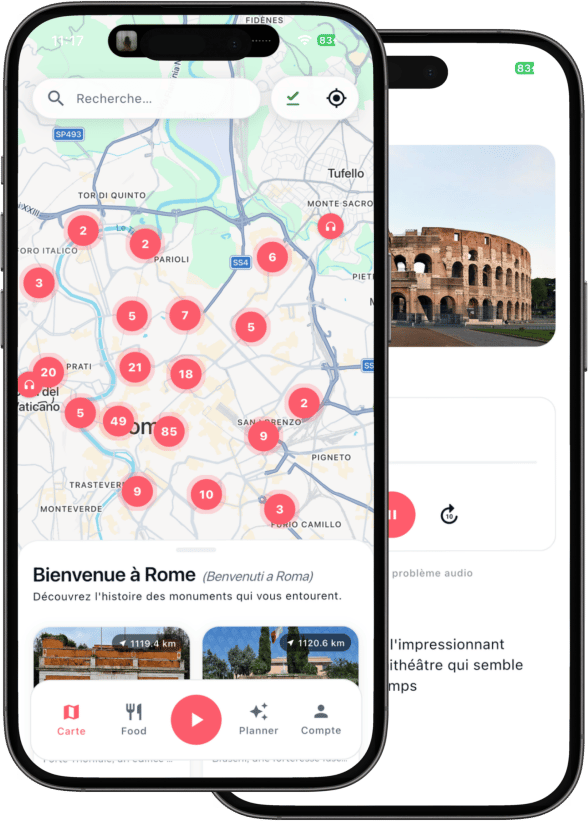
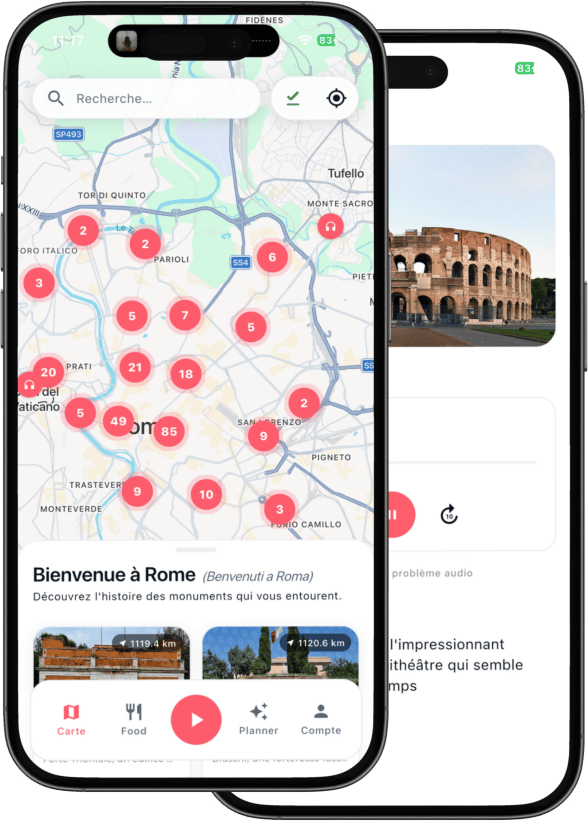
The audio guide that tells you Porto as you walk
CityGuide turns your phone into a personal guide: you walk, and the commentary starts on its own at each church, each azulejo wall, each viewpoint. It all works offline, and one purchase covers everyone travelling with you.
See the Porto audio guide