

Self-Guided Tour
Free Blue Mosque Audio Guide: The Complete On-Site Commentary
Looking for an audio guide to visit the Blue Mosque without missing a thing? Here is the complete, documented commentary to read directly on site, with no sign-up and no hidden fees.
The CityGuide Editorial Team · September 8, 2026 · Read: 8 min

The Blue Mosque remains an absolute visual shock in the heart of Istanbul. You are standing before one of the most famous silhouettes in the world, built to rival its Christian neighbour turned mosque, Hagia Sophia. Yet on site, no official counter offers audio guide headsets to independent visitors.
To save you from wandering the vast prayer hall without understanding what you are looking at, we provide the full historical commentary in written form. You will also find a short audio sample to discover the voice behind our app, whose full city tour is paid.
Listen to an Audio Guide Sample
Listen to a twenty-second audio sample here to experience our narrator's tone. The full mobile app with geolocation to explore all of Istanbul is paid.
Play a sample
Istanbul > Blue Mosque
20-second sample. The full city audio guide is paid.
What Is Free and What Is Not
To plan your visit without any surprises, here is a clear breakdown of costs and admission rules.
Free
Blue Mosque admission
Entry inside the monument is entirely free as it is an active religious sanctuary.
Free
The full text on this page
You can read all six explanatory chapters for free on your screen.
Free
Sample audio preview
Listening to the twenty-second audio preview on our page is available at no cost.
Paid
CityGuide Istanbul mobile app
The full audio guide that triggers automatically as you walk through the city is paid.
The Complete Tour Commentary: What Your Guide Would Tell You
Read these six steps as you walk through the courtyard and then under the dome. Take your time to observe every architectural detail.
1. 1. What lies before your eyes from the courtyard
Stop for a moment in the centre of the vast arcaded courtyard. All around you, the harmony of proportions is striking. The monument rises in a cascade of semi-domes converging toward the central dome, forty-three metres high. This masterly architecture is by no means an accident. Architect Sedefkar Mehmed Agha, a disciple of the renowned master Sinan, sought to create an impression of airy lightness despite the colossal mass of stone. You will notice the marble ablution fountain at the centre of the courtyard. Today it is purely decorative, as worshippers use the water points along the outer walls. Look up at the six minarets piercing the Istanbul skyline. At the time of construction, this number represented an unheard-of audacity that bordered on sacrilege in the eyes of the entire Muslim world. Take the time to take in the calm of this courtyard before stepping through the main entrance portal.
2. 2. The ambition of a contested young sultan
In 1609, when construction began, Sultan Ahmed I was only nineteen years old. The Ottoman Empire was going through a difficult period, marked by military setbacks against the Habsburgs and the Persians. Ahmed I wanted to leave his mark on history and reassert imperial authority by financing this gigantic mosque from his own treasury, a rare move since sultans usually relied on war spoils. The construction took seven years and was completed in 1617, just a few months before the ruler's premature death from typhus at the age of twenty-seven. By choosing the site of the former Byzantine Great Palace, directly facing Hagia Sophia, Ahmed I sent an unequivocal political and religious message. He wanted to prove that Ottoman art could surpass the genius of sixth-century Byzantine builders. The result is a classical masterpiece of balance, scale, and geometric precision that still dominates the Bosphorus Strait.
3. 3. The scandal of the six minarets
Erecting six minarets around a mosque triggered a genuine political earthquake in the early seventeenth century. Until then, only the Grand Mosque of Mecca, Islam's most sacred sanctuary, possessed six minarets. Religious dignitaries cried scandal and accused the young sultan of excessive arrogance. Popular legend has it that the architect misunderstood Ahmed I's order, confusing the word for gold, altin in Turkish, with the number six, alti. The historical explanation is far more pragmatic: Ahmed I wanted to assert his imperial supremacy. To appease the anger of the ulema and extinguish the controversy without abandoning his monument, the sultan devised a clever diplomatic solution. He financed the addition of a seventh minaret to the holy mosque in Mecca. Religious hierarchy was thus preserved, and Istanbul proudly kept its complex with six slender spires that define the Sultanahmet skyline to this day.
The full Istanbul audio guide
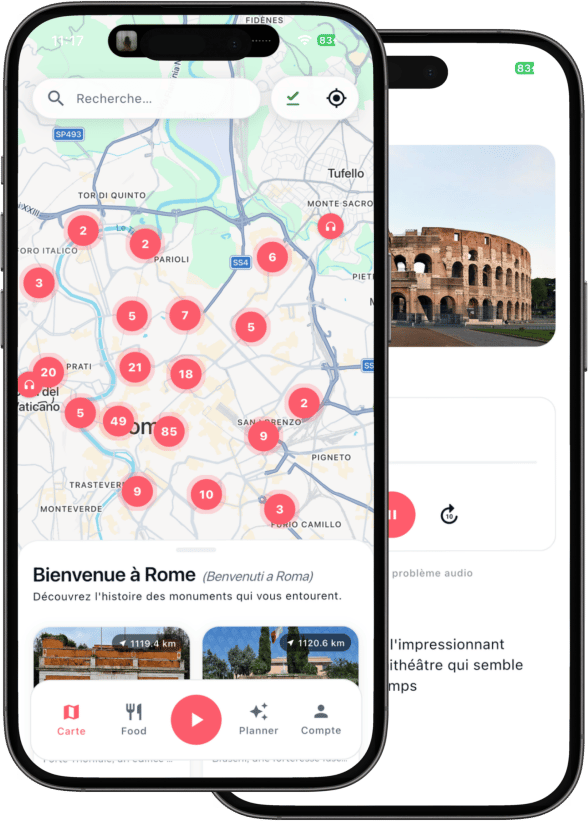
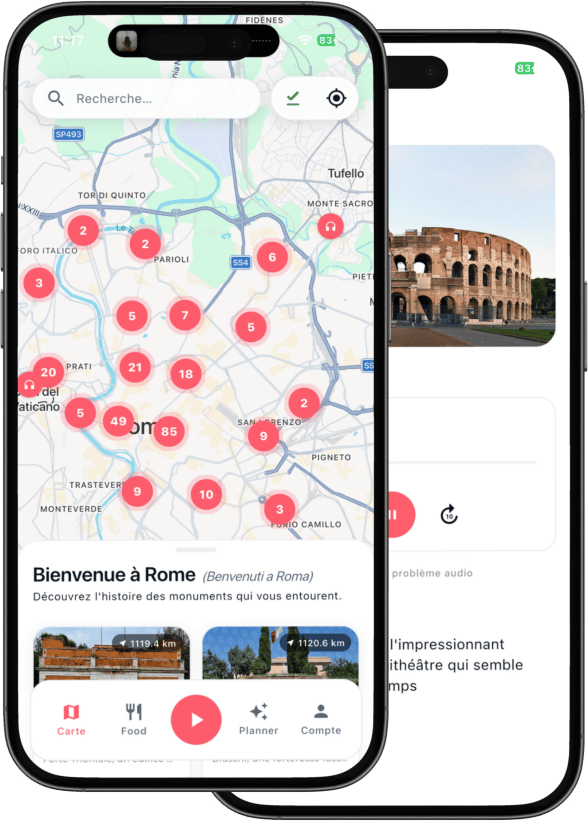
The commentary on this page is part of the CityGuide audio guide, which starts by itself in front of every place in the city.
Full audio guide
$21.90 $39.90
★ 4.8/5 · 15 reviews
30-day money-back guarantee
4. 4. The secret of the twenty thousand Iznik tiles
Once inside, after removing your shoes, look up at the upper galleries. You will immediately understand the origin of the Western moniker, the Blue Mosque. More than twenty thousand handcrafted ceramic tiles, produced in the city of Iznik, adorn the interior walls. These ceramics display over fifty different tulip motifs, along with carnations, roses, lilies, and stylised cypresses. The lower levels feature traditional designs, while the upper tiers burst with lavish floral patterns dominated by cobalt blue, turquoise green, and vivid red. Natural light pours in through more than two hundred stained-glass windows, illuminating these mineral reflections throughout the day. The sultan had imposed a fixed price on the Iznik workshops for this monumental commission. This decree financially crippled several manufacturers, paradoxically triggering the subsequent decline in quality of the famous imperial pottery workshops.
5. 5. The elephant feet and invisible treasures
Look at the four massive piers supporting the central dome. They are commonly called elephant feet due to their impressive five-metre diameter. These fluted columns absorb colossal loads to allow this interior space to remain virtually unobstructed by partition walls. On the floor, the thick red carpet muffles the footsteps of the crowds. But one detail often escapes hurried eyes: the chains that once hung above the imperial loge and the mihrab, the niche indicating the direction of Mecca. A heavy iron chain was hung across the entrance of the courtyard reserved for the sovereign. When the sultan entered the precinct on horseback, he was forced to bow his head to avoid hitting it. This architectural ritual symbolically served as a reminder that even the all-powerful master of the empire had to bow humbly before divine greatness prior to entering the sanctuary.
6. 6. A living place of worship in the twenty-first century
The Blue Mosque is not a museum frozen in time. It is first and foremost an active place of daily prayer for thousands of worshippers. Five times a day, the call of the muezzin echoes from the minarets and the building closes its doors to sightseeing visitors to make way for worship. Unlike neighbouring Hagia Sophia, where foreign travellers must pay an admission fee since 2024, entry to the Blue Mosque remains completely free for everyone. It embodies the living continuity of faith and Istanbul traditions. Watching families seated on the carpet, children, and worshippers prostrating in silence toward the south-east, you grasp the very soul of this edifice. It has survived earthquakes, city fires, and the fall of the Ottoman Empire to endure as one of the most vibrant spiritual hearts of modern Turkey.
Three Ways to Listen to or Read the Site's History
Depending on your budget and desired level of independence, here are your options for exploring the mosque with insightful commentary.
No official counter on site
The mosque does not provide any audio guide headsets for rent on site. You must navigate on your own using basic signage or standard guidebooks.
Online videos and free resources
You can find short video clips or summaries online. This requires an international mobile data plan and searching your way manually between each stop.
The CityGuide Istanbul app
Our paid app guides you throughout the entire city. Audio tracks play automatically as you walk thanks to GPS, without having to fiddle with your phone in crowds.
Practical Tips for Your Visit
Opening hours and prayer times
The mosque is open every day, but closes to visitors during the five daily ritual prayers. Each closure lasts about forty-five to sixty minutes. On Fridays, the closure is longer for the main midday prayer. Be sure to check the exact prayer times according to the season.
Mandatory dress code
This is a strict place of worship. Women must cover their hair with a headscarf and wear clothing that covers their shoulders, arms, and legs. Men must also wear long trousers and avoid sleeveless tops. Coverings are available on loan at the entrance if needed.
Shoe management
You must remove your shoes before stepping onto the carpet. A plastic bag will be handed to you at the entrance to carry them with you throughout your visit. Bring clean, comfortable socks, especially in winter when the floor can feel cool despite the carpeting.
Wait times and crowds
The queue grows considerably by the middle of the day. It is best to arrive right when it opens in the morning or in the late afternoon, just after the mid-afternoon prayer. The entrance for non-worshipping tourists is located on the side to streamline visitor flow.
— Frequently asked questions
Frequently Asked Questions About the Blue Mosque
No, there is no official free audio guide device handed out on site. The only free resources available are written guides like the one on this page or short online videos. Comprehensive, location-based audio guide apps, including CityGuide, are paid.
Yes, admission to the Blue Mosque is completely free for all visitors, both local and international. This is a major difference from neighbouring Hagia Sophia, which introduced an admission fee for foreign tourists in 2024.
Plan for about thirty to forty-five minutes inside to admire the tiles, domes, and overall atmosphere. Allow extra time for the queue at the entrance depending on your chosen time slot.
Yes, non-flash photography is permitted for visitors. However, you are strictly requested not to film or take close-up photos of worshippers performing their prayers, in order to respect their privacy.
The loan of headscarves and long skirts to comply with the religious dress code is generally provided free of charge at the entrance. However, to save time and travel with peace of mind, we recommend bringing your own scarf.
Yes, it welcomes the public every single day of the year without exception. The only restrictions occur during the five daily prayer windows and specific religious ceremonies on the Islamic calendar.
— Go further
Explore All of Istanbul Guided by Our Voices
Want to continue walking through the historic district without being glued to your screen? Our complete mobile audio guide triggers automatically at every street corner.
Download the Full Istanbul Tour