

— TRAVEL TIPS · ISTANBUL
How to visit Istanbul without a guide (and miss nothing)?
You want to explore Istanbul on your own terms, at your own pace, without paying for a guided tour or trailing behind a group in single file. Good news: not only is it possible, it's often the most beautiful way to discover the city of two continents — with one condition.
Sophie Dorval, Turkey specialist · June 23, 2026 · 8 min read

Let's say it right away: yes, you can absolutely visit Istanbul without a guide. Millions of travelers do it every year, and they gain what no organized tour offers — total freedom. Your itinerary. Your pace. Your budget. The right to linger an hour under a dome, or slip off for a çay whenever you feel like it.
The only mistake to avoid is setting off completely blind. Because Istanbul, with no context at all, can quickly come down to very beautiful monuments whose history you never grasp. And that would be a shame: here, every stone was Byzantine and then Ottoman, and it's precisely that double history that turns a stroll into a journey.
The right approach fits in one sentence: stay free, but don't stay clueless. Here's how.
What no one tells you about Istanbul "with nothing"
Inside Hagia Sophia, an unprepared traveler sees… a big, dim building. It's the classic trap, and travelers admit it themselves: "you walk in, you look up, and you walk out without understanding what you just stood inside."
There's a reason for that: Istanbul was Byzantium, then Constantinople, then Istanbul. Every site reads in layers — a church turned mosque turned museum, Christian mosaics beneath Islamic calligraphy. With no key to read them, you walk past 1,500 years of history without seeing it. On-site signs are rare, often in Turkish, and never tell the symbols or the stories that make a place come alive.
Visiting without a guide doesn't mean "visiting with nothing." It means giving yourself the right means to understand — while keeping your freedom.
Istanbul's must-sees (and why you need to understand them)
Here are the places not to miss. But remember one thing: in front of each, what changes everything isn't seeing it — it's knowing what you're looking at.
Hagia Sophia
From afar, a great grey dome. With its history: the largest church in the world for a thousand years, then a mosque, then a museum, then a mosque again — its Christian mosaics sit beside Islamic calligraphy.
The Blue Mosque (Sultanahmet)
Facing Hagia Sophia, almost as a challenge. Its six minarets caused a scandal in the 17th century, and its 20,000 blue Iznik tiles give it its nickname.
Topkapı Palace
Four centuries of Ottoman sultans ruled three continents from here. Without context, just pretty courtyards; with it, the harem, the treasury, and the relics of an empire.
The Basilica Cistern (Yerebatan)
A cathedral drowned beneath the city: 336 columns standing in water, and two Medusa heads placed upside down for reasons no one truly knows.
The Grand Bazaar
One of the oldest covered markets in the world: 4,000 shops, 60 lanes. A labyrinth where haggling is an art — and getting lost is part of the plan.
The Galata Tower
Built by the Genoese in the Middle Ages, it watched over the Golden Horn. From its top, the finest view over the old city and the strait.
The Bosphorus
The strait that divides Europe from Asia. Crossing it by boat means going from one continent to another in twenty minutes, between palaces and fortresses.
The Spice Bazaar (Egyptian Bazaar)
Once funded by taxes from Cairo, hence its name. A cloud of saffron, Turkish delight, and teas — the fragrant belly of Istanbul.
And these are only the most famous: Istanbul has hundreds of places worth stopping for, from little-known neighborhoods to hidden treasures on both shores.
How to visit Istanbul without a guide, in practice
1. Group your must-sees by neighborhood
You now know the big must-sees. Spot them on a map and group them by area so you don't zigzag: Hagia Sophia, the Blue Mosque, the Basilica Cistern, and Topkapı are all walkable within Sultanahmet; the Grand Bazaar and the Spice Bazaar flow together; Galata and the Bosphorus are best kept for another half-day, across the Golden Horn. And leave room for the unexpected — in Istanbul, it's often the unplanned lanes that stay with you most.
2. Give yourself the means to understand what you see
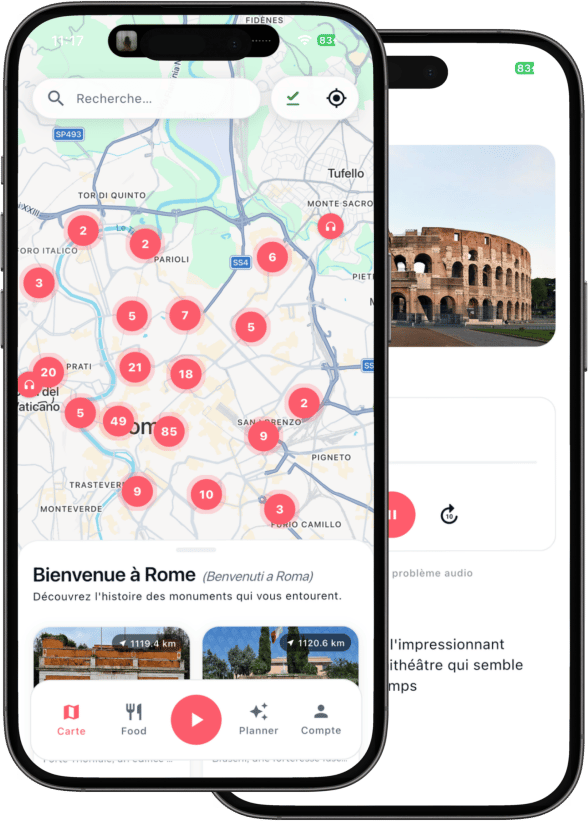
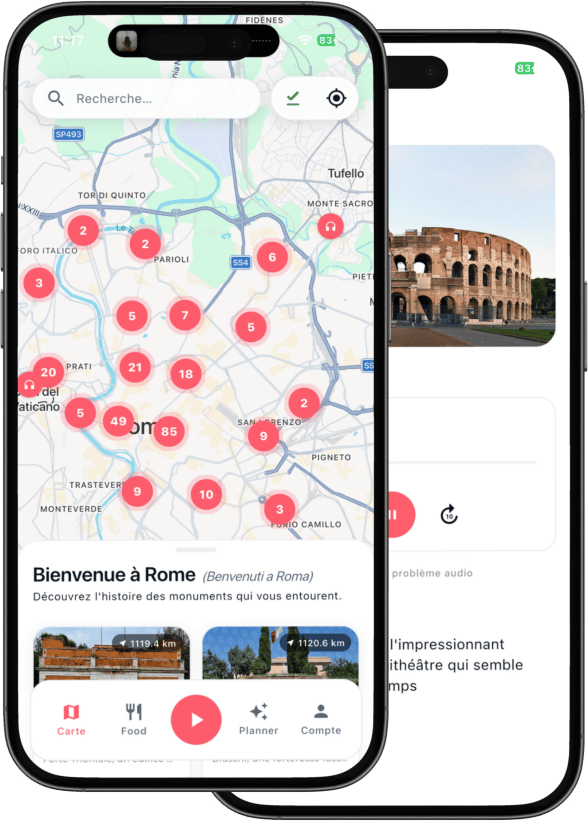
This is the step most people skip — and the one that makes all the difference. You have several options: a paper guide (effective, but you read it head down, hands full), home prep (notes, videos), or the solution independent travelers have adopted in recent years: the geolocated audio guide, which detects where you are and starts the story of a place the moment you arrive — hands and eyes free, across Istanbul.
3. Pick the right moment and avoid the traps
Arrive early at the big sites (before the groups and before the heat), cover your shoulders and knees to enter the mosques — and women should bring a scarf for their head. Be wary of overly helpful touts near the monuments: carpet shops and restaurants "recommended by a friend" often hide a scam. Favor spring or autumn, when the heat eases off and so do the crowds.
Paper guide, mobile app, or audio guide: which to choose?
On paper, all three look equal. In the streets of Istanbul, the experience is very different.
The paper guide
Thorough, but you read it standing up, head down, hands full. You drop your eyes to the pages instead of looking at the city — and you forget it by that evening.
The "classic" audio app
It forces a fixed route to be followed in order. The frequent result: you end up disoriented in the maze of the Grand Bazaar, you retrace your steps, and you feel you've missed half of it.
The geolocated audio guide
The story triggers on its own right where you are: impossible to get lost or miss the order. And it's no robot — a real story, with the anecdotes and secrets no sign ever tells. You look up at Istanbul, not at a screen, even offline. That's CityGuide's approach.
A typical day in Istanbul without a guide
An example of a walking itinerary, to adapt to your wishes — each stop tells its own story if you have an audio guide that triggers as you walk.
Sultanahmet: Hagia Sophia, the Blue Mosque, and the Basilica Cistern, all a few minutes' walk apart. This is where the domes come back to life: Byzantium, emperors, and sultans. Arrive early to beat the lines and the heat.
Topkapı in late morning, then lunch in the lanes toward Eminönü — a balık ekmek (fish sandwich) by the Bosphorus, the way locals do it.
The Spice Bazaar, then the Grand Bazaar: you wander the labyrinth as the mood takes you, each lane with its trade and its story. Save some energy to haggle over tea or Turkish delight.
Cross the Galata Bridge, climb the tower for sunset over the Golden Horn and both shores. The day's last story before dinner.
— Questions fréquentes
Visiting Istanbul without a guide: your questions
Yes, absolutely. Millions of travelers visit Istanbul independently every year. You gain total freedom — your itinerary, your pace, your budget. The one thing to plan for: having a bit of context to understand what you're looking at, otherwise the Byzantine and Ottoman layers stay silent.
Not necessarily. A good audio guide like CityGuide downloads before you leave and then works 100% offline — without touching your data plan or paying roaming in Turkey. GPS is enough.
That's the difference with a geolocated audio guide: instead of forcing a fixed route to follow in order, it detects where you are and starts the right story in the right place. Even in the maze of the Grand Bazaar, you walk however you like, and you can't miss the order or end up disoriented.
Not if you equip yourself a little. A well-made audio guide tells you the stories and anecdotes a guide would give — except you keep it forever and replay it whenever you want. You gain the freedom on top.
Hagia Sophia, the Blue Mosque, Topkapı Palace, the Basilica Cistern, the Grand Bazaar and the Spice Bazaar, the Galata Tower, and of course a crossing of the Bosphorus between Europe and Asia. But Istanbul is also lived in its lesser-known neighborhoods, on both shores.
Spring (April–May) and autumn (September–October): mild weather, thinner crowds, and bearable heat, far from the heavy, humid summer. And whatever the season, arrive early at the big sites to avoid the lines — and bring something to cover up for the mosques.
— Pour aller plus loin
The audio guide that tells you Istanbul as you walk
CityGuide turns your phone into a personal audio guide: you walk, and the precise moment you arrive in front of a monument, a voice begins — a real story, with the anecdotes and secrets no sign ever tells. And it's more than an audio guide: ready-made walks to follow, the best spots to eat like a local, an itinerary planner. Hundreds of places in Istanbul, on both shores and even offline — enough to explore the city from A to Z, without ever staying clueless.
Discover the Istanbul audio guide