

Independent Visitor Guide
Free St Mark's Basilica Audio Guide: Full Written Tour
Everything you need to know about Venice's Byzantine marvel. Read our complete written guide for free and listen to an audio sample before your visit.
Antoine from CityGuide · September 8, 2026 · 7 min

You are probably looking for a free audio guide to explore St Mark's Basilica in Venice. To be completely transparent, no full official audio recording is available for free, neither on-site nor in our app. Our CityGuide app offers a complete paid tour for the entire city, with automatic playback.
However, we provide the entire written commentary here completely free of charge. You can read it at your own pace before the gilded interior or on St Mark's Square, and listen to a short twenty-second audio sample to hear our guides' voices.
Listen to an Audio Sample
Play this short twenty-second sample to discover our guide's voice and tone. The full audio commentary for the entire city is included in our paid app.
Play a sample
Venice > St Mark's Basilica > Free Audio Guide
20-second sample. The full city audio guide is paid.
What Is Free and What Is Paid at St Mark's Basilica
To plan your visit without any surprises, here is a clear summary of what is free to access and what requires a paid ticket.
Free
Full guide text on this page
You can read our full historical commentary for free before or during your visit.
Free
20-second audio sample
Listening to the audio sample on this page is free so you can test our production quality.
Paid
Basilica entry, Pala d'Oro, and museum
Admission to the interior requires a paid ticket, with additional fees for special areas.
Free
St Mark's Square, Piazzetta, and facade
Admiring the facade, crossing the square, and viewing the campanile from below are free.
The Complete Monument Commentary to Read on Site
Here is the full commentary you would hear with a private guide. Take your time to read these six stops in front of the monument.
1. What You See Before You
Before you stands a monument unique in the world, a fascinating blend of East and West. You are looking at the western facade of St Mark's Basilica, consecrated in the eleventh century to house the relics of the Evangelist. Look at its five large round-arched portals topped with pointed arches and rounded domes that immediately evoke Constantinople. Every square meter outside overflows with mismatched columns, precious marbles, carved bas-reliefs, and glittering mosaics. All this ornamentation was imported by Venetian sailors over the centuries. Merchants and captains of the Republic were under strict obligation to bring back a precious offering after every maritime expedition to the eastern Mediterranean. Right above the central portal, admire the copies of the four famous bronze horses watching over the square. Look up at the Gothic pinnacles added later on. This cathedral was not designed as a simple parish church: it was the private chapel of the doges and an overwhelming showcase of Venice's merchant power.
2. The Construction and Interior Gold
When you step through the portal, the atmosphere changes drastically. Your eyes need a moment to adjust to the dimness before the light hits thousands of square meters of gold-ground mosaics. These golden tesserae cover the vaults, the domes, and every single corner of the ceiling. They were laid at a very precise angle to catch the flickering candlelight and make the space shimmer. The floor plan follows the Byzantine Greek cross, topped by five majestic domes. Here, artists illustrated the entire sacred history, from Genesis to the Last Judgment, along with the life of Saint Mark. Lower your gaze to the floor for a moment. You are walking on an undulating marble pavement, warped by centuries of acque alte and ground subsidence. These intricate geometric patterns combine fragments of red porphyry, green serpentine, and antique marbles. Each slab tells the story of the insolent wealth of a maritime empire capable of adorning a religious building from floor to ceiling like a colossal, glittering reliquary.
3. A Defining Episode: The Theft of the Relics
The very existence of this basilica rests on an extraordinary act of daring that occurred in 828. Two Venetian merchants, Rustico da Torcello and Buono da Malamocco, were in Alexandria, Egypt. They decided to steal the remains of Saint Mark to offer them to their city. To evade the vigilance of Muslim customs officers searching the ship, they concealed the body under pork cuts and cabbage leaves. The guards recoiled in disgust, and the precious cargo was able to set sail without trouble. The other major turning point in the monument's history took place in 1204, during the Fourth Crusade. Led by Doge Enrico Dandolo, the Venetians methodically sacked Constantinople. They brought back priceless loot to Venice: alabaster columns, precious enamels, icons, and above all, the four antique gilded bronze horses. St Mark's Basilica then became the visible treasury of spoils seized from the Byzantine Empire, strengthening the political and spiritual legend of the Serenissima.
The full Venice audio guide
The commentary on this page is part of the CityGuide audio guide, which starts by itself in front of every place in the city.
Full audio guide
$21.90 $39.90
★ 4.8/5 · 15 reviews
30-day money-back guarantee
4. A Detail Nobody Notices
Take the time to closely observe the hundreds of columns supporting the facade and the exterior galleries. If you look carefully, not a single one is perfectly identical to its neighbor. Some are made of veined white marble, others of grey granite, and still others of purple Egyptian porphyry. The capitals are Corinthian, Byzantine, or composite. Why such visual anarchy in such a prestigious monument? Because Venice literally plundered antique ruins and Byzantine palaces to assemble its sanctuary. These columns are what are known as spolia—reused architectural elements brought back as war trophies. Venetian architects did not seek classical symmetry. They assembled these pieces of history like a majestic puzzle to proudly display their military and commercial triumphs. Even at the southern corner of the facade, look at the sculpted porphyry relief depicting four embracing Roman emperors: it is another treasure carved out of Constantinople and grafted directly onto the Venetian masonry without the slightest aesthetic hesitation.
5. The Dark Side: High Tides and Plunder
Behind this golden splendor lies a constant struggle against destruction. The basilica rests on a forest of wooden piles driven into the lagoon mud. Saltwater insidiously seeps into the bricks through capillary action, eating away at the mortar and shattering the precious marbles. During acqua alta events, water regularly enters the narthex, the entrance vestibule, directly threatening the floor mosaics. The Venetians recently had to design an intricate system of transparent glass barriers to protect the entrance. Yet St Mark's Basilica has also endured the ravages of human history. In 1797, when Napoleon Bonaparte's troops brought an end to the Venetian Republic, the French removed the famous bronze horses to install them in Paris, atop the Arc de Triomphe du Carrousel. Venice only reclaimed its horses after the fall of the Empire in 1815. Today, the originals are carefully sheltered inside the basilica's museum, while replicas brave the pollution on the outdoor loggia.
6. What Remains Today
St Mark's Basilica remains the ultimate symbol of Venetian identity, drawing travelers from all over the world. Long reserved for state ceremonies and the doges, it only became the official cathedral of Venice at the beginning of the nineteenth century, succeeding San Pietro di Castello. Today, to preserve this fragile sanctuary, entry conditions have changed. Access to the nave now requires a modest entrance fee, and separate tickets grant entry to the Pala d'Oro—a masterpiece of goldsmithing studded with thousands of precious gems—as well as the museum and its panoramic terrace view. Yet the magic still takes hold the moment light streams through the high windows. As you step out onto the square, take a few minutes to step back. Look at the campanile soaring toward the sky and the Piazzetta opening out onto the waters of St Mark's Basin. You then realize that this monument is not just a church, but the flamboyant testament to a maritime republic that defied the world.
Three Options for Visiting with Commentary
Visiting the basilica without commentary means missing out on the essentials. Here are the three options available to you.
The Official On-Site Audio Guide
Available for rent on-site or online with your ticket. Convenient if you only want to visit the inside of St Mark's Basilica, but it is confined to the building's walls and requires returning the device or using a dedicated connection.
Online Videos and Articles
You will find free videos and blogs before you go. This provides good background research to prepare your trip, but it is hard to use while gazing up at the mosaics amid the crowds.
The CityGuide Venice App
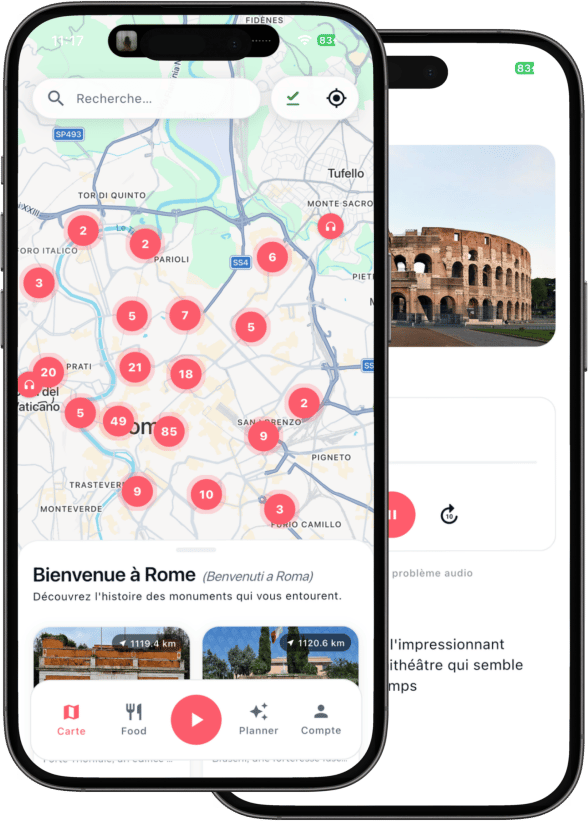
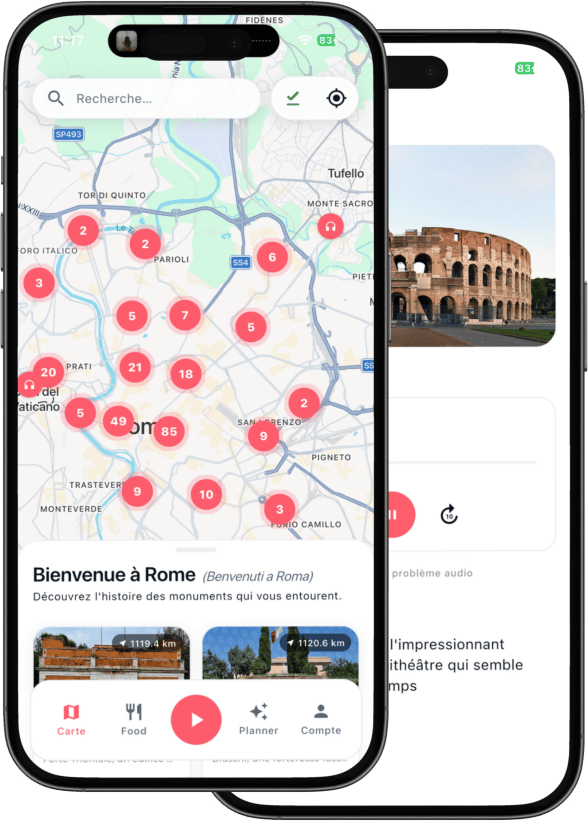
Our app turns your phone into a personal guide for the entire city. Audio commentaries trigger automatically as you walk. Paid yet comprehensive, it accompanies you at St Mark's Basilica and through every Venetian district.
Practical Tips for a Successful Visit
Prices and Reservations
Admission to the interior of St Mark's Basilica is now subject to an entry fee. Additional tickets are required for the Pala d'Oro, the museum, and the terrace. Check the official website for current prices. Be sure to book your time slot in advance to avoid hours of waiting in the square.
Strict Dress Code
St Mark's Basilica is an active place of worship where rules are strictly enforced. Your shoulders and knees must be covered. Tank tops, short shorts, and short skirts are turned away at the door by the staff without exception.
Bags and Luggage Policy
For security and conservation reasons, no large backpacks, suitcases, or bulky bags are allowed inside St Mark's Basilica. You must leave your luggage at the dedicated cloakroom located nearby before joining the line.
Opening Hours and Crowds
Opening hours vary depending on the season and Sunday religious services. Check the official website for current prices and exact daily hours. It is best to arrive early in the morning or in the late afternoon to enjoy relative peace.
— Frequently asked questions
Frequently Asked Questions About the Visit
No, there is no completely free audio guide for St Mark's Basilica, neither at the official ticket counter nor on our app. Beware of misleading claims. On our page, however, we offer the full guide text to read for free along with a twenty-second audio sample. If you want full audio guidance for all of Venice, our CityGuide app is paid.
No, admission to St Mark's Basilica now requires a small entry fee. Extra charges apply to see the Pala d'Oro, the museum, and the terrace of the horses. St Mark's Square and admiring the exterior facade remain entirely free.
The standard tour through the nave takes about fifteen to twenty minutes following the one-way route. If you add the museum, the outdoor terrace, and the Pala d'Oro, plan for forty-five minutes to an hour on site.
Photography and filming are strictly forbidden inside the nave to preserve prayerfulness and keep crowds moving. Attendants regularly enforce this rule. However, you are allowed to take photos from the museum's outdoor terrace.
The four bronze horses you see on the loggia of the exterior facade are replicas. The original antique sculptures brought back from Constantinople in 1204 are kept inside the museum of St Mark's Basilica, protected from pollution and the elements.
The best option is to book a skip-the-line ticket online with a reserved time slot via the official website. Arrive ten minutes before your designated time. Choose early morning slots right at opening for a calmer visit.
— Go further
Explore Venice Eyes Up with CityGuide
Don't spend your trip glued to a screen. Download our mobile app: audio commentary plays automatically as you wander through Venetian alleyways. Full paid tour available on smartphone.
Discover the CityGuide App