

— TRAVEL TIPS · VENICE
Things to do in Venice: the highlights and the right pace
Venice does not reward a checklist. The city is a maze of a hundred and eighteen islets joined by more than four hundred bridges, where GPS loses its mind and the shortest route does not exist. Getting lost is not a mishap here — it is the method.
Sophie Dorval, Italy specialist · September 5, 2026 · 9 min read

Venice is divided into six sestieri. San Marco holds the monuments and the crowd, Cannaregio and Castello keep a neighbourhood life, Dorsoduro gathers the museums, San Polo and Santa Croce hold the Rialto market.
Two full days cover the historic centre. Three let you add the lagoon islands — Murano, Burano, Torcello — which take half a day on their own.
The principle that changes everything: the crowd concentrates between ten and five, along the station–Rialto–San Marco axis. Five minutes off it, or an early start before eight, and the city is nearly empty.
What to know before you go
Since 2024 Venice charges day visitors an access fee on selected peak days. It does not apply if you stay overnight, but the dates are revised every year: check before you travel.
There are no cars, so there is no drop-off: from Piazzale Roma or the station, everything happens on foot or by vaporetto, suitcases included, bridges and steps included. Travel light.
Acqua alta mainly affects autumn and winter. The MOSE barriers now limit the major episodes, but walkways still go up on St Mark's Square a few days a year.
The highlights of Venice
What to see, with what makes each one interesting — and often far stranger than you would expect.
St Mark's Basilica
Eight thousand square metres of gold-ground mosaic, on a Greek-cross plan that comes from Constantinople rather than Rome. Much of the decoration is loot from the sack of 1204 — including the four bronze horses.
The Doge's Palace
The seat of a republic that lasted a thousand years. The Great Council chamber holds one of the largest canvases in the world, and the Bridge of Sighs leads to the prisons — which Casanova escaped from in 1756.
The Rialto bridge and market
The present stone bridge dates from 1591; the wooden ones before it collapsed. The fish market beside it has run for seven centuries and opens early — that is where Venice is still Venetian.
The Grand Canal by vaporetto
Line 1 runs its full length in forty minutes for the price of a ticket. Sitting at the front you pass two hundred palaces built on larch piles, façades turned to the water because that was the front door.
The Cannaregio Ghetto
The first ghetto in Europe, created in 1516. Barred from building outward, its residents built upward: these are the tallest buildings in Venice, and the word itself comes from the foundry that stood here.
Scuola Grande di San Rocco
Fifty-six Tintorettos, painted over twenty-three years, in the building they were made for. They lend you mirrors so you can study the ceilings without wrecking your neck. Very few visitors.
Dorsoduro and the Zattere
The museum sestiere — Accademia, Peggy Guggenheim collection, Santa Maria della Salute — and a south-facing quay opposite the Giudecca where Venetians walk in the sun.
Burano and Torcello
Burano for its painted houses, whose colours let fishermen find their own door in the fog. Torcello, five minutes further, was the lagoon's first city: twenty residents remain, and a seventh-century cathedral.
Beyond those: the Arsenale, which turned out a ship a day in the sixteenth century, the squeri where gondolas are still built by hand, and dozens of campi where nothing happens except neighbourhood life.
How to plan your days
Get up early, genuinely early
Between seven and nine St Mark's Square is nearly deserted and the Rialto belongs to the delivery men. It is the only window in which the city lets itself be looked at.
Get a vaporetto pass if you stay more than a day
Single rides are expensive and expire after seventy-five minutes. Past three or four trips, the day pass pays for itself.
Walk against the flow
The yellow 'per Rialto' and 'per San Marco' signs funnel everyone the same way. Take the next alley instead: you will arrive at the same place, having seen something else.
Book the basilica and the Doge's Palace
They are the only two places where the queue can cost an hour. Everything else — churches, scuole, local museums — can be improvised.
Understanding what you are looking at
Venice is a city of signs: a winged lion, a pointed window, a wellhead in the middle of a square each say something about a merchant republic that ruled the Mediterranean. Without a key, all of it stays merely decorative.
A paper guidebook
Awkward standing on a narrow bridge, and it requires knowing in advance what you are looking for — which does not work in a maze.
A guided tour
Effective on St Mark's and the Doge's Palace, but it never leaves the main axis, the very one that is saturated.
A location-aware audio guide
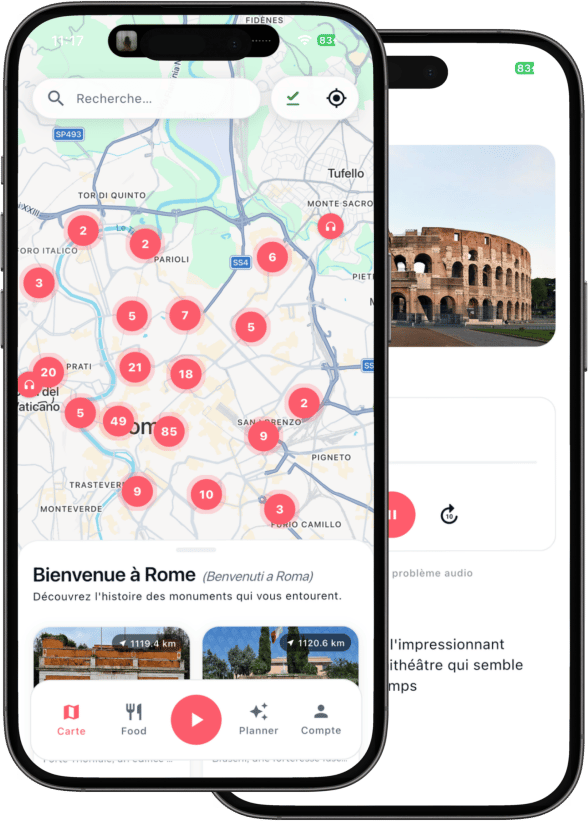
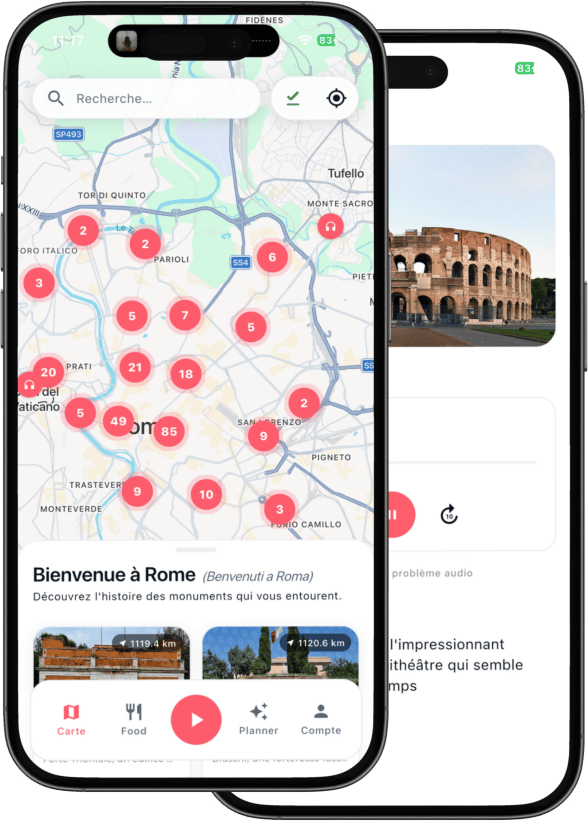
The commentary triggers by itself as you pass a church, a campo, a palace — including in the alleys you got lost in. Which is exactly what you want in a city where nobody follows a route.
What to do in Venice depending on how long you have
Three itineraries that build on each other, keeping the islands for last.
St Mark's and the Doge's Palace early, then the Grand Canal by vaporetto to the Rialto, lunch at the market, and the afternoon in Dorsoduro. Sunset on the Zattere.
Give the second day to Cannaregio and the Ghetto in the morning, Scuola Grande di San Rocco in the afternoon, then Castello and the Arsenale. That is where you will see Venetians.
A day in the lagoon: Murano for glass, Burano for colour, Torcello for silence. Allow two hours of vaporetto round trip — that is the real cost of the day.
The Lido, the one lagoon island with cars, with its beaches and Art Nouveau architecture. Or the Giudecca, five minutes away and largely ignored by visitors.
A giro d'ombra: bar to bar, a glass of wine and two cicchetti at each stop. It is the local ritual, and by far the cheapest way to eat in Venice.
— Questions fréquentes
Things to do in Venice: your questions
Two full days cover the historic centre. Three let you add the lagoon islands. One day is enough for St Mark's and the Rialto, but that is precisely the busiest route in the city.
An access fee has applied since 2024 to day visitors, only on selected peak days and on a calendar revised each year. Overnight guests are exempt but still have to register.
The fare is official and fixed, higher in the evening, for about thirty minutes shared between several passengers. Expensive as transport, reasonable as an experience. The traghetto, which crosses the Grand Canal for a couple of euros, is an honest taste of it.
Three levers: start before eight, step off the station–Rialto–San Marco axis, and favour Cannaregio and Castello. The difference between a main alley and the next one along is spectacular.
Yes, and it is arguably the best season: low light, mist on the lagoon, monuments with no queue. Expect damp, and check the acqua alta forecast, which is published daily.
Mestre is considerably cheaper but adds two journeys a day and costs you the two best moments — early morning and after the day trippers leave. A night in the city changes the whole trip.
— Pour aller plus loin
The audio guide that tells you Venice as you walk
CityGuide starts the commentary on its own at every church, campo and palace — including when you are lost in the alleys, which happens constantly here. It all works offline, and one purchase covers everyone travelling with you.
See the Venice audio guide