

— TRAVEL TIPS · DUBLIN
Visiting Dublin on your own: the practical guide
Dublin is a city you walk and listen to. The centre fits into two kilometres, the great national museums are free, and most of what makes the place — the music, the pubs, the talk — cannot be booked.
Sophie Dorval, Ireland specialist · September 8, 2026 · 8 min read

Dublin is organised around the Liffey: to the south, Trinity College, Grafton Street and the Georgian squares; to the north, O'Connell Street, the General Post Office and the modern art museums.
Two bookings genuinely bind: the Book of Kells at Trinity College, and above all Kilmainham Gaol, which sells out weeks ahead and can only be seen on a guided tour.
Everything else can be improvised, and much of it is free: the four national museums, the National Gallery, Phoenix Park, the Trinity courtyards. It is a capital where you can spend three days buying very few tickets.
What nobody tells you before you go alone
The national museums — archaeology, decorative arts, natural history — and the National Gallery are free, with no booking. It is the single most valuable fact of the trip, and it rarely leads the guidebooks.
Temple Bar is a nightlife district turned into a set: pints there easily cost double the street behind, for music played on a loop for visitors. The good music pubs are five minutes away.
Kilmainham can only be visited with a guide, on timed slots, and tickets go weeks ahead. It is the most important site for understanding Irish history, and the one thing you cannot improvise.
What to see, and how to approach each one alone
For each: what is free, what needs booking, and what the place does not tell you about itself.
Trinity College and the Book of Kells
The courtyards are open to walk through; the Book of Kells and the Long Room are ticketed, on timed slots. The manuscript dates from around 800 and is displayed open at two pages only, changed regularly — do not expect to leaf through it.
Kilmainham Gaol
Ticketed, guided tour compulsory, booking weeks ahead. The leaders of the 1916 Rising were executed here: this is where the swing of Irish opinion towards independence becomes comprehensible.
The National Museum of Archaeology
Free. It holds the bog bodies, preserved since the Iron Age, and the finest Celtic goldwork in Europe. Plenty of visitors walk past without going in.
The General Post Office, O'Connell Street
Free outside, ticketed museum inside. It was the insurgents' headquarters in 1916: the columns still carry bullet marks, and nobody will point them out to you.
St Patrick's Cathedral
Ticketed. Jonathan Swift, author of Gulliver's Travels, was its dean and is buried here. The adjoining park is free and one of the pleasantest in the centre.
The Guinness Storehouse
Ticketed, and expensive: book online, it costs considerably less than at the door. Seven floors that are as much brand experience as museum, with a pint and a full-circle view at the top.
Phoenix Park
Free. One of the largest enclosed urban parks in Europe, twice Central Park, with a herd of fallow deer roaming free since the seventeenth century. The Irish president's residence stands inside it.
The Georgian squares
Free. Merrion Square and Fitzwilliam Square line up brick façades with brightly coloured doors: the colour distinguished houses that a strict eighteenth-century planning code had made rigorously identical.
Beyond those: the Chester Beatty Library, free and remarkable, Dublin Castle, Christ Church, the Docklands and their contemporary architecture, and Howth or Dún Laoghaire at the end of the coastal DART line.
How to organise yourself, in practice
Book Kilmainham as soon as your dates are set
It is the only thing that plays out weeks in advance. If it is sold out, a few tickets are sometimes released on the morning itself on the official site.
Keep the free museums for the rain
It rains often and briefly. Hold the national museums and the National Gallery as a fallback: they are free, so stepping in for thirty minutes costs nothing.
Leave Temple Bar for the music
The most genuine sessions happen in neighbourhood pubs, usually free and unannounced. Look for music in the streets around, not on the square.
Guidebook, guided tour or audio guide: what to choose on your own?
Dublin is a city where history left few visible traces: bullet marks on a column, a plaque, a street name. With no commentary you cross a pleasant Georgian centre without sensing any of what happened in it.
A paper guidebook
Useful for planning, awkward in a city where you walk a lot and the rain arrives without warning.
A guided tour
Dublin has excellent guides, particularly on literary and political history — but fixed times, in a group, and usually in English only.
A location-aware audio guide
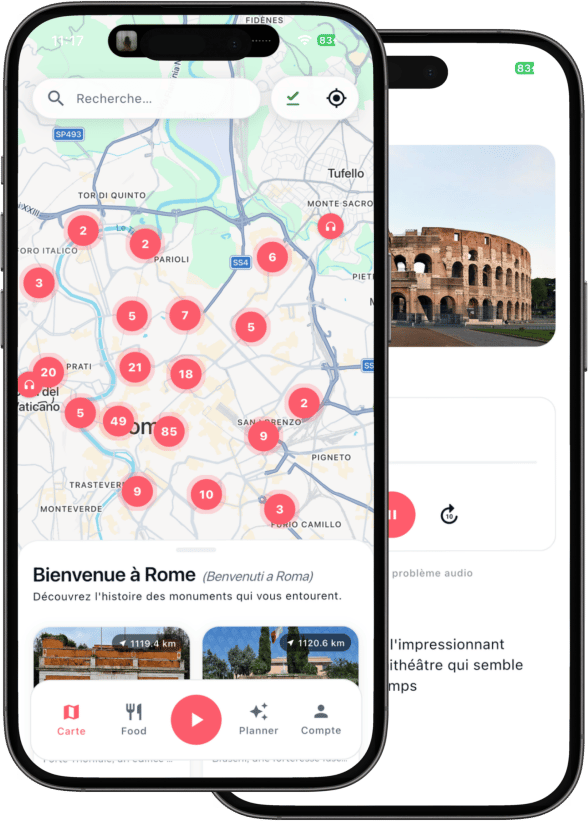
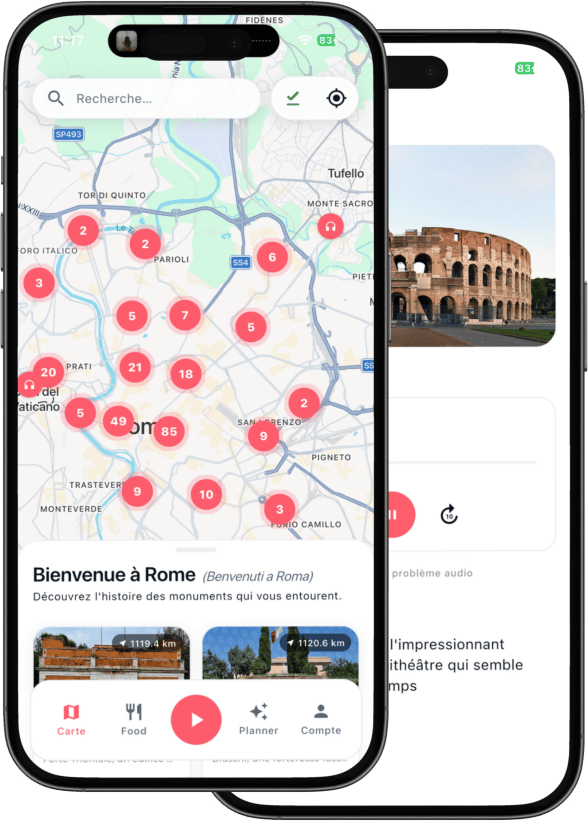
The commentary starts on its own at each monument, square and façade — including where there is only a plaque to read. It all works offline.
A typical day in Dublin, without a guide
An example route, entirely on foot.
The Book of Kells on your booked slot at opening, then the courtyards and out onto Grafton Street.
Archaeology and the National Gallery, five minutes apart and both free. An hour each is enough.
Bus or tram west for your booked slot. Allow an hour and a half for the visit, plus travel.
Back towards the centre, away from Temple Bar. Free live music in most neighbourhood pubs from around nine.
— Questions fréquentes
Visiting Dublin on your own: your questions
Two full days cover the centre and the major sites. Three allow Kilmainham without rushing and a coastal escape to Howth. Beyond that you leave the city for the Cliffs of Moher or Glendalough.
Yes, the four national museums and the National Gallery are, with no booking. Trinity College, Kilmainham, the Guinness Storehouse and the cathedrals are ticketed.
Absolutely, and as early as possible: the visit is guided, groups are limited, and slots go weeks ahead in high season.
The district is worth a walk by day for its architecture and lanes. In the evening prices are double and the music is played for visitors. The best sessions are elsewhere, five minutes away.
On foot for the centre, which is small. The Luas tram and the buses cover the rest with a Leap card, cheaper than paying per journey. The DART train runs along the coast to Howth and Dún Laoghaire.
May-June and September: long days, mild temperatures, less rain than in winter. St Patrick's Day, 17 March, turns the city into a festival but sends hotel prices through the roof.
— Pour aller plus loin
The audio guide that tells you Dublin as you walk
CityGuide turns your phone into a personal guide: you walk, and the commentary starts on its own at each monument, square and façade — including where only a plaque remains. It all works offline, and one purchase covers everyone travelling with you.
See the Dublin audio guide