

Audio Guide & Tour
Free Alcázar of Seville Audio Guide: Read the Full Commentary
Looking for an audio guide to visit the Alcázar of Seville without breaking the bank? Here is the full text of the historical tour to read for free, complete with a short audio sample and all our practical tips.
Antoine from CityGuide · September 8, 2026 · 7 min read

The Alcázar of Seville is undoubtedly one of Spain's most fascinating landmarks. Still an active royal residence, this palace is a masterpiece of Mudéjar architecture where Islamic and Christian influences interweave with rare elegance. To truly appreciate its intricacies, a detailed commentary is essential.
On this page, we provide you with the full text a private guide would share before the monument, completely free of charge, along with a twenty-second audio sample to sample our voice. The full city audio guide in our app is paid, but here, reading is entirely free with no surprises.
Listen to a Sample of Our Voice
Get a twenty-second taste of our audio guide's tone. You'll quickly see why our listeners prefer an engaging story over a dry list of dates.
Play a sample
Seville > Alcázar of Seville > Free Audio Guide
20-second sample. The full city audio guide is paid.
What is Free and What is Paid
To avoid unpleasant surprises before your trip to Seville, here is a clear breakdown of what costs nothing and what requires payment.
Free
Full guide text on this page
You can read our entire historical commentary without spending a single penny.
Free
Sample audio demo
The twenty-second audio preview is accessible directly on this website.
Paid
Official ticket and palace audio guide
General admission and the audio device rented on site are paid; check current prices on the official website.
Paid
Full Seville audio guide in the app
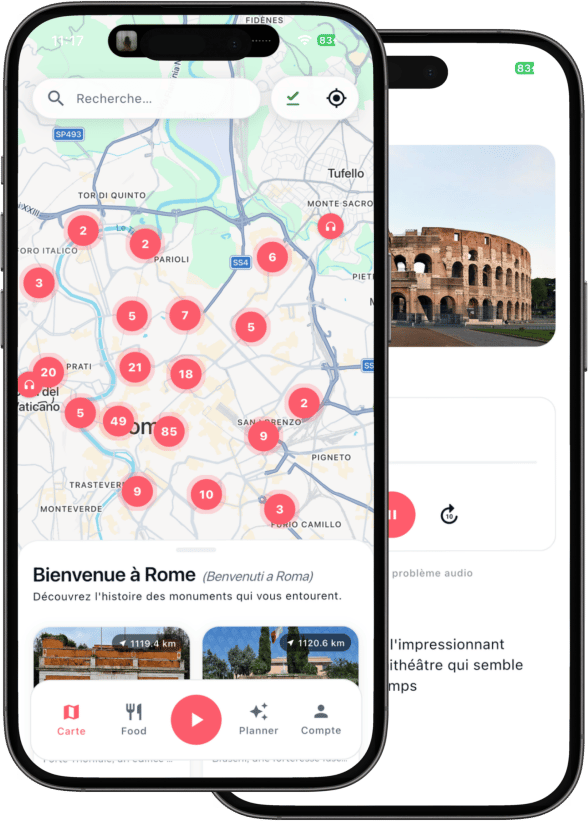
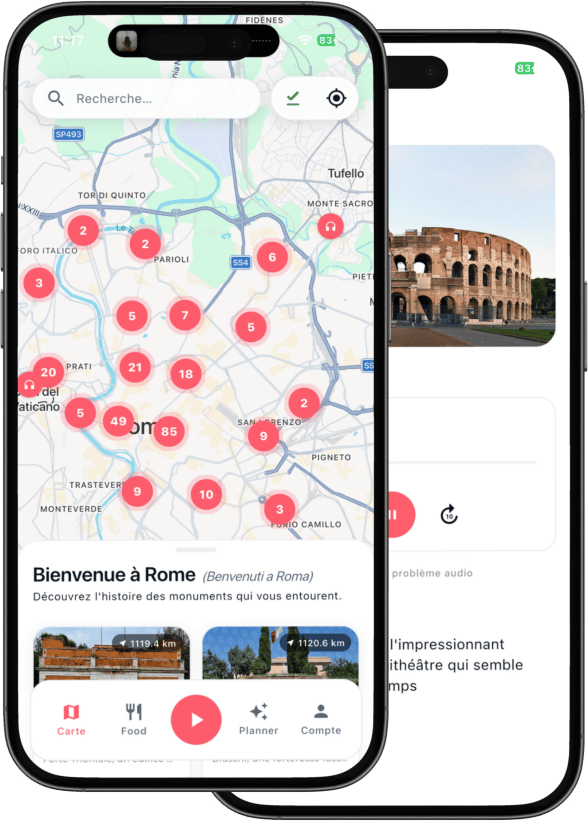
The mobile app featuring GPS guidance and all city itineraries requires purchase.
The Full Monument Commentary to Read on Site
Stand before the ramparts or find a spot in a shady courtyard and read this story step by step.
1. What lies before your eyes
As you pass through the Puerta del León, you step into a place unique in the world. Rising before you is the oldest royal palace still in use in Europe. The Spanish royal family still stays here during their visits to Seville. But before becoming a Spanish royal residence, this site served as a Muslim fortress dating back to the tenth century. You will discover an impressive succession of inner courtyards, delicately carved galleries, and rooms with dizzying ceilings. The walls combine bare brick, lace-like carved stucco, and azulejo tiles shimmering with metallic glints. Water trickles gently through marble channels, offering welcome coolness under the Andalusian sun. You are not simply standing in a fortified castle, but in a complete palatine city, designed to awe foreign ambassadors and shield monarchs from urban uprisings. Take time to notice the extraordinary light filtering through the mashrabiya lattices, casting geometric shadows across the floors.
2. Mudéjar construction and cross-cultural fusion
This palace is the absolute masterpiece of Mudéjar art, a fascinating architectural style born from the encounter between two worlds. Following the Christian reconquest of Seville, King Peter I—known as 'the Cruel' or 'the Just'—decided to rebuild the palace in the mid-fourteenth century. Instead of imposing a European Gothic style, he summoned the finest Muslim artisans from Granada and Toledo. These master builders brought their centuries-old craftsmanship: geometric plaster carving, cedarwood marquetry, and the symmetrical layout of interior courtyards. They worked side by side with Christian builders. The result is an extraordinary fusion where Islamic polylobed arches stand alongside Castilian coats of arms. This is not a mere replica of the Alhambra; it is a political and aesthetic reinvention. Peter I sought to assert his royal authority while appropriating the refined prestige of the caliphs of Al-Andalus. This stylistic alliance has weathered earthquakes and successive Renaissance fashions.
3. The Courtyard of the Maidens and the Ambassadors' Hall
Venturing deeper into the heart of the palace, you reach the Patio de las Doncellas, the Courtyard of the Maidens. Look at this flawless rectangle bordered by delicate arches, with its sunken central pool framed by lower gardens. This was the nerve center of official court life. Right beside it opens the centerpiece of the complex: the Ambassadors' Hall. Look straight up. You are gazing at a gilded wooden dome that is utterly breathtaking, sculpted into a hemisphere to represent the heavenly vault and the entire universe. Crafted in 1427 by Mudéjar artisans, it sparkles in the natural light. It was in this solemn chamber that the king received foreign envoys to proclaim his supreme power. The wrought-iron balconies added later remind us that power continued to evolve here without ever erasing the original beauty of the space. The acoustics are astonishing, engineered to amplify the sovereign's voice.
The full Seville audio guide
The commentary on this page is part of the CityGuide audio guide, which starts by itself in front of every place in the city.
Full audio guide
$21.90 $39.90
★ 4.8/5 · 15 reviews
30-day money-back guarantee
4. A detail that no one notices
Pause for a moment along the walls of the Ambassadors' Hall and take a very close look at the plaster friezes. Many visitors walk right past without realizing: the calligraphic Arabic inscriptions adorning the walls are not mere decorative motifs. If you decipher them, you will find the phrase 'Wa la ghaliba illa Allah'—meaning 'There is no victor but God'—the motto of the Nasrid emirs of Granada. Yet, this palace was commissioned and funded by a Catholic Castilian monarch. Peter I deliberately preserved these Arabic praises throughout his own state apartments. Some historians see this as a personal fascination with Islamic culture, while others view it as a clever diplomatic move to charm his southern Muslim allies. Notice too the tiny faces and lions hidden within the lace-like stucco—distinctly Christian touches blended seamlessly into traditional arabesques, creating a visual dialogue unique in the world.
5. The dark side of the court
Beneath this splendor lies a blood-soaked history marked by paranoia and conspiracy. Peter I truly lived up to his epithet 'the Cruel' among the local nobility. It was in these very galleries that he had his half-brother Fadrique murdered, despite him coming to pledge his loyalty, leaving bloodstains that tour guides once loved to point out to curious travelers. The king lived in perpetual dread of betrayal by his own family. His beloved mistress, María de Padilla, wielded considerable influence over his decisions. She gave her name to the famous subterranean baths, a vaulted haven of peace of Almohad origin where she sought silence and cool air. Legend has it that courtiers would drink her bathwater to prove their blind devotion to the monarch. This endless tension between romantic passion, political brutality, and artistic refinement lends every corner of the Alcázar of Seville an unforgettable dramatic depth.
6. The gardens and life today
To round off your visit, escape into the gardens—a true green oasis spanning several hectares. Designed during the Muslim era to sustain inhabitants and perfume the air, they now blend Renaissance terraces, bitter orange trees, centuries-old palms, and murmuring fountains. Water is everywhere, channeled through ancient Roman aqueducts that were later restored. You can still hear the cries of peacocks roaming freely along the Grotesque Gallery. This remarkable site is by no means a museum frozen in time. Whenever the King of Spain visits Seville, the upper floor of the Alcázar of Seville is reserved for his use, and entire areas are cordoned off for royal security. Strolling along these shaded paths, you realize you are walking the same ground as emirs, Catholic monarchs, and explorers who set sail to conquer the New World. A historical continuum spanning over a millennium that commands deep respect.
Three Ways to Listen to a Commentary at the Alcázar of Seville
Each option has its strengths depending on your travel style and budget.
The official on-site audio guide
Available at the palace entrance for an additional fee on top of admission, offered as a physical device or a dedicated app. It is very thorough and comprehensive, though the narration remains formal and linear. Check prices on the official website.
Online videos and podcasts
Online, you'll find videos and a few free audio summaries. Handy for trip planning from your living room, but they drain your battery and mobile data without offering real-time guidance across the rooms.
CityGuide Seville
Our paid app guides you through the Alcázar of Seville and across the entire city. Audio tracks play automatically as you walk using GPS, delivering an engaging, friendly narrative without forcing you to stare at your screen.
Planning Your Visit to the Alcázar of Seville
Book well in advance
The Alcázar of Seville is one of Andalusia's most sought-after destinations. Booking online is strongly recommended, and virtually essential during peak season to avoid being turned away at the gates. Check the official website to secure your specific time slot.
Free admission time slots
Free entry slots are available late in the day on certain days of the week. Availability is very limited and they sell out in minutes. Check eligibility criteria and operating hours on the official website before planning your visit.
Freely accessible surroundings
If you couldn't secure an interior ticket, do not despair. The Patio de Banderas, Plaza del Triunfo, and the medieval lanes skirting the outer walls can be explored freely all year round.
How much time to allocate
Allow at least two hours to take in the highlights. If you wish to linger in the sprawling gardens and absorb the atmosphere without rushing, plan on spending an easy three hours on site.
— Frequently asked questions
Frequently Asked Questions About the Alcázar of Seville and Its Audio Guide
No. There is no comprehensive, high-quality audio guide provided for free, neither by the official monument nor by our app. On this page, however, we offer the full written commentary and a short audio preview. To access the full audio guide on your phone, our app is paid, as is the official handheld device rented at the entrance.
Yes, but only during very specific late-afternoon time slots on certain days of the week. These free tickets must be booked online in advance and go extremely fast. Schedules and terms must be checked on the official website.
Yes, online booking is strongly advised. On-site queues are often very long and daily visitor caps apply. Without a pre-purchased timed-entry ticket, you risk missing out on entry altogether.
You can stroll freely across Plaza del Triunfo, admire the outer battlements, and walk through the Patio de Banderas. This public courtyard offers splendid views of the Giralda and requires no entry ticket.
The Alhambra is an expansive, preserved Nasrid fortress, whereas the Alcázar of Seville is a Mudéjar palace commissioned by Christian monarchs who hired Muslim artisans. The Alcázar of Seville is also more compact and remains an active residence of the Spanish monarchy.
You download the app onto your smartphone. As you walk through Seville and around its monuments, your phone senses your location and triggers the relevant audio tracks automatically, so you never have to search for track numbers.
— Go further
Ready to Explore Seville Hands-Free?
Download the CityGuide app, pop in your earphones, and let audio guide you through the alleys of the Santa Cruz neighborhood and around Andalusia's greatest palaces.
Discover the CityGuide App