

Free walking tour
Free walking tour Budapest: the full route to do on your own (for free)
Discover Budapest’s must-sees on foot, following the real free walking tour route—no fees, no guide needed.
CityGuide.app · September 7, 2026 · 9 min read
 Free
Ozan Tabakoğlu · Pexels
Free
Ozan Tabakoğlu · Pexels
Free walking tour Budapest
- Duration
- 2h25
- Distance
- 6 km
- Difficulty
- Moderate
- Start
- Hungarian State Opera
- Finish
- Vienna Gate
- Best time
- Morning or late afternoon to avoid crowds and enjoy the Danube light.
no guide, no booking, no tipping
Want to explore Budapest like you’re on a free walking tour, but without a guide or tipping? This route follows the exact path of the most popular free walking tours, covering both Pest and Buda.
With the CityGuide app, you can also listen to each stop as audio, automatically triggered when you arrive.
The route
 1
Ozan Tabakoğlu · Pexels
1
Ozan Tabakoğlu · Pexels
1. Hungarian State Opera
In front of you stands Miklós Ybl’s neo-Renaissance masterpiece, opened in 1884. The Opera is famous for its exceptional acoustics, rivaling Vienna and Paris. Its facade features statues of Hungarian and European composers, including Liszt and Erkel. Inside, gilded and marble details make it one of the city’s gems. In 1886, Erkel’s "Bánk Bán" premiered here, now a national classic. A detail often missed: the exterior lampposts are topped with miniature busts. Even if you don’t go inside, check out the balconies and central relief.
- Access :
- Facade and exterior free, interior guided tours for a fee.
- Tip :
- Don’t let yourself be approached by hostess bar touts on Andrássy, especially in the evening.
Walking to the next stop : From the Hungarian State Opera, walk straight down Andrássy út to St. Stephen’s Basilica, about 7 minutes.
 2
Ozan Tabakoğlu · Pexels
2
Ozan Tabakoğlu · Pexels
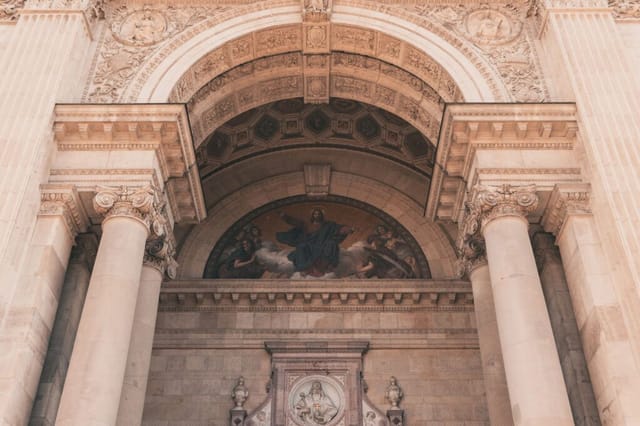
2. St. Stephen’s Basilica
You’re facing one of Budapest’s largest Catholic churches, named after Hungary’s first king, Stephen I, canonized in 1083. Its construction took over 50 years, from 1851 to 1905, and involved three architects after the original dome collapsed. The building blends neo-Renaissance and classical styles. Inside, you’ll find the mummified right hand of St. Stephen—a true national relic. Notice the dome, visible from nearly anywhere in the city, rising 96 meters high, a nod to 896, the year Hungary was founded by the Magyars. The main entrance is often lively with street musicians.
- Access :
- Exterior free, interior with ticket or donation.
- Tip :
- You’ll need a ticket or a donation to go inside, but you can admire the facade and square for free.
Walking to the next stop : From St. Stephen’s Basilica, take Zrínyi utca west to the Parliament, about a 10-minute walk.
 3
Margo Evardson · Unsplash
3
Margo Evardson · Unsplash
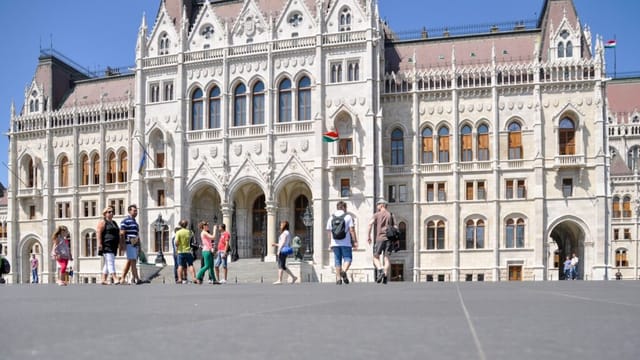
3. Parliament
The Hungarian Parliament is one of Europe’s largest: 268 meters long, 123 meters wide. Built between 1885 and 1904, mainly by Imre Steindl, its neo-Gothic style was inspired by Westminster. The massive central dome dominates Kossuth Square. The building houses Hungary’s Holy Crown, a symbol of monarchy. On the Danube side, each niche contains a statue of a king or historical figure. Look for the bullet holes on the north side, remnants of the 1956 uprisings. The inside tour is paid, but the square and exterior are a must-see.
- Access :
- Exterior and square free, interior visit for a fee.
- Tip :
- The square is huge and well-patrolled—watch for pickpockets in crowds.
Walking to the next stop : From the Parliament, walk south along the Danube to the Shoes on the Danube Bank, about 5 minutes.
This walk, narrated in your headphones
The CityGuide Budapest audio guide starts by itself at every stop. You walk, it tells the story.
Full audio guide
$21.90 $39.90
★ 4.8/5 · 15 reviews
30-day money-back guarantee
 4
J MAD · Pexels
4
J MAD · Pexels
4. Shoes on the Danube Bank
You’re at one of Budapest’s most moving memorials. Sixty pairs of cast-iron shoes, lined up along 40 meters of riverbank, recall the execution of Hungarian Jews by the Arrow Cross in 1944. Victims were forced to remove their shoes before being shot into the river. Created by Can Togay and sculptor Gyula Pauer in 2005, it’s a powerful Holocaust memorial in Budapest. Look for the quiet detail: fresh flowers and candles are often left by passersby and mourning families.
- Access :
- Open and free access at all times.
- Tip :
- Keep the memorial atmosphere respectful. Don’t climb on the sculpture.
Walking to the next stop : From the Shoes on the Danube Bank, continue along the river to the Széchenyi Chain Bridge, about 8 minutes.
 5
Gaye Kırkın · Pexels
5
Gaye Kırkın · Pexels
5. Széchenyi Chain Bridge
This was the first permanent bridge to link Buda and Pest, opened in 1849 and designed by English engineer William Tierney Clark. It’s named after Count István Széchenyi, Hungary’s great modernizer. The monumental lions at each end are by János Marschalkó. Destroyed in World War II, the bridge was rebuilt exactly as before in 1949. Fun detail: legend says the lions have no tongues, but they’re just hard to spot from some angles. The views over Parliament and the castle are spectacular.
- Access :
- Pedestrian access free, open 24/7.
- Tip :
- Watch for car traffic. Use the north-side pedestrian walkway for the best view.
Walking to the next stop : Cross the Széchenyi Chain Bridge and head up to Buda Castle—it’s an uphill walk of about 12 minutes.
 6
6
6. Buda Castle
Before you lies Hungary’s vast royal complex, built from the 14th century and rebuilt many times after sieges and wars. The current Baroque palace is mostly from the late 19th century under Franz Joseph I. It was home to Hungarian kings, then national museums. During the 1945 siege of Budapest, it was heavily damaged and partly restored. Don’t miss the equestrian statue of Prince Eugene of Savoy, who defended the city against the Ottomans—it stands at the main entrance.
- Access :
- Courtyards and exteriors free, museums for a fee.
- Tip :
- The courtyards and terraces are free, but museums and the National Gallery charge admission.
Walking to the next stop : From Buda Castle, head northwest to Matthias Church, about 10 minutes on foot.
7
7. Matthias Church
This iconic church was originally built in the 13th century and later remodeled by King Matthias Corvinus in the 15th century, who gave it his name. It hosted several royal coronations, including Franz Joseph and Elisabeth (Sissi) in 1867. Its colorful tiled roof is a unique landmark on the hill. The style is a mix of Gothic and neo-Gothic, after Frigyes Schulek’s restoration in the late 19th century. Look for the quirky gargoyles—often overlooked—depicting animals and grotesque figures.
- Access :
- Exterior free, interior for a fee.
- Tip :
- You need a ticket to go inside, but the facade and square are free to enjoy.
Walking to the next stop : From Matthias Church, walk straight ahead to Fisherman’s Bastion—it’s just next door, 2 minutes away.
This walk, narrated in your headphones
The CityGuide Budapest audio guide starts by itself at every stop. You walk, it tells the story.
Full audio guide
$21.90 $39.90
★ 4.8/5 · 15 reviews
30-day money-back guarantee
8
8. Fisherman’s Bastion
This panoramic terrace, built between 1895 and 1902, celebrates Hungary’s millennium. It’s named after the fishermen’s guild, who once defended this section of the medieval wall. Architect Schulek designed seven towers to symbolize the nation’s founding tribes. The views over the Danube, Parliament, and Pest are stunning, especially at sunset. Little-known detail: the equestrian statue of St. Stephen, Hungary’s first king, has stood here since 1906, surrounded by reliefs telling his story.
- Access :
- Lower terraces free, upper terraces for a fee.
- Tip :
- Lower terraces are free; only the upper terraces require a ticket.
Walking to the next stop : From Fisherman’s Bastion, take Fortuna utca north to the Koller Gallery, about 5 minutes.
 9
Befejezetlen · CC BY-SA 3.0 · Wikimedia Commons
9
Befejezetlen · CC BY-SA 3.0 · Wikimedia Commons
9. Koller Gallery
This private gallery, founded in 1980, occupies a baroque house typical of the castle district. It showcases works by classic and contemporary Hungarian artists, with a special focus on sculpture. There’s a small sculpture garden out back. A detail often missed: the sculptor Amerigo Tot, known for his works in Rome, lived here in the 1970s.
- Access :
- Exterior free, interior exhibition for a fee.
- Tip :
- There’s a fee to enter the gallery, but you can enjoy the facade and the area’s vibe for free.
Walking to the next stop : From the Koller Gallery, continue north along the same street to the Vienna Gate, about 6 minutes.
10
10. Vienna Gate
The Vienna Gate marks the old northern entrance to the castle district. Built in 1936 to mark Hungary’s millennium, it replaced a lost medieval gate. Caravans from Vienna once entered the city here. The current structure blends art deco and neo-medieval elements. Look up at the ceiling mosaics—they show the coats of arms of Hungary’s main cities, a subtle tribute to national unity.
- Access :
- Free access, day and night.
- Tip :
- A quiet, shady spot with perfect photo ops on the ramparts.
What next : You’ve reached the Vienna Gate, the northern entrance to Buda Castle district: from here, you can explore the ramparts or head back down to the city.
Free walking tour with a guide or solo: which is best in Budapest?
Not sure whether to join a guide or go solo? Here’s an honest comparison to help you decide.
Real cost
Guided free tour
Free, but tipping (usually €10-15 at the end) is expected.
The same route on your own
Completely free, no required spending.
Schedule & pace
Guided free tour
Fixed start time, pace set by the group.
The same route on your own
Go at your own pace, whenever you want, free breaks.
Language
Guided free tour
Tours in English or Spanish, rarely in French.
The same route on your own
Read or listen in French with CityGuide, your choice.
Group size
Guided free tour
Groups of 15 to 40, sometimes noisy.
The same route on your own
Solo or with friends—peace and quiet guaranteed.
Content depth
Guided free tour
Live anecdotes, direct Q&A.
The same route on your own
Reliable info at every stop, but no personal interaction.
Practical tips for your free walking tour in Budapest
Transport & access
All stops on this route are walkable or reachable by public transport. Watch out for unofficial taxis, especially at the airport: stick to recommended companies or trusted apps.
Safety & scams
Stay alert near Andrássy Avenue—some touts lure people to overpriced hostess bars. Keep an eye on your belongings in touristy spots.
CityGuide: your smart audio guide
With CityGuide, you can listen to each story on your phone, triggered automatically as you walk. Perfect for soaking up each place without missing the sights.
Budget
You don’t need to spend anything for this tour, except to enter some landmarks (basilica, museums, Matthias Church, etc.).
— Frequently asked questions
Frequently asked questions about the free walking tour Budapest
No, you can do it anytime, no reservation needed.
Yes, for the exteriors and main stops. Major interiors like the basilica or Matthias Church require a ticket.
About 2.5 to 3 hours, depending on your pace and photo stops.
Yes, the CityGuide app offers this route in audio, triggered automatically on site.
No, this route is 100% self-guided and free. No guide to tip.
— Go further
Set out to discover Budapest at your own pace
This route gives you the true free walking tour experience in Budapest, with no constraints or costs. Enjoy every stop, whether you’re solo, a couple, or with friends.
Download CityGuide for the full route and audio in your pocket!