

Visiting Piazza dei Miracoli
Free Leaning Tower of Pisa Audio Guide: The Full Story to Read
Want to understand why the Leaning Tower of Pisa leans without spending a penny? Read the full commentary on the world's most famous bell tower right here.
The CityGuide Team · September 8, 2026 · 7 min

When you arrive at Piazza dei Miracoli, the silhouette of the Leaning Tower of Pisa strikes you immediately. You expect it to lean, but the visual vertigo is still stunning. Yet, most visitors settle for an amusing photo on the lawn without ever uncovering the mystery of its survival.
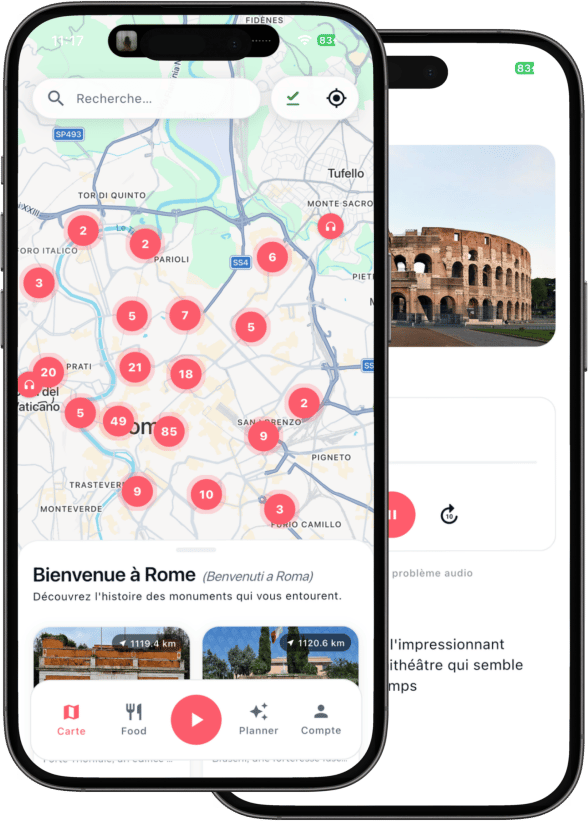
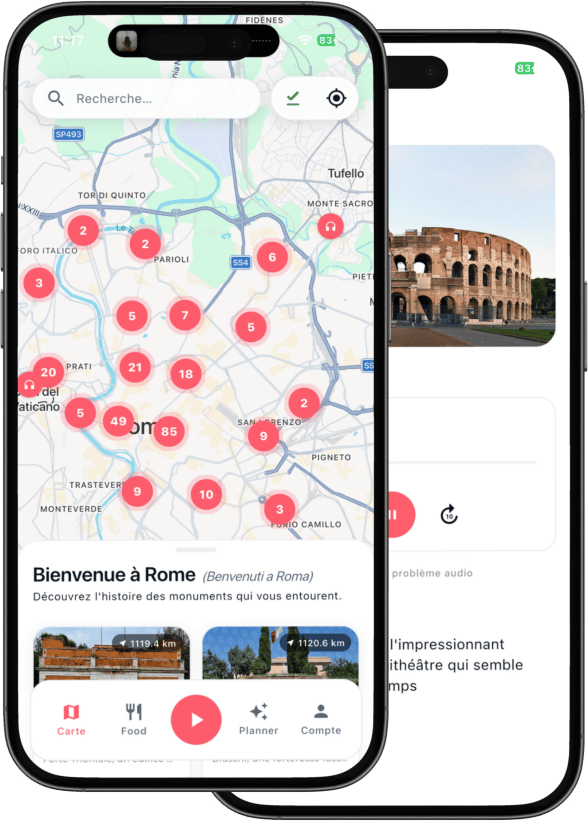
On this page, we provide you with the complete historical commentary of the monument to read for free, accompanied by a twenty-second audio sample. Our full audio guide app for the city of Pisa is paid, but this text already gives you all the essential keys.
Listen to a sample of our audio guide
Discover the voice and atmosphere of our tour with this free twenty-second audio sample. To listen to the full route through the streets of Pisa, our complete app is paid.
Play a sample
Home > Italy > Pisa > Leaning Tower of Pisa
20-second sample. The full city audio guide is paid.
What is free and what is paid at the Leaning Tower of Pisa
To avoid unpleasant surprises at the ticket offices, here is the exact access situation on Piazza dei Miracoli.
Free
Square access and exterior view
You can enter Piazza dei Miracoli freely, walk up to the bell tower, and take pictures from the lawn without paying.
Paid
Climbing to the top of the tower
Access to the interior steps requires a mandatory paid ticket with an advance time slot reservation.
Free
Full commentary on this page
The entire text of our historical guide and the short audio sample can be accessed here for free.
Paid
Complete Pisa audio guide app
The CityGuide app featuring automatic GPS triggering across the entire city of Pisa is paid.
The complete commentary of the monument
Stand before the campanile and dive into eight centuries of architectural boldness, engineering blunders, and miraculous rescues.
1. What lies before your eyes
You are standing before a masterpiece of white and grey marble rising nearly fifty-seven meters high. This monument is not an isolated building erected for military glory, but the campanile, meaning the freestanding bell tower of the Cathedral of Santa Maria Assunta located right next to it. Look closely at its cylindrical structure. It rises across eight distinct tiers, bordered by elegant arcades supported by carved columns in pure Pisan Romanesque style. At the top rests the bell chamber, added at a later stage. From the very first glance, your brain tries to correct the angle: the tower leans dramatically to the south. This precarious balance has defied the laws of gravity for centuries. Looking across the bright green lawn, you realize that this bell tower forms, together with the baptistery and the cathedral, a religious complex designed to assert the maritime power of the Republic of Pisa in the Middle Ages.
2. A construction cursed from the start
Work began in 1173 under the likely direction of architect Bonanno Pisano. At that time, the Tuscan city was flush with wealth from naval victories and eager to impress rivals like Florence and Genoa. But a major geological issue surfaced very quickly. Pisa's subsoil consists of river silt, loose sand, and waterlogged clay brought by nearby rivers. As early as 1178, when the masons had barely reached the third floor, the ground began to sink on the southern side. The foundations, ridiculously shallow at barely three meters deep, proved completely inadequate for such a mass of stone. Work came to an abrupt halt. In an ironic twist of history, the relentless wars pitting Pisa against its neighbors halted construction for almost a century. This forced hiatus paradoxically saved the monument, giving the marshy soil time to settle and slightly consolidate the building's footing.
3. The builders' desperate trick
In 1272, a new architect, Giovanni di Simone, resumed work with an idea as daring as it was risky to correct the alignment. Instead of demolishing what was tilting, he decided to compensate for the subsidence by building the upper stories slightly crooked. If you step back a few paces and observe the central axis carefully, you will see that the tower is not a straight tilted line, but a curve shaped like a banana. The builders carved taller blocks of marble on the southern side to shift the center of gravity toward the north. Unfortunately, this extra weight only worsened the sinking into the soft earth. Construction stopped once more in 1284 following Pisa's devastating naval defeat against Genoa at the Battle of Meloria. It was not until 1372 that Tommaso Pisano finally completed the bell chamber, sealing forever the building's peculiar silhouette.
The full Pisa audio guide
The commentary on this page is part of the CityGuide audio guide, which starts by itself in front of every place in the city.
Full audio guide
$21.90 $39.90
★ 4.8/5 · 15 reviews
30-day money-back guarantee
4. The detail no one notices
As you approach the base of the tower, cast your eyes on the bas-reliefs decorating the entrance portal on the ground floor. Most travelers look straight up to the sky, missing the medieval carvings of mythical beasts and interlaced patterns etched directly into the stone. Yet the most fascinating detail lies along the exterior columns of the lowest tier. Several column shafts were replaced over successive restorations with marble from different quarries, creating subtle shifts in color and texture beneath the Tuscan sun. Take a look at the entrance to the interior staircase as well. Due to the pronounced lean, the spiral marble steps are worn unevenly: the soles of guards and visitors have carved into the stone differently depending on whether they were climbing on the sunken side or the raised side, bearing witness to the strange physical exertion demanded by this tilt.
5. The threat of total collapse
Over the centuries, the bell tower continued to sink slowly, reaching a critical tilt of more than five degrees by the late twentieth century. In 1990, the imminent risk of collapse became so alarming that authorities decided to close the monument to the public for the first time in its modern history. An international committee of engineers and scientists was commissioned to save the campanile without straightening it completely, as no one wanted to erase its legendary charm. Several earlier attempts had turned into disasters, notably when an injection of liquid concrete caused a sudden lurch. The solution ultimately chosen was masterful: delicately removing soil from under the northern side using drilling tubes to coax the ground into subsiding in the right direction. Thanks to this meticulous work, the tower regained a safe tilt of around four degrees.
6. What remains today
Today, the Leaning Tower of Pisa stands proudly in the center of the immaculate lawn of Campo dei Miracoli, designated as a UNESCO World Heritage site. Electronic sensors installed at its base monitor it day and night, and specialists state that it is now stabilized for at least two to three centuries. Climbing its two hundred and ninety-four steps remains a disorienting sensory experience: your inner ear loses its bearings and your body sways from one wall to the other along the spiral ascent. Once at the top, the view over the city of Pisa, the Tuscan hills, and the Arno River more than rewards the effort. This imperfect tower, born of an engineering miscalculation and temperamental soil, has become a triumph of human perseverance against nature's unyielding laws. It proves that even a geological flaw can give birth to an immortal masterpiece.
How to listen to an audio guide at the Leaning Tower of Pisa?
Several options are available for visiting the campanile with historical commentary.
The official on-site audio guide
Available at the ticket desks or through the site's app, it offers detailed commentary on the interior of the monuments but remains tied to a fixed time slot and costs extra.
Online videos and virtual tours
Plenty of free content is available online to prepare your visit, but it forces you to keep your eyes glued to a screen instead of admiring the facades.
The CityGuide mobile app
Our app triggers automatically through your headphones as you walk around Pisa. The full city itinerary is paid, offering complete independence.
Practical tips to prepare your visit
Reservations and time slots
To climb the tower, booking your ticket in advance is essential. The number of visitors allowed inside at any one time is strictly capped for safety reasons.
Age restrictions and safety
A strict minimum age is enforced for climbing the tower steps. Very young children are not allowed to go up. Make sure to check this rule on the official website before booking.
Access to other monuments
The cathedral, baptistery, and Camposanto require paid admission or collecting a pass depending on the season. Check the official portal for exact details.
Official prices and opening hours
Rates and opening hours change regularly depending on combined ticket packages. No prices are invented here: consult the official website for current pricing.
— Frequently asked questions
Frequently asked questions about visiting the Leaning Tower of Pisa
No, there is no official full audio guide available for free download. On this page, however, we offer you the complete historical commentary to read for free along with a twenty-second audio sample.
Yes, access to Piazza dei Miracoli is completely free. You can walk up to the campanile, admire the carved details on the ground floor, and take photos without spending a cent.
Yes, entering the bell tower to climb to the top requires a paid ticket. Check the official Opera della Primaziale Pisana website for the current price.
The tower leans because it was built on soft alluvial soil made of silt, sand, and clay, with foundations barely three meters deep that gave way under its weight.
No, authorities enforce a strict minimum age limit to climb the steep steps of the tower. This rule ensures visitor safety inside a narrow and tilted staircase.
Allow around thirty minutes if you only want to admire the facades from the free lawn, and about two hours if you plan to climb the tower and visit the cathedral.
— Go further
Discover Pisa with our complete audio guide
Don't stop at the leaning tower. Our complete audio guide triggers automatically in your ears to tell the story of the entire city of Pisa on foot. Download the paid app to start your tour.
Discover the Pisa audio guide