

— TRAVEL TIPS · DUBAI
How to visit Dubai without a guide (and miss nothing)?
You want to explore Dubai on your own terms, at your own pace, without paying for a guided tour or shuffling along behind a group. Good news: not only is it possible, it's often the best way to discover the city of superlatives — with one condition.
Sophie Dorval, Gulf specialist · June 23, 2026 · 8 min read
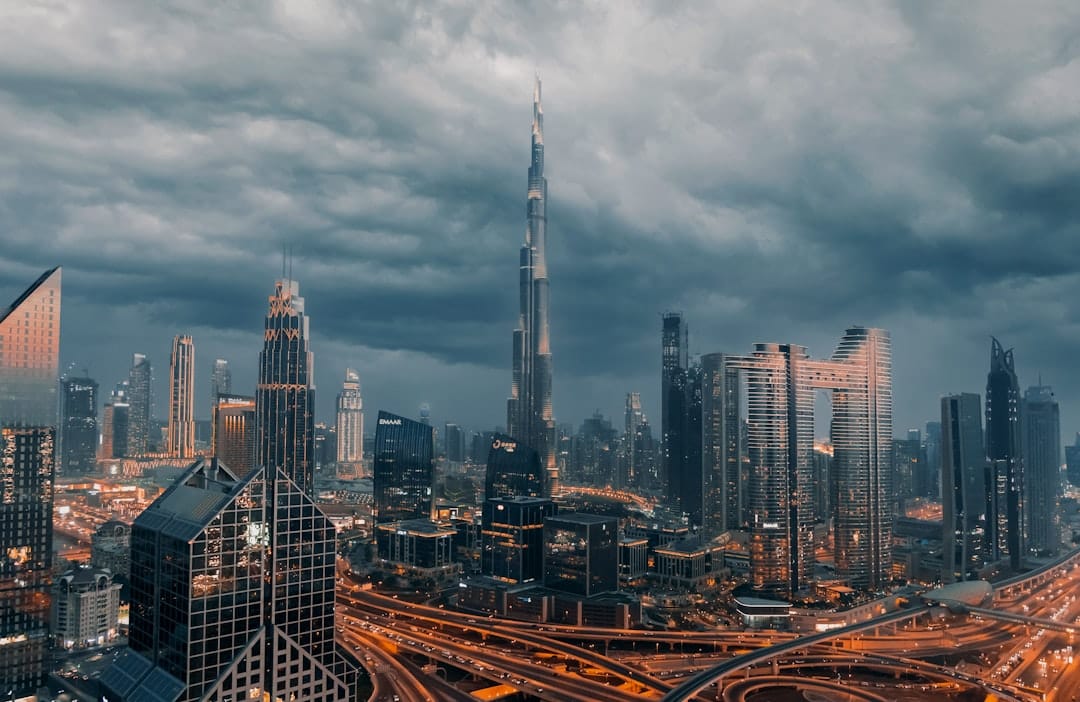
Let's settle it right away: yes, you can absolutely visit Dubai without a guide. Millions of travelers do it every year, and gain something no organized tour can offer — total freedom. Your itinerary. Your pace. Your budget. The right to linger an hour in front of a glass tower or hop on an abra across the creek whenever the mood strikes.
The only mistake to avoid is setting off completely blind. Because Dubai, without any context, can quickly boil down to very handsome façades whose story you don't understand. And that would be a shame: it's precisely that story — a village of pearl divers turned megacity in a single generation — that turns a walk into a journey.
The right approach fits in one sentence: stay free, but don't stay clueless. Here's how.
What nobody tells you about Dubai "with nothing"
Standing before the Burj Khalifa, an unprepared traveler sees… a very tall tower. That's the classic trap: you photograph the sheer scale without understanding what lies behind it. Yet barely two generations ago, there was nothing here but sand, a creek and pearl divers.
There's a reason for that: Dubai went from a modest pearl-diving port to the most spectacular city in the Gulf in just a few decades. Without a key to read it, you miss the contrast that gives the city all its flavor — old Dubai with its creek and souks on one side, the skyscrapers and man-made islands on the other. The signs on site are rare, and never tell you about the engineering feat or the past that makes this leap forward so dizzying.
Visiting without a guide doesn't mean "visiting with nothing." It means giving yourself the right tools to understand — while keeping your freedom.
Dubai's must-sees (and why you need to understand them)
Here are the places not to miss. But remember one thing: in front of each, what changes everything isn't seeing it — it's knowing what you're looking at.
The Burj Khalifa
From afar, a spire of glass. With its story: 828 meters, 163 habitable floors, the tallest building in the world — built where there was only desert a generation ago.
The Dubai Mall & the Fountain
You come for the shops. You stay for the world's largest choreographed fountain, by the creators of the Bellagio's in Las Vegas, shooting water 150 meters high to music.
The Al Fahidi historic district
The Dubai everyone forgets: coral-stone lanes, wind towers (the ancestors of air conditioning) and 19th-century merchant houses, a stone's throw from the skyscrapers.
Dubai Creek
The cradle of the city. It was here, on this saltwater inlet, that it all began — with merchant dhows and the abras that still cross for a few cents.
The Gold and Spice Souks
In old Deira, windows groaning under gold and alleys scented with saffron. The art of haggling, inherited from the trade routes of the past.
The Burj Al Arab
The white sail set upon the sea. Built on a man-made island in 1999, its shape pays tribute to the old dhows — a manifesto of Dubai's ambition.
Palm Jumeirah
An island shaped like a palm tree, designed and raised from the sea by human hands. An engineering feat you grasp better once you know how it was built.
Madinat Jumeirah & Dubai Marina
On one side a mock-ancient quarter laced with canals, on the other a forest of waterfront skyscrapers. Modern Dubai in all its unapologetic excess.
And these are only the best known: Dubai has dozens of places worth stopping for, from little-known districts to hidden gems.
How to visit Dubai without a guide, in practice
1. Group your must-sees by area
You now know the big must-sees. Locate them on a map and group them by sector so you don't zigzag across a sprawling city: old Dubai in one block (Al Fahidi, the creek, the Deira souks reachable by abra), Downtown together (Burj Khalifa, Dubai Mall and its fountain), and the coast on its own (Burj Al Arab, Madinat Jumeirah, Palm Jumeirah, the Marina). And leave room for the unexpected — in Dubai, the contrast between two districts is often worth the detour.
2. Give yourself the means to understand what you see
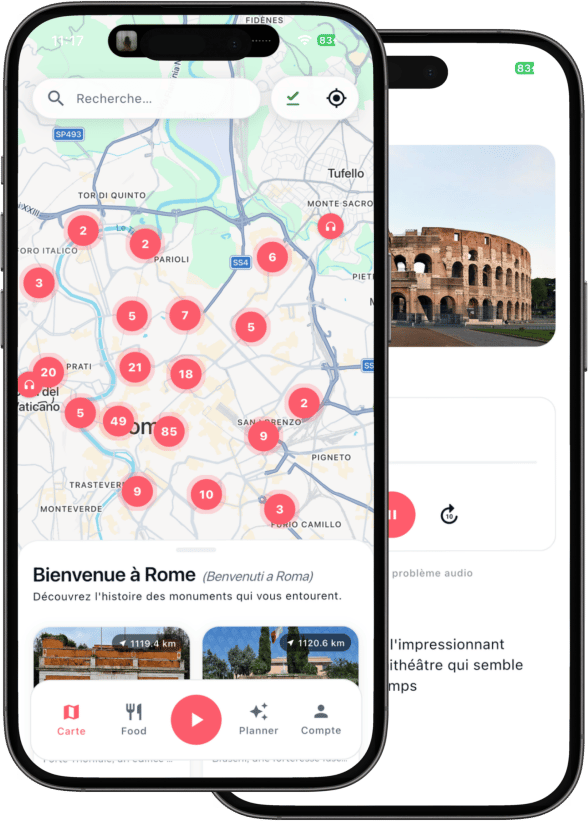
This is the step most people skip — and the one that makes all the difference. You have several options: a paper guide (effective, but you read it head-down, hands full), DIY prep (notes, videos), or the solution independent travelers have embraced in recent years: the geolocated audio guide, which detects where you are and starts the story of the place at the exact moment you arrive — hands and eyes free, across Dubai.
3. Pick the right time and avoid the traps
Visit Dubai between November and March: in summer, the heat often tops 40 °C and makes outdoor sightseeing punishing. Book your Burj Khalifa ticket ahead, aim for early morning or late afternoon for the souks and the creek, dress to cover shoulders and knees in traditional districts and mosques, and get around by metro (clean and air-conditioned) or by affordable taxi. With that, you visit Dubai more freely — and often better — than with any guided tour.
Paper guide, mobile app or audio guide: which to choose?
On paper, all three are equal. On the streets of Dubai, the experience is very different.
The paper guide
Thorough, but you read it standing in the sun, head down, hands full. You look down at the pages instead of at the city — and forget it all by evening.
The "classic" audio app
It imposes a fixed route to follow in order. Frequent result: you end up disoriented, retracing your steps, with the feeling you missed half of it.
The geolocated audio guide
The story triggers on its own wherever you are: impossible to get lost or miss the order. And it's no robot — a real story, with the anecdotes and secrets no sign ever tells. You look up at Dubai, not at a screen, even offline. That's the CityGuide approach.
A typical day in Dubai without a guide
An example of a walking itinerary, to adapt to your mood — each stop tells its own story if you have an audio guide that triggers as you walk.
Old Dubai: the Al Fahidi district and its wind towers, then the creek. Cross by abra for a few cents over to Deira and lose yourself in the gold and spice souks. Enjoy the cool of the morning.
Lunch and a break out of the heat. Head to Downtown to reach the Dubai Mall — a chance to eat and catch your breath somewhere air-conditioned during the hottest hours.
Downtown: the foot of the Burj Khalifa, and the ride to the top if you've booked. The contrast with the morning hits you — from a fishing village to 828 meters of glass, in a single day.
The coast: sunset over Madinat Jumeirah with the Burj Al Arab as a backdrop, then the Fountain show at the foot of the tower after dark. The last anecdote before dinner.
— Questions fréquentes
Visiting Dubai without a guide: your questions
Yes, absolutely. Millions of travelers visit Dubai independently every year. You gain total freedom — your itinerary, your pace, your budget. The only thing to plan for: having a bit of context to understand what you're looking at, otherwise the skyscrapers and souks stay silent.
Not necessarily. A good audio guide like CityGuide downloads before you leave and then works 100% offline — without touching your data plan or paying roaming in the Emirates. GPS is enough.
That's the difference with a geolocated audio guide: instead of forcing a fixed route on you to follow in order, it detects where you are and starts the right story in the right place. You walk however you like, and you can't miss the order or end up disoriented.
Not if you equip yourself a little. A well-made audio guide tells you the stories and anecdotes a guide would give — except you keep it forever and replay it whenever you want. You gain the freedom on top.
The Burj Khalifa and the Dubai Mall with its fountain, the historic Al Fahidi district and the creek, the gold and spice souks, the Burj Al Arab, Palm Jumeirah, Madinat Jumeirah and Dubai Marina. But Dubai is also lived in the contrast between the old town and the modern megacity.
From November to March: the heat is bearable and outdoor sightseeing pleasant. In summer (June to September), temperatures often top 40 °C and most activities move indoors with air conditioning. And whatever the season, aim for early morning in old Dubai.
— Pour aller plus loin
The audio guide that tells you Dubai as you walk
CityGuide turns your phone into a personal audio guide: you walk, and at the exact moment you arrive in front of a landmark, a voice begins — a real story, with the anecdotes and secrets no sign ever tells. And it's more than an audio guide: ready-made walks to follow, the best spots to eat like a local, an itinerary planner. Dozens of places in Dubai, even offline — enough to visit the city from A to Z, without ever staying clueless.
Discover the Dubai audio guide