

— TRAVEL TIPS · ROME
Visiting Rome in 3 Days: What to Do and a Day-by-Day Itinerary
Three days is the ideal amount of time to discover Rome without rushing — as long as you plan it well. Here's a day-by-day itinerary, organised by neighbourhood, to help you see the essentials and understand what you're looking at.
By Sophie Dorval, Italy specialist · August 21, 2026 · 9 min read
Rome isn't a city to explore at random: it's dense, and zigzagging from one end to the other wastes a huge amount of time. The key to visiting Rome well in 3 days is to group your sightseeing by area and book in advance whatever can be booked. With this approach, three days are more than enough to see the must-sees: ancient Rome, the Vatican and the Baroque heart of the city.
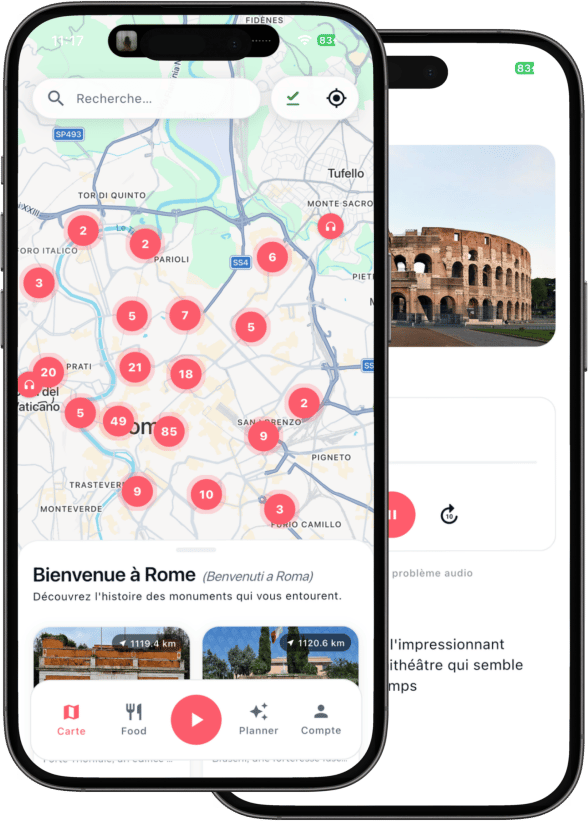
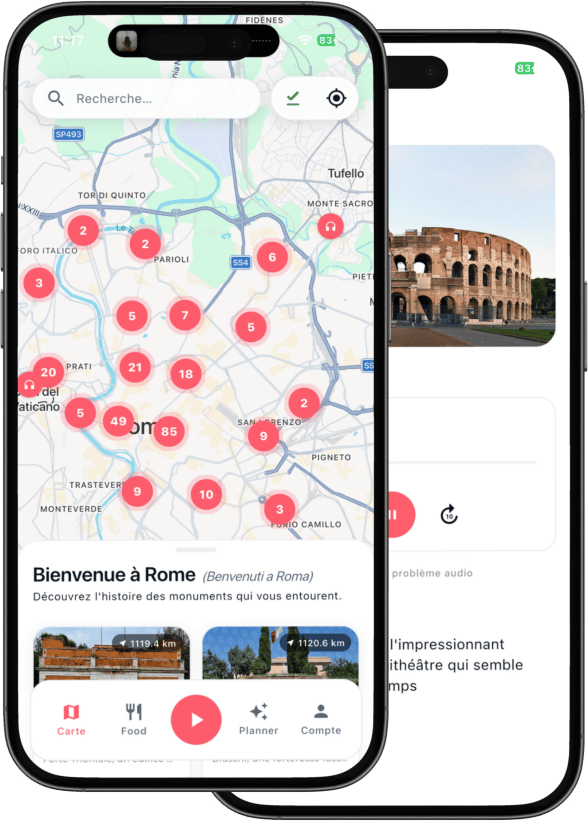
One tip before you go: to follow this itinerary independently — at your own pace, without booking a guided tour for every site — bring an audio guide app. You unlock the whole city at once, and the story of each monument starts playing as soon as you arrive in front of it. That's exactly what CityGuide offers in Rome.
Here, day by day, is an itinerary that actually works — plus our tips for enjoying it rather than enduring it.
Day 1
Ancient Rome
Where it all began.
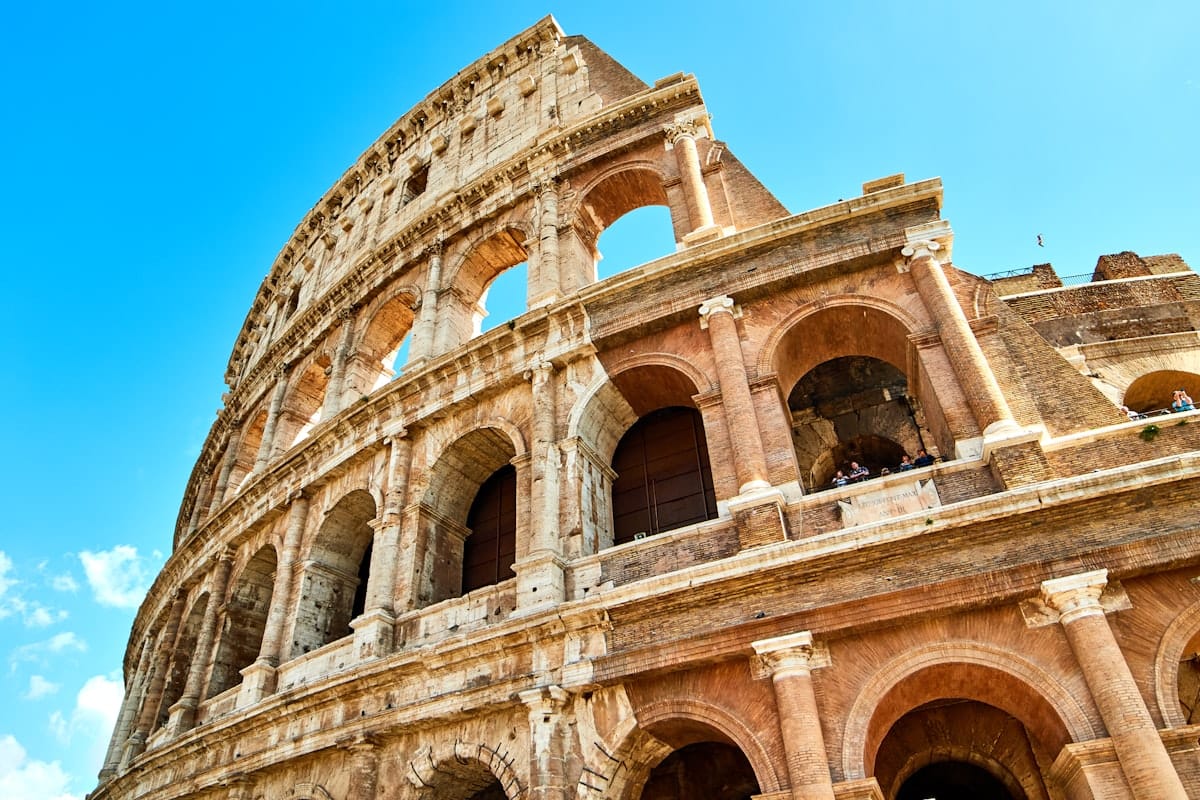
The Colosseum, right at opening time. Book your ticket in advance (timed entry) and arrive early: it's the most crowded site in Rome. Allow 1 to 1.5 hours. On site, an audio guide tells you about the staged combats and the floor that opened onto the wild beasts below — all the difference between seeing and understanding.
The Roman Forum and Palatine Hill, right next door (the ticket is often combined with the Colosseum). It's here, among the ruins, that you really grasp what the centre of the ancient world once was.
Lunch in the Monti district, just a stone's throw away: quiet lanes, trattorias and terraces away from the crowds.
The Capitoline Hill and Piazza del Campidoglio, designed by Michelangelo, the viewpoint over the Forum, then the Vittoriano (the "Altar of the Fatherland") and Piazza Venezia.
Dinner in Trastevere: cobbled lanes, washing lines strung between windows, pizza al taglio and true Roman atmosphere.
Day 2
The Vatican and the Baroque heart of Rome
From the smallest state in the world to Rome's finest squares.
The Vatican Museums and the Sistine Chapel. Booking (timed entry) is essential, and aim for opening time to beat the crowds — this is one of the most visited sites in the world.
St Peter's Basilica (free entry) and, if your legs are up for it, the climb to the dome for a view over the whole city from 136 metres up.
Cross Ponte Sant'Angelo, lined with Bernini's angels, to Castel Sant'Angelo. Then the Baroque trio: Piazza Navona, the Pantheon and the Trevi Fountain, just a few minutes apart. Each square has its own story: a location-based audio guide app plays it as you approach, with nothing for you to look up.
Drinks and dinner around Campo de' Fiori or the Pantheon, the beating heart of Rome after dark.
Day 3
Rome's art and la dolce vita side
A breather, after the intensity.
The Borghese Gallery (timed-entry booking is essential, and slots go fast) and its Bernini and Caravaggio masterpieces, set within the gardens of Villa Borghese. Climb up to the Pincio for the view over Piazza del Popolo.
Head down to the Spanish Steps (Piazza di Spagna), then on to Via dei Condotti.
Your choice: wander Trastevere in more detail, or discover the more down-to-earth Testaccio (market, street food). For one last view, climb up to Janiculum Hill.
One last Roman dinner — cacio e pepe, supplì, and a gelato as you stroll along the Tiber.
Our tips for making the most of your 3 days in Rome
- Book your tickets online — the Colosseum, Vatican Museums and Borghese Gallery sell out days in advance, especially from April to October.
- Arrive early at major sites (before 9am) to avoid queues and the heat.
- Cover your shoulders and knees for the Vatican and churches, or you'll be turned away at the door.
- Keep a water bottle handy: the nasoni drinking fountains provide fresh, drinkable water all over the city.
- The centre is best explored on foot; the metro (lines A and B) connects the Vatican, the Spanish Steps and the Colosseum.
- A Roma Pass can pay for itself if you're visiting several museums and using public transport.
The detail that turns an itinerary into a real visit
A good itinerary takes you past the right places. But standing in front of the Forum or the Pantheon, what really makes the difference is understanding what you're looking at — otherwise it's just nice stonework.
That's where an audio guide app like CityGuide comes in: it detects where you are and plays the story of each place at just the right moment, while you walk from one stop to the next — hands and eyes free, even offline. So you can follow your itinerary without ever being left in the dark.
— Frequently Asked Questions
Visiting Rome in 3 Days: Your Questions
Yes, for seeing the must-sees: ancient Rome, the Vatican and the Baroque centre all fit into three well-organised days. To explore the museums in depth or venture to nearby sites (Tivoli, Ostia Antica), you'll need more time.
Definitely. The Colosseum, the Vatican Museums and the Borghese Gallery all work on timed-entry slots that fill up fast, especially from April to October. Booking online saves you hours of queuing.
Spring (April-May) and autumn (September-October): mild weather and thinner crowds than in the height of summer. Whatever the season, arrive early at the major sites.
Mostly on foot: the historic centre is compact. The metro (lines A and B) comes in handy for longer distances, such as getting to the Vatican or the Spanish Steps from the Colosseum.
Excluding accommodation and transport, budget mainly for entry tickets (the Colosseum, Vatican and Borghese Gallery each cost around twenty euros) and meals. A Roma Pass can pay off if you're visiting several sites.
Have dinner and stroll around Trastevere, Campo de' Fiori or the Pantheon. The illuminated squares and fountains — Navona, Trevi, the Spanish Steps — are well worth an evening walk.
— Go Further
Follow your itinerary, understand every stop
CityGuide brings together a location-based audio guide (over 500 sites in Rome), ready-made walking tours, insider addresses and an itinerary planner — everything you need to make the most of your 3 days without missing a thing, even offline.
Discover the Rome audio guide