

— TRAVEL TIPS · FLORENCE
Visit Florence in 3 days: a neighbourhood-by-neighbourhood game plan
Seventy-two hours are just enough to take in the finest masterpieces of the Renaissance and wander both banks of the Arno. What this timeframe won't allow is exploring the Medici villas in the countryside or lingering in secondary museums.
By Sophie Dorval, Italy specialist · September 9, 2026 · 9 min read

Florence's historic core is remarkably compact, yet the sheer density of art per square metre can quickly lead to sensory overload. The best strategy is to break the city down into three distinct geographical zones to avoid exhausting treks across the cobblestones.
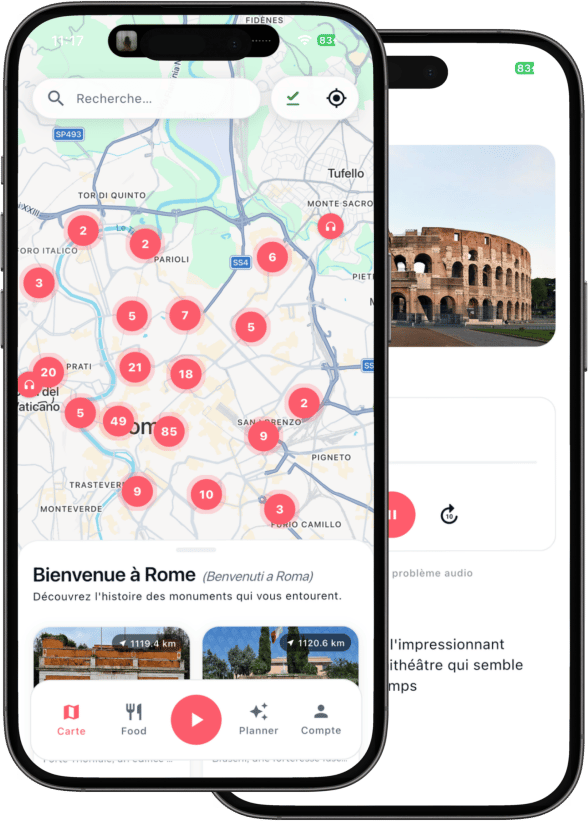
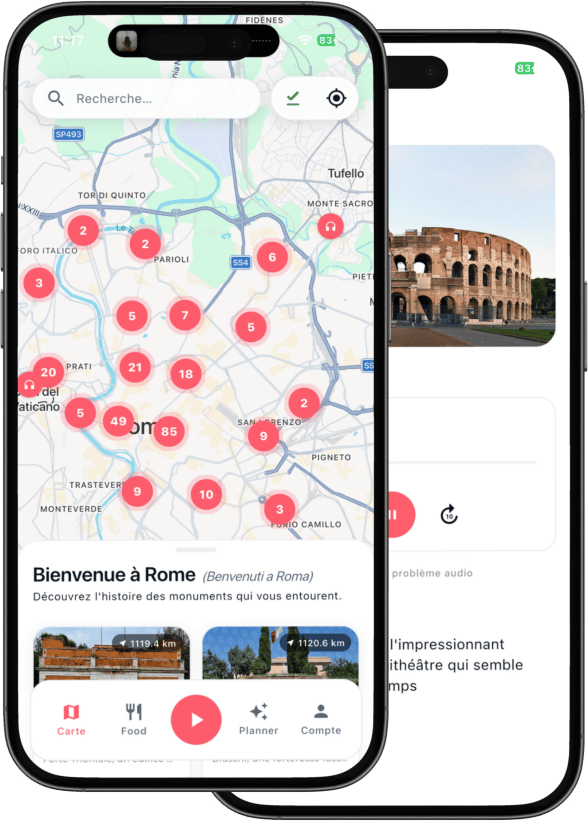
One tip before you go: to follow this itinerary independently — at your own pace, without booking a guided tour for every site — bring an audio guide app. You unlock the whole city at once, and the story of each monument starts playing as soon as you arrive in front of it. That's exactly what CityGuide offers in Florence.
Forward planning is the golden rule here: time slots for Brunelleschi's Dome or the Uffizi sell out weeks in advance.
Day 1
The religious and political core
Duomo and Signoria, the foundations of Florentine power.
Brunelleschi's dome rises with its 4 million bricks laid without any wooden centering. Climbing its 463 steps requires a mandatory reservation with a fixed time slot.
Ghiberti's gilded bronze Gates of Paradise took twenty-seven years of painstaking work to complete. Entry to the Baptistery is included in the Brunelleschi Pass, which is valid for three days.
The ground floor of the Mercato Centrale houses traditional butchers and greengrocers open until early afternoon. Upstairs, a modern food court sits beneath an iron-and-glass market hall inaugurated in 1874.
Palazzo Vecchio, the seat of government since 1299, boasts a striking 94-metre-high tower. On Piazza della Signoria, the Loggia dei Lanzi serves as a free open-air gallery showcasing original sculptures like Cellini's Perseus.
The green Prato and white Carrara marble facade of Santa Maria Novella was finished by Alberti in 1470. The surrounding neighbourhood is packed with trattorias serving bistecca alla fiorentina, billed strictly by weight.
Day 2
Medici art and the eastern quarters
Uffizi and Santa Croce: a dense concentration of masterpieces.
This U-shaped building designed by Vasari is home to Botticelli's The Birth of Venus. The Uffizi Gallery is closed on Mondays and requires booking a skip-the-line ticket at least one month ahead during peak season.
The Santa Croce quarter is home to Florence's Leather School, based since 1950 in the monastery's former dormitories. Access to the artisan workshops and boutique is free.
The Franciscan basilica of Santa Croce holds the tombs of Michelangelo, Galileo, and Machiavelli. Entrance tickets can be purchased directly on-site from automated kiosks.
Far less crowded with tourists, Sant'Ambrogio Market shuts its gates in the early afternoon, but the surrounding district comes alive at dusk. Bars along Via de' Macci pour classic Negronis, invented in Florence back in 1919.
Once you are there, let it guide you
The CityGuide Florence audio guide starts by itself in front of every stop on your itinerary.
Full audio guide
$21.90 $39.90
★ 4.8/5 · 15 reviews
30-day money-back guarantee
Day 3
The David, the river, and the Oltrarno
From sculptural perfection to left-bank artisan workshops.
Michelangelo's David, carved from an abandoned block of marble, stands 5.17 metres tall beneath the skylight of the Accademia Gallery. Strict advance booking is required; use the museum audio guide to understand why the hands were intentionally sculpted out of proportion.
Ponte Vecchio survived the German bombings of August 1944. Its original butcher shops were evicted and replaced by goldsmiths in 1593 on the orders of Ferdinand I to banish foul smells.
The church of Santo Spirito, designed by Brunelleschi, shelters a wooden crucifix carved by Michelangelo when he was just 17. Its tree-lined square hosts an open-air morning market every day.
The San Frediano neighbourhood is a haven for traditional bookbinders and wood-gilding workshops. The Brancacci Chapel, inside the church of Santa Maria del Carmine, requires advance booking to view Masaccio's groundbreaking frescoes.
The terrace of Piazzale Michelangelo, laid out in 1869 by Giuseppe Poggi, offers the most sweeping panorama over the city's terracotta roofs. Access is completely free, and crowds gather here an hour before sunset.
6 practical tips for visiting Florence
- The all-inclusive Firenze Card is no longer what it was; you will need the Brunelleschi Pass for the entire Duomo complex, which remains valid for 72 hours.
- Firenze Santa Maria Novella station is the main stop for Frecciarossa high-speed trains; avoid services stopping only at Campo di Marte, which is far more out of the way.
- State museums, including the Uffizi and the Accademia, are closed on Mondays and offer free admission on the first Sunday of the month, which triggers massive queues.
- The T2 tram links Amerigo Vespucci Airport directly to the central train station for just a few euros, a far more budget-friendly option than taxis with their steep fixed fares.
- The ZTL (restricted traffic zone) covers the entire historic centre and is enforced during weekday daytime hours; cameras automatically ticket unregistered number plates.
- Traditional Tuscan bread, served in every trattoria, has been baked without salt since the 12th century as a historic protest against customs duties imposed by Pisa.
Understanding what you are looking at
A list of landmark addresses is no substitute for context. Without historical bearings, Renaissance palazzi quickly start to look alike, and the vicious power struggles between the Medici and the Pazzi remain completely invisible.
That's where an audio guide app like CityGuide comes in: it detects where you are and plays the story of each place at just the right moment, while you walk from one stop to the next — hands and eyes free, even offline. So you can follow your itinerary without ever being left in the dark.
— Frequently Asked Questions
Frequently asked questions about Florence
Three full days allow you to see the headline museums and explore both banks of the Arno. A fourth day would be required if you wish to add Palazzo Pitti and wander around the Boboli Gardens.
Plan a comfortable budget for sightseeing tickets and meals. A ticket for the Uffizi is a noticeable expense during high season, though a classic pasta dish in a neighbourhood trattoria remains quite affordable.
The historic centre is remarkably compact and best navigated entirely on foot. Autolinee Toscane city buses are only really useful if you want to avoid the steep walk up to Piazzale Michelangelo.
November and February bring cooler weather but slash visitor numbers by two-thirds. High summer turns the Florentine basin into an oven, with temperatures frequently climbing to 38 degrees.
Brunelleschi's dome, the Uffizi Gallery, and the Accademia Gallery routinely turn away visitors without pre-purchased tickets. Secure all three online at least three weeks ahead of your trip.
The San Frediano and Santo Spirito quarters on the left bank are packed with wine bars that stay lively well into the night. Museums typically close in the early evening, outside of occasional late-night openings announced by the Ministry of Culture.
— Go Further
Take your journey to the next level
The CityGuide Florence app tracks your route and narrates the political intrigue of the Renaissance in the very places where it unfolded. Dozens of sights documented with solid historical facts.
See the Florence audio guide