

— TRAVEL TIPS · KRAKOW
Visiting Krakow on your own: the practical guide
Krakow is one of the few major Central European cities not destroyed in the war. Everything is original, everything fits inside a pedestrian centre a kilometre across, and everything is very cheap. What takes organising are the excursions.
Sophie Dorval, Central Europe specialist · September 8, 2026 · 8 min read

Three areas are enough to understand the city: the old town around the main square, Wawel hill with the castle and cathedral, and Kazimierz, the former Jewish quarter, fifteen minutes away on foot.
Within the city, only one booking counts: Wawel, whose exhibitions run on hourly quotas. St Mary's Basilica and the Schindler Factory also use timed slots, but with more flexibility.
The excursions, however, need planning far ahead. Auschwitz-Birkenau is free but requires a compulsory booking, often full months in advance, and a guided tour during peak hours.
What nobody tells you before you go alone
Auschwitz-Birkenau is booked directly on the memorial's official site, free of charge for the unguided visit. Krakow agencies resell the same access with transport and a guide at a much higher price — legitimate, but not compulsory.
The trumpet call from the top of St Mary's Basilica breaks off abruptly every hour, and has done for centuries. It re-enacts the moment when, by tradition, a Tatar arrow struck the trumpeter. Nobody explains it on the square.
Krakow remains one of the cheapest cities in Europe, but the currency is the złoty. Decline the conversion ATMs offer into your own currency; it costs several per cent.
What to see, and how to approach each one alone
For each: what needs booking, what is free, and what the place does not tell you about itself.
The main square and the Cloth Hall
Free, always open. This is the largest medieval square in Europe, laid out in 1257 and never altered since. The central hall has housed a market for seven centuries.
St Mary's Basilica
Ticketed for the nave, separate ticket for the tower. The Veit Stoss altarpiece, twelve metres high, was dismantled and hidden in 1939, looted by the Nazis, then found in Bavaria and returned in 1946.
Wawel Hill
The grounds and courtyards are free; each castle exhibition has its own ticket and hourly quota. The cathedral, ticketed, holds the tombs of the kings of Poland.
Kazimierz
Free. The former Jewish quarter, with seven synagogues still standing, some open to visit. It is not the ghetto — that was across the river in Podgórze, a distinction many visitors miss.
Ghetto Heroes Square, Podgórze
Free. Seventy empty bronze chairs, on the spot where the deportations began. The memorial is striking and carries almost no explanation on site.
Oskar Schindler's factory
Ticketed, timed slots, often full in summer. The museum is less about Schindler than about life in Krakow under occupation: one of the best-designed museums in Central Europe.
The Planty park
Free. A four-kilometre ring of greenery encircling the whole old town, laid out in the nineteenth century where the walls once stood. It is the best way to circle the centre.
The Wieliczka salt mine
Ticketed, guided tour compulsory, book ahead. Three hundred kilometres of galleries across nine levels, including a chapel carved entirely out of salt by miners. Thirty minutes by train from Krakow.
Beyond those: the Barbican and St Florian's Gate, the Czartoryski Museum with Leonardo's Lady with an Ermine, the Nowa Huta district built by the Soviets as a model workers' town, and the banks of the Vistula at sunset.
How to organise yourself, in practice
Book Auschwitz first, very far ahead
Guided slots often go three months in advance in high season. The unguided visit is free, but only possible at the start or end of the day.
Keep the city for half-days
Auschwitz takes a full day — three and a half hours on site, two hours of travel there and back. Wieliczka takes half a day. Central Krakow fits around those blocks.
Do not do Auschwitz and Wieliczka on the same day
It is physically possible and humanly absurd. Leave at least one night between them.
Guidebook, guided tour or audio guide: what to choose on your own?
Krakow layers a medieval royal capital, one of the great Jewish centres of Europe, and the Nazi occupation. Three strata on the same streets, with almost no signage to tell them apart.
A paper guidebook
Fine for planning, but no substitute for commentary in an empty square where you would need to know what happened there.
A guided tour
Essential at Auschwitz and Wieliczka, where it is imposed anyway. In the city it stays fixed-time and confined to the old town.
A location-aware audio guide
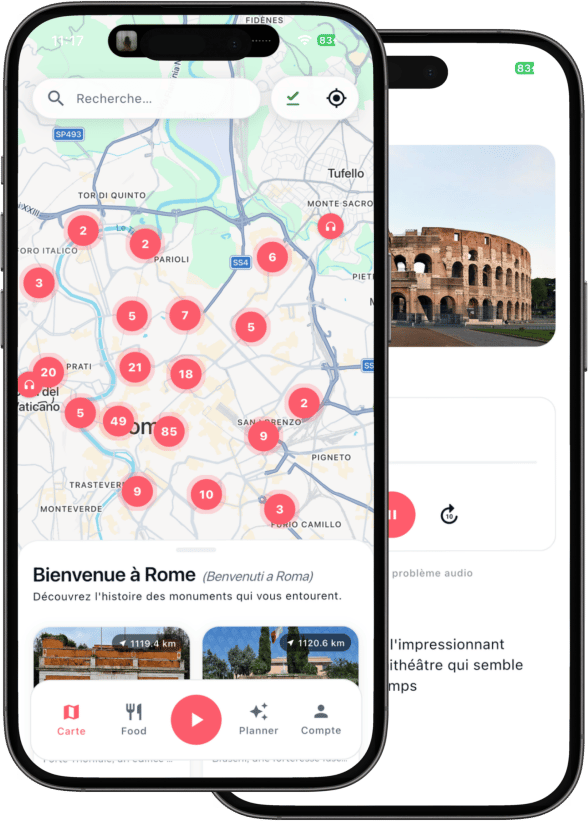
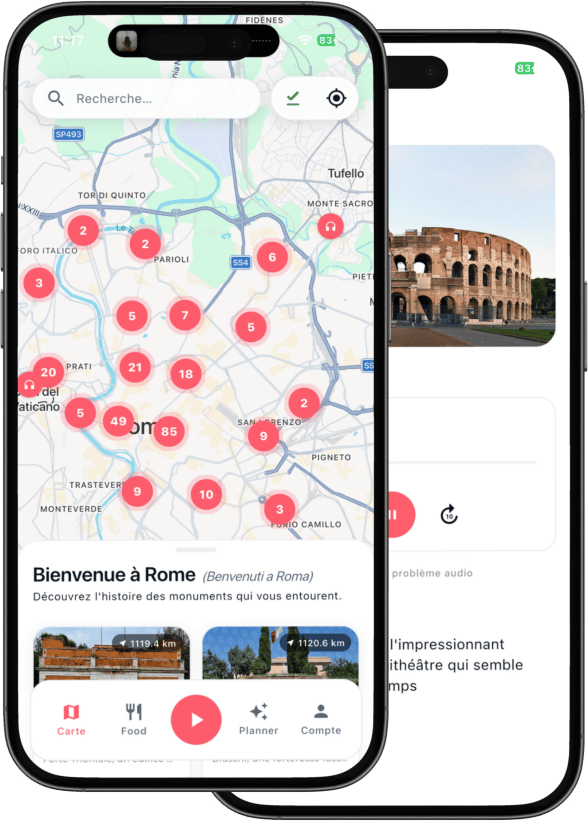
The commentary starts on its own at each church, synagogue and square — including in Podgórze, where tours almost never go. It all works offline.
A typical day in Krakow, without a guide
An example route through the city, entirely on foot.
St Mary's Basilica at opening, ahead of the groups, then the Cloth Hall and a circuit of the square, still quiet at that hour.
Ten minutes south on foot. The courtyards are free; pick one or two exhibitions rather than the full ticket.
Lunch in the quarter, then the synagogues, the old cemetery and the squares. This is where Krakow is liveliest at the end of the day.
Across the bridge to Ghetto Heroes Square and Schindler's factory if you have a slot. Back along the Vistula.
— Questions fréquentes
Visiting Krakow on your own: your questions
Two full days cover the city. Four are needed if you add Auschwitz and Wieliczka, each taking a full or half day including travel.
By booking directly on the memorial's official site. The unguided visit is free but limited to the first and last hours; during peak hours a guided tour is compulsory and ticketed. The train or bus from Krakow takes about an hour and a half.
The main square, the Planty park, the Wawel courtyards, all of Kazimierz, Ghetto Heroes Square and the banks of the Vistula. Some municipal museums are free one day a week.
Yes: the visit is guided, in timed groups and by language. Allow three hours on site and eight hundred steps down — you come back up by lift.
It is one of the cheapest major cities in Europe: meals, transport and museums cost markedly less than in Western Europe. Withdraw złoty locally and decline conversion into your own currency.
May-June and September: mild weather, terraces on the main square, manageable crowds. Winter is harsh but the city under snow is magnificent, and the sites are empty.
— Pour aller plus loin
The audio guide that tells you Krakow as you walk
CityGuide turns your phone into a personal guide: you walk, and the commentary starts on its own at each church, synagogue and square — including in the districts tours ignore. It all works offline, and one purchase covers everyone travelling with you.
See the Krakow audio guide