

Krakow Audio Guide
Free Wawel Royal Castle Audio Guide: Full Commentary to Read
Everything you need to know to explore the hill of Poland's kings in Krakow, with the complete historical commentary in open access.
Antoine from CityGuide · September 8, 2026 · 8 min read

Are you preparing your visit to Wawel Royal Castle in Krakow and looking for a free audio guide? You have come to the right place to understand this site without spending a dime on history. We provide you with the full explanatory text of our guide, as well as a short twenty-second audio sample to test our narration voice.
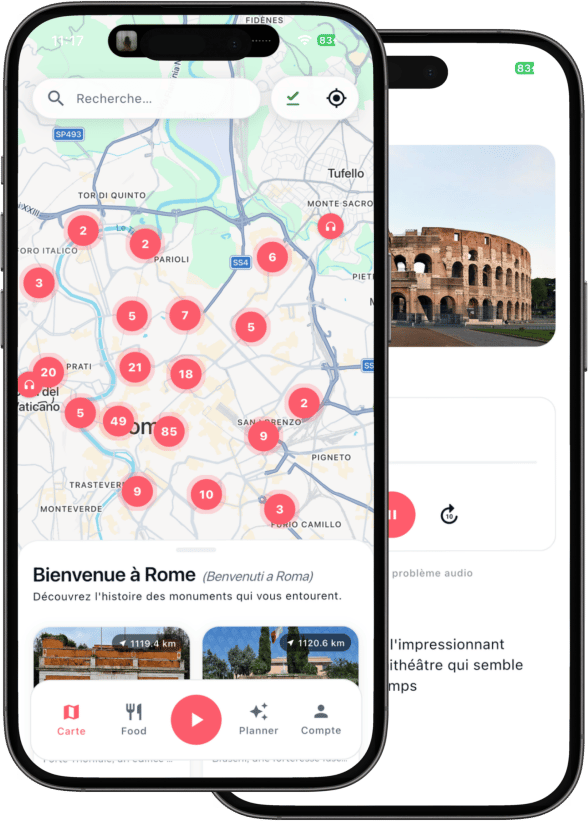
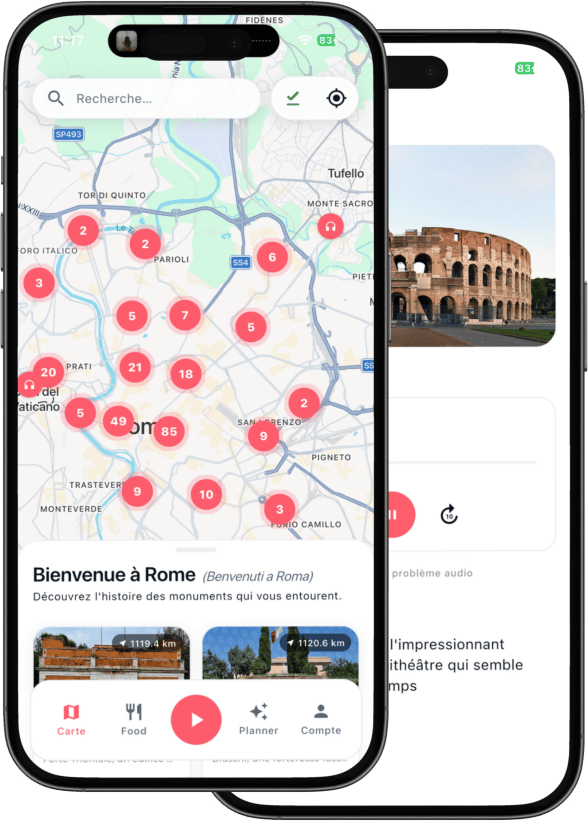
However, let's be clear from the start: our full Krakow audio guide app, which triggers via GPS as you walk through the Old Town, is a paid service. Here, you enjoy the knowledge for free, directly on your screen before heading up along the Vistula.
Listen to a Sample of Our Audio Guide
Play this twenty-second sample to discover our guide's voice and tone. You'll get a preview of our immersive audio tour of Krakow.
Play a sample
Home > Poland > Krakow > Wawel Royal Castle
20-second sample. The full city audio guide is paid.
What Can You See for Free at Wawel Royal Castle?
You can enjoy the hill without spending a single zloty. Here is exactly what is free to access and what requires a ticket.
Free
Access to the hill and terraces
You can walk up the fortified hill freely and admire the panoramic views over the Vistula.
Free
Renaissance arcaded courtyard
The sumptuous inner courtyard lined with colonnades can be visited without any ticket.
Paid
Castle interior exhibitions
The royal state rooms, private apartments, and crown treasury require a paid ticket (check current rates on the official website).
Paid
Cathedral, bell tower, and Dragon's Den
The cathedral nave, Sigismund Bell, and underground den are ticketed with daily visitor quotas.
The Guide's Commentary: Six Steps to Understand Wawel Royal Castle
Take the time to read these six steps in front of the ramparts. You will have all the stories in mind to appreciate every stone on the hill.
1. What lies before your eyes: the sacred hill
When you climb this limestone promontory overlooking the Vistula, you step into the beating heart of the Polish nation. Before you stands an architectural ensemble unique in the world, blending medieval defensive austerity with Italian refinement. The hill brings together two major landmarks: the cathedral with its multiple disparate chapels, and the vast Wawel Royal Castle surrounded by its massive ramparts. Crossing the monumental gate, you discover the magnificent Renaissance courtyard lined with three tiers of light arcades, commissioned by King Sigismund I the Old in the sixteenth century. This complex silhouette is the result of centuries of alterations, reconstructions following fires, and successive additions. From the fortified terraces, your gaze sweeps directly over the calm waters of the river and Krakow's red roofs. You stand at the very place where the country's political and cultural identity was forged, a sanctuary where every king sought to leave an immortal mark.
2. Construction and the Renaissance golden age
The hill has been inhabited since the Paleolithic era, but its royal history truly began around the tenth century with the first Piast dukes. It was here that Casimir III the Great erected a formidable Gothic brick and stone fortress in the fourteenth century, before a devastating fire in 1499 forced the crown to rethink everything. Monarchs Sigismund I and his Milanese wife Bona Sforza brought Italy's greatest architects of the time to Krakow, including Francesco Fiorentino and Bartolomeo Berrecci. Within a few decades, the feudal castle transformed into a luminous princely residence worthy of Florentine palazzi, complete with spectacular open galleries and innovatively carved ceilings. This was Krakow's golden age: Wawel Royal Castle became the intellectual and artistic crossroads of Central Europe, welcoming diplomats, painters, and humanists. Walking under these arcades today, imagine the splendor of this cosmopolitan court that projected the Polish kingdom's renown far beyond its eastern and Germanic borders.
3. A defining chapter: the odyssey of the royal treasures
The destiny of Wawel Royal Castle shifted in the early seventeenth century when Sigismund III Vasa moved the Polish capital to Warsaw. From then on, the castle lost its administrative role while retaining its sacred prestige as the site of royal coronations. But true drama unfolded in September 1939 with the invasion of Poland. Facing the imminent Nazi threat, Polish curators organized a daring covert operation to evacuate the castle's priceless treasures, notably the famous collection of Jagiellonian Flemish tapestries and the Szczerbiec, the royal coronation sword. These masterpieces journeyed through Romania, France, and England before being hidden in bank vaults and convents in Canada throughout World War II. During the occupation, Nazi Governor-General Hans Frank took up residence at Wawel Royal Castle, plundering the remaining property. The original treasures returned only after protracted diplomatic negotiations in 1961, finally rejoining their intact historic rooms.
The full Krakow audio guide
The commentary on this page is part of the CityGuide audio guide, which starts by itself in front of every place in the city.
Full audio guide
$21.90 $39.90
★ 4.8/5 · 15 reviews
30-day money-back guarantee
4. A detail nobody notices: the daring top floor
When visitors admire the famous Renaissance courtyard, most gaze awestruck at the beauty of the galleries without noticing a striking architectural detail on the top floor. Look closely at the height of the third-tier columns compared to the two lower levels. Contrary to classical Italian architectural rules that stack Doric, Ionic, and Corinthian orders with strict geometric discipline, the Italian and Polish builders broke the rules here. The columns at the top are unusually tall, nearly twice as slender as standard proportions, capped with peculiar jug-shaped capitals. This visual trick opened the space up to Poland's grey skies, allowing maximum light to penetrate the royal apartments on the top floor. Also note the fragments of polychrome frescoes still visible under the roof cornices: during royal times, this entire courtyard sparkled with vibrant colors that have now faded away.
5. The dark side: the Austrian barracks
The grandeur of Wawel Royal Castle must not obscure the centuries of humiliation endured by this royal symbol. At the end of the eighteenth century, successive partitions of Poland wiped the country off the European map, and Krakow fell under Austrian rule. The imperial troops from Vienna then turned the proud royal palace into ordinary military barracks and a field hospital. To adapt the site to their garrison needs, soldiers bricked up the elegant courtyard arcades, destroyed centuries-old decorations, burned royal woodwork, and demolished several medieval churches that stood on the hill to create a parade ground. The neighboring cathedral and its royal tombs fortunately escaped destruction. It took until the early twentieth century and a nationwide public subscription for the Polish people to buy the estate back from the Austrians, embarking on a colossal restoration to erase the scars of this destructive militarization.
6. What remains today: the living sanctuary
Today, Wawel Royal Castle stands as Poland's ultimate heritage sanctuary, visited with reverence by locals and travelers worldwide. While the hill has lost its political function, its spiritual resonance remains undiminished. You can freely stroll through its paved courtyards, walk along the imposing ramparts, and take in the bend of the Vistula from the brick bastions. In the depths of the rock lingers the enduring legend of the Wawel Dragon (Smok Wawelski), whose den opens directly onto the lower promenade. The cathedral still houses the sarcophagi of monarchs, national heroes, and Poland's greatest romantic poets. Meanwhile, Wawel Royal Castle showcases its recovered collections, from medieval weaponry to master paintings and monumental tapestries. Leaving the site, you realize that Wawel Royal Castle is not merely a museum of ancient stones, but the heroic witness of a nation that repeatedly rose from the ashes.
Three Options for Visiting Wawel Royal Castle with Commentary
Choose the option that best suits your budget and walking pace in the city of kings.
The official on-site audio guide
Available at ticket desks for select interior exhibitions and the cathedral. It offers highly detailed academic content, but it is expensive and requires waiting in counter queues.
Online videos and articles
You will find numerous free blogs and videos online. Handy for exploring the topic at home, they prove cumbersome once on site, glued to your screen in the middle of the courtyards.
The CityGuide Krakow app
Our full city audio guide triggers automatically in your headphones using GPS. Walk hands-free from Wawel Royal Castle to the Main Market Square, with lively stories and zero hassle.
Practical Tips for a Successful Visit to Wawel Royal Castle
Arrive early for interior tickets
Castle exhibitions and cathedral areas operate under strict daily visitor quotas. If you wish to tour the interiors during peak season, book your time slots well in advance or head to the ticket desks when they open in the morning to avoid finding them sold out for the day.
Enjoy the outdoor grounds in the evening
If you are on a tight budget or don't have a ticket, visit the hill in the late afternoon. The Renaissance courtyard and fortified terraces stay open later than the exhibition halls. The golden light over the Vistula is stunning and the crowds will have dispersed.
Head down to greet the dragon
At the foot of the western ramparts, on the riverbanks, stands the famous bronze statue of the Wawel Dragon. Access is completely free, and it breathes real fire every few minutes to the delight of visitors of all ages.
Check official ticket prices and opening hours
Prices for the different exhibitions, Sigismund Tower, and the cave change regularly depending on the season. Furthermore, each exhibition requires its own separate ticket. Be sure to check the official castle website before planning your purchases.
— Frequently asked questions
Frequently Asked Questions About Visiting Wawel Royal Castle
No, there is no official, complete audio guide that is entirely free for the monument. On this page, we provide the full historical commentary to read for free along with an audio sample. If you wish to listen to the complete audio tour for the hill and all of Krakow through your earbuds via our CityGuide app, that service is paid.
Yes, absolutely. Access to the fortified grounds of the hill, the panoramic observation terraces overlooking the Vistula, and the magnificent Renaissance arcaded courtyard is completely free during park opening hours.
The interior exhibitions of Wawel Royal Castle (State Rooms, Royal Private Apartments, Crown Treasury), the cathedral with the Sigismund Bell and royal crypts, and the descent into the Dragon's Den all require a paid admission ticket.
It is strongly recommended. The monument enforces strict timed entry quotas to preserve the historic rooms. During the tourist season or on weekends, time slots for the royal apartments often sell out early in the day.
Allow about one hour simply to stroll around the hill, admire the facades, the arcaded courtyard, and the view over the Vistula. If you plan to visit the cathedral and two or three interior exhibitions, budget a full half-day.
It is located at the foot of the hill, right on the pedestrian banks of the Vistula, outside the limestone cave exit. Access is completely open and free at any time of day or night.
— Go further
Discover Krakow with CityGuide in Your Ears
Download the CityGuide app to explore Wawel Royal Castle, the Old Town, and the Jewish quarter of Kazimierz. Keep your phone in your pocket: our engaging audio commentary triggers automatically as you walk.
Discover the Krakow Audio Guide