

— TRAVEL TIPS · LISBON
Visit Lisbon in 3 days: the itinerary for those who want to truly understand the city
Three days are just enough to tackle the seven historic hills and grasp the post-1755 reconstruction of the Baixa. However, you will not have time to explore Sintra or Cascais without sacrificing the essentials of the city centre.
By Sophie Dorval, Portugal specialist · September 9, 2026 · 9 min read
Lisbon is a topographical puzzle. Moving from Alfama to Bairro Alto involves steep climbs that will quickly wear you out if you wander aimlessly. The golden rule is to divide the city into geographical pockets and book timed-entry slots for national monuments well in advance.
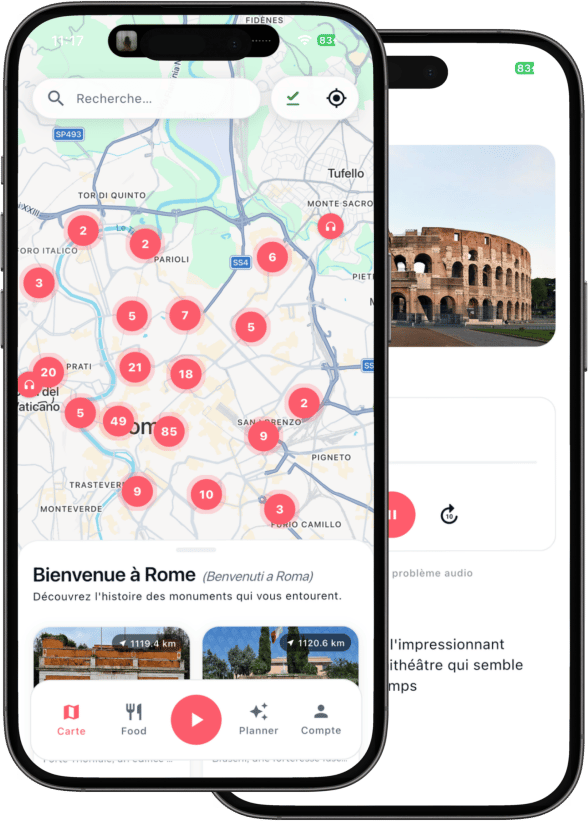
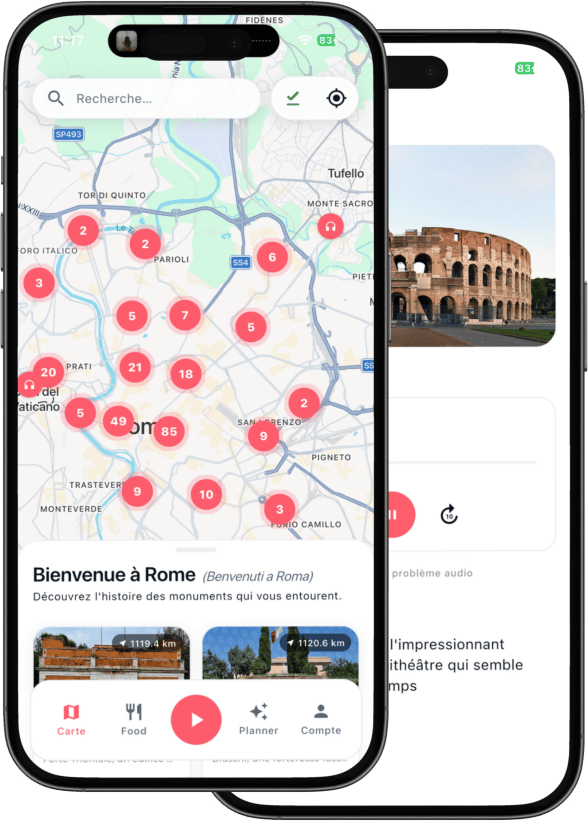
One tip before you go: to follow this itinerary independently — at your own pace, without booking a guided tour for every site — bring an audio guide app. You unlock the whole city at once, and the story of each monument starts playing as soon as you arrive in front of it. That's exactly what CityGuide offers in Lisbon.
Here is a neighbourhood-by-neighbourhood battle plan, designed to cut down on unnecessary uphill slogs and secure access to sites with strict visitor caps.
Day 1
From Moorish foundations to Pombaline grid
A chronological descent from the castle hill down to the river.
São Jorge Castle opens at 9:00 am. Arrive right at opening time to beat the queues that start swelling from 10:00 am. The ramparts date back to the 11th century and provide an ideal visual vantage point to understand the layout of the Tagus estuary.
Walk down into Alfama, one of the few neighbourhoods that survived the 1755 earthquake. Its narrow alleyways still follow the old Islamic street grid. Pause at the Miradouro das Portas do Sol, a free public terrace offering panoramic views over terracotta rooftops and the Church of São Vicente de Fora.
Stop for lunch near the Casa dos Bicos, famous for its 1523 facade studded with diamond-pointed stones. The ground floor houses excavated Roman ruins that are free to view.
Walk through the Rua Augusta Arch into Praça do Comércio. The Pombaline Baixa, rebuilt under the direction of the Marquis of Pombal after 1755, relies on an innovative earthquake-resistant wooden cage known as the 'gaiola pombalina'. It stands as Europe's earliest example of modern urban planning.
Head back up towards Mouraria and Intendente, the historic Moorish quarter banished outside the city walls following the Reconquista in 1147. Traditional tascas here serve daily specials for around ten euros.
Day 2
The Age of Discovery and industrial reinvention
An expedition along the Tagus, focusing on Manueline architecture and repurposed docklands.
Jerónimos Monastery requires booking several weeks ahead, as time slots sell out fast. Construction was funded by the 'Vintena da Pimenta' (a tax on spices) and began in 1501 to celebrate the safe return of Vasco da Gama.
Walk over to the Belém Tower, a 1515 fortress that originally stood in the middle of the river before the earthquake altered the shoreline. Entry to the upper terrace is capped at 120 people at a time, so expect queues at the bottom of the narrow spiral staircase.
Head back towards Alcântara to explore LX Factory. This creative hub occupies an 1846 textile mill. Restaurants now sit beneath preserved ironwork and industrial framework.
Continue to the Museum of Art, Architecture and Technology (MAAT). Even without paying the 11-euro entrance ticket, you can walk across its wave-like roof for free, paved with 15,000 three-dimensional ceramic tiles.
Make your way to Cais do Sodré. Once a gritty sailors' haunt, it is now home to the Mercado da Ribeira (Time Out Market), open until midnight on weekdays. Prices are higher than in traditional tascas, but you will find outposts from Michelin-starred Portuguese chefs.
Once you are there, let it guide you
The CityGuide Lisbon audio guide starts by itself in front of every stop on your itinerary.
Full audio guide
$21.90 $39.90
★ 4.8/5 · 15 reviews
30-day money-back guarantee
Day 3
Ascending to the bohemian and literary quarters
Climbing the western hills, among literary cafes and elevated gardens.
Start at Praça Dom Pedro IV (Rossio). Look down at the undulating black-and-white wave pavement laid in 1848, which later inspired Copacabana's promenade. The Santa Justa Lift, engineered by Raoul Mesnier du Ponsard in 1902, is best admired from below to skip the six-euro ride fare.
Climb up into Chiado. The Church of Loreto, rebuilt in 1785, features a single nave in the Italian Baroque style funded by the local Genoese community. Listen to the audio guide to catch the nuances of its facade without losing time.
Head into Bairro Alto, laid out in a grid pattern back in 1513. By day, the streets are empty and the bar shutters pulled down. Take the opportunity to dine in a quiet neighbourhood 'leitaria' or bakery, far from the evening crowds.
Continue walking up to the Miradouro de São Pedro de Alcântara. This landscaped terrace spans two levels directly facing São Jorge Castle. Right alongside, the Glória Funicular has been operating its rack railway system since 1885.
Wrap up your stay in the gardens of Príncipe Real, renowned for a sprawling Buçaco cedar whose canopy stretches over twenty metres in diameter, supported by a metal frame. Restaurants around the square often run two dinner seatings, at 7:30 pm and 9:30 pm.
6 practical tips for tackling Lisbon's cobblestones
- The Lisboa Card (22 euros for 24h) is only cost-effective if you group visits to Jerónimos Monastery and Belém Tower into the very same day.
- Tram 28 is perpetually packed with visitors between Martim Moniz and Campo de Ourique. For an identical ride on the same 1930s rolling stock, take route 12 or 24 instead, which are far less crowded.
- National museums and state-run monuments, including the National Pantheon and Ajuda National Palace, are closed on Mondays.
- The Bica Funicular costs 3.80 euros if you buy on board. Use a Viva Viagem card topped up with 'Zapping' credit instead to bring the fare down to 1.61 euros.
- Do not touch the appetisers (couvert) brought unprompted to your table in traditional restaurants: if you eat them, you will be billed, typically between 2 and 5 euros per person.
- Cais do Sodré station is the departure terminal for suburban trains to Cascais, while Rossio station serves Sintra. Do not mix them up if you plan to extend your stay.
Historical context: the key to reading Lisbon
An optimised itinerary will save your legs on the steep inclines, but it won't explain why Alfama survived the 1755 earthquake or how the Inquisition shaped Chiado. Without that historical backdrop, you risk walking past facades steeped in heritage and seeing nothing more than pretty azulejo tiles.
That's where an audio guide app like CityGuide comes in: it detects where you are and plays the story of each place at just the right moment, while you walk from one stop to the next — hands and eyes free, even offline. So you can follow your itinerary without ever being left in the dark.
— Frequently Asked Questions
Frequently asked questions about a 3-day trip
Three days allow you to cover the historic core (Baixa, Alfama, Chiado) thoroughly and dedicate half a day to Belém. It is the sweet spot for the city proper, though not enough if you want to include Sintra's palaces, which require a full day for travel and sightseeing.
Expect around 70 to 100 euros per night for a double room in central districts like Baixa. Meals in tascas average 12 to 15 euros, while a 24-hour transit pass costs 6.60 euros, keeping on-the-ground spending lower than in most Western European capitals.
Walking is the best way to explore, but the terrain dictates the pace. Rely on the metro (4 lines, running from 6:30 am to 1:00 am) for longer distances, and take advantage of free public lifts or station escalators, such as those inside Baixa-Chiado metro, to skip punishing climbs.
May, June, September, and October bring pleasant temperatures hovering between 22 and 26°C. In July and August, the mercury regularly tops 35°C, making the climb up the hills of Graça or Bairro Alto particularly gruelling.
Jerónimos Monastery and Belém Tower require timed-entry tickets booked online, which can sell out 48 hours in advance. São Jorge Castle also offers skip-the-line tickets on its official site—indispensable between April and October.
Bairro Alto is packed with street-side bars where pints sell for 2 euros, but the noise continues unabated until 3:00 am. For fado, avoid the touts in Alfama and head towards Mouraria instead, where local community associations host authentic sessions with no cover charge.
— Go Further
Don't wander blindly
The CityGuide Lisbon app pinpoints your location and narrates the history of the buildings right before your eyes. Hundreds of points of interest documented by local historians, all accessible offline.
See the Lisbon audio guide