

— TRAVEL TIPS · LISBON
Things to do in Lisbon: the highlights and the right pace
Lisbon is visited by going up and coming back down, constantly. The city is built on seven hills and paved in a smooth limestone that turns into an ice rink in the rain. That relief is not a logistical detail: it is what gives each district its character and each street corner its view.
Sophie Dorval, Portugal specialist · September 5, 2026 · 9 min read
Lisbon is organised around three blocks: the Baixa, rebuilt on a grid after the 1755 earthquake, the hills that frame it — Alfama to the east, Chiado and Bairro Alto to the west — and Belém, six kilometres out, where the legacy of the age of discovery is concentrated.
Two full days cover the city. Three let you add Sintra, which needs a whole day and cannot be rushed.
The principle that changes the trip: go up by transport, come down on foot. The funiculars, the Santa Justa lift and the metro exist precisely for that, and the districts reveal themselves far better on the way down.
What to know before you go
Portuguese calçada, that paving of small limestone blocks, is beautiful and slippery. Grippy soles change the day, especially in Alfama where the lanes are steep.
Tram 28 is as much an attraction as a means of transport: packed, slow, and well known to pickpockets. Boarding early at the Martim Moniz terminus is the only way to get a seat.
Sintra is forty minutes away by train but draws enormous crowds. Pena Palace tickets run on timed slots, and it is worth leaving before eight.
The highlights of Lisbon
What to see, with what makes each one interesting rather than merely photogenic.
Alfama
The one district largely spared by the 1755 earthquake, because it sits on rock. Its labyrinthine layout is Moorish in origin: you cannot orient yourself in it, and that is exactly what to look for.
São Jorge Castle
A Moorish fortress taken in 1147, perched at the top of the hill. The visit is worth it above all for the ramparts and the full circle of views over the city and the Tagus.
The Pombaline Baixa
An entire district rebuilt in five years after 1755, on a grid, with buildings designed to survive earthquakes — one of the earliest anti-seismic architectures in Europe.
The Jerónimos Monastery, in Belém
Funded by the tax on spices brought back from the Indies, it is Manueline architecture at its peak: ropes, armillary spheres and Order of Christ crosses carved into stone. Vasco da Gama is buried here.
Belém Tower
Built in the middle of the river as a defensive post, it now stands almost on the bank: the earthquake shifted the Tagus. Small, endlessly photographed, and often with a long queue.
The miradouros
Santa Luzia, Portas do Sol, Senhora do Monte, São Pedro de Alcântara: terraces laid out purely for the view. They are public, free, and the best place to be at sunset.
Chiado and Bairro Alto
The first for bookshops, historic cafés and theatres; the second silent by day and awake after dark. The two are five minutes apart on foot.
LX Factory
A nineteenth-century industrial complex under the 25 de Abril bridge, converted into studios, a bookshop and restaurants. This is contemporary Lisbon, fifteen minutes from the centre by tram.
Beyond those: the National Azulejo Museum, the Ribeira market, Graça and its viewpoints, the Mouraria district where fado was born, and Oriente, built for the 1998 Expo and unlike anything else in the city.
How to plan your days
Go up by transport, come down on foot
Bica or Glória funicular on the way up, alleys on the way down. The rule sounds trivial; it changes an entire day of walking.
Give Belém a full half-day
Six kilometres from the centre, three main sites and a near-permanent queue at the pastry shop: this is a half-day, not a stop between two visits.
Sintra early or not at all
First train, tickets bought ahead, and Pena Palace before ten. After that, the queues and packed buses turn the day into an ordeal.
Save the miradouros for late afternoon
Low light on the Alfama rooftops at the end of the day is one of the reasons people come to Lisbon. That is not something you schedule at noon.
Understanding what you are looking at
Lisbon carries the trace of two events everywhere: the age of discovery, which enriched it, and the 1755 earthquake, which destroyed it. An azulejo, a façade, a street plan tells you about one or the other — but none of it is explained on site.
A paper guidebook
Awkward while climbing a cobbled lane, and it forces you to stop and find the right page.
A guided tour
Good on Alfama and Belém, but fixed times, in a group, and it skips the upper districts, which are the heart of the city.
A location-aware audio guide
The commentary starts on its own at each church, each miradouro, each square — including in the lanes where you lose your bearings. You walk at your own pace, and it all works offline.
What to do in Lisbon depending on how long you have
Three itineraries that build on each other, keeping Sintra for last.
The Baixa and the Rossio in the morning, up to São Jorge Castle, down on foot through Alfama, then Chiado at the end of the day and a miradouro at sunset.
Belém on the second morning — the monastery, the tower, the pastéis — back via LX Factory, and the evening in Bairro Alto. This is the best-balanced format.
Sintra as a full day: Pena Palace, Quinta da Regaleira and the historic centre. Take the first train and book tickets ahead.
Cascais and the coast by train from Cais do Sodré, or the far bank of the Tagus: Cristo Rei and Almada give the best view of Lisbon, and almost nobody goes.
A fado house in Alfama or Mouraria, avoiding the places with a tourist set menu. Simple rule: where people eat first and the singing starts late.
— Questions fréquentes
Things to do in Lisbon: your questions
Two full days cover the city, Belém included. Three let you add Sintra, which deserves a whole day. Four allow Cascais or the far bank of the Tagus.
The route is superb, but the tram is packed from nine until night and closely watched by pickpockets. Take it at the Martim Moniz terminus around eight, or walk the same route.
For Pena Palace, yes: tickets are timed and the early slots go quickly. The other sites can be bought on the spot, but the Pena queue can reach an hour without a booking.
All the miradouros, the cathedral, Praça do Comércio, the Ribeira market, LX Factory and every historic district. Municipal museums are free on certain Sunday mornings.
It covers transport and entry to many sites, including those in Belém and the train to Sintra. It starts paying off at two or three paid visits in the same day.
March-May and September-October: superb light, reasonable heat, thinner crowds. Summer is very hot and Sintra becomes hard going; winter stays mild but wetter.
— Pour aller plus loin
The audio guide that tells you Lisbon as you walk
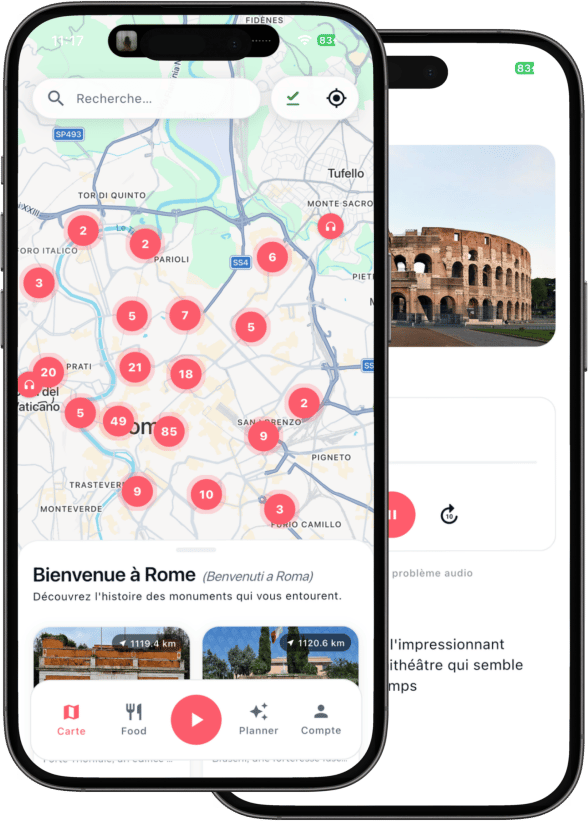
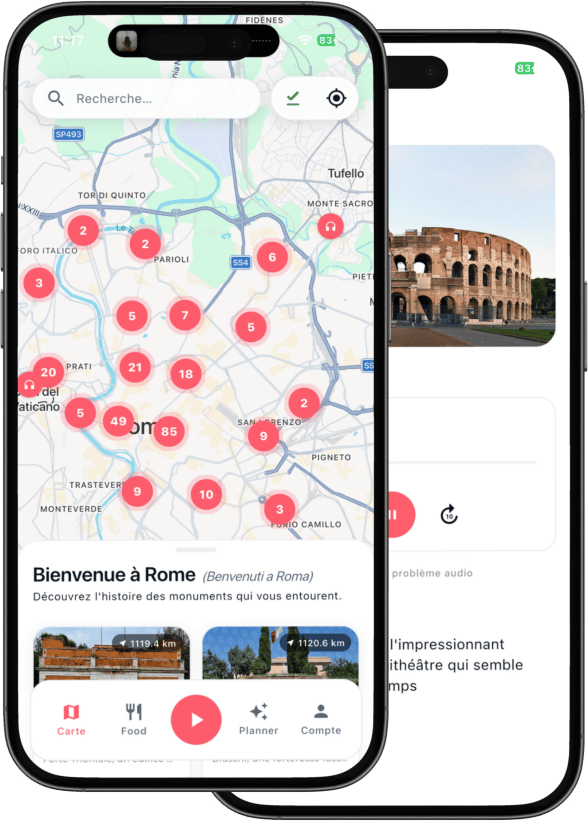
CityGuide starts the commentary on its own at every church, every miradouro and every Alfama lane — with no need to pull out your phone and search. It all works offline, and one purchase covers everyone travelling with you.
See the Lisbon audio guide