

— TRAVEL TIPS
Self-guided tours: what they are, and why they change a trip
You want to understand what you're looking at — without following a raised umbrella or building your days around someone else's schedule. That's exactly what a self-guided tour gives you, and most travelers who try one don't go back.
Sophie Dorval, independent travel specialist · September 4, 2026 · 7 min read
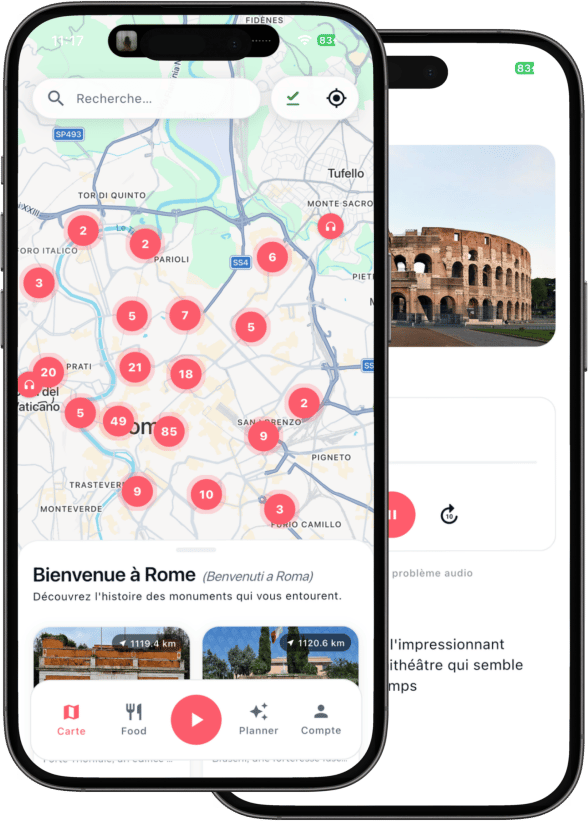
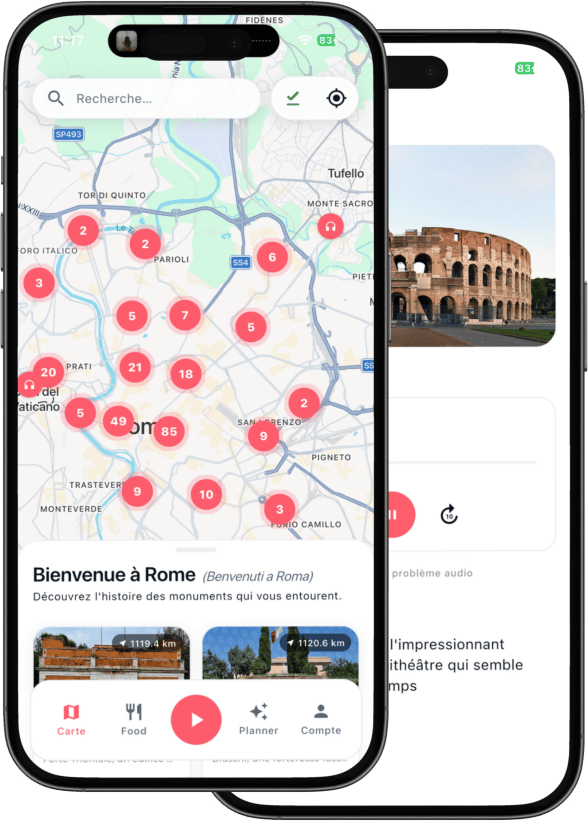
A self-guided tour is a tour you run yourself, with content that travels with you: a route planned in advance, and commentary that plays as you reach each place. No group, no timetable, no guide walking ahead of you.
What separates it from simply visiting alone is the content. Without it, you walk past facades. With it, you know why that facade exists, who wanted it there, and what happened on the square across the street.
What separates it from a traditional guided tour is freedom. You start when you like, stop when something catches you, and skip what bores you. Nobody is waiting.
Why travelers are switching
Pace, first. A guided tour runs two hours and sets its own tempo — the group moves when the guide moves. On your own, you can spend forty minutes inside a church that moves you, and six inside one that doesn't.
Cost, next. Guided tours run roughly $25 to $70 per person, multiplied by everyone traveling with you. An audio guide is bought once and covers the whole family for several days.
Language, finally. Guided tours happen in whatever language is scheduled that day, usually English. On a self-guided tour you listen in your own, with wording you actually follow.
Where self-guided tours win outright
This format isn't right for everyone in every situation. But there are cases where nothing else comes close.
Traveling as a couple
You move at your own speed, stop for coffee when you feel like it, and don't have fifteen strangers between you and the view.
Traveling with kids
A tired child will not last two hours in a group. On your own you pause, cut it short, pick it up tomorrow — and nobody is inconvenienced.
Short stays
On a two-day trip, a guided tour eats half a day. Self-guided, you cover twice the ground and still have time to wander.
Awkward hours
Up at six, or wanting to walk after eight in the evening? No guided tour leaves at those hours — and those are the best ones.
Traveling solo
No group dynamic to navigate, no awkward silences. You listen, you walk, you enjoy it.
Returning to a city
Already done the highlights? Self-guided lets you pick the neighborhoods you've never walked.
Tight budgets
For a family of four, a guided tour easily runs $200. An audio guide costs a fraction of that and stays on your phone.
If you're shy
Asking a question in front of twenty people isn't for everyone. Here you simply replay the section as often as you want.
Conversely, if what you want is human contact, questions answered on the spot, and a real encounter, a good guided tour is still irreplaceable. The two formats aren't rivals — they answer different appetites.
How to run a self-guided tour that actually works
Pick a route, not a list
A list of ten monuments sends you criss-crossing the city. A thought-out route strings places together in an order that makes geographic sense — you walk less and see more.
Download before you go
Signal is unreliable in old narrow streets, and data abroad is expensive. Downloaded content works in airplane mode, which also saves your battery.
Keep one ear free
Use a single earbud. You still hear the city — bells, traffic, people — and you stay aware of what's around you.
Allow yourself to drift
The best moment of a self-guided tour is often the street you turn into for no reason at all. The route will wait.
Guidebook, map app, or audio guide?
Three families of tools compete here. They don't ask the same effort, or the same attention.
The paper guidebook
Thorough and reliable, but you have to read it. Reading means looking down — you spend the visit in the pages instead of looking at what you came to see.
The map app
Excellent for finding your way, silent on meaning. It tells you where you are, never why it matters.
The location-aware audio guide
Commentary starts on its own as you reach each place. Your eyes stay up and your hands stay free — the closest thing to a real guide, without the group.
What a self-guided day looks like
A shape that works in more or less any European city.
The historic center before the crowds. Squares are empty and the light is at its best. One to two hours of narrated walking.
A museum or monument that needs a ticket. You walk in with the context already in your head, which changes the visit entirely.
A long pause. Lunch, a nap, a terrace. The hot hours are good neither for walking nor for taking anything in.
A quieter district, away from the headline sights. This is where cities actually let you in.
One last short loop at dusk, when the monuments light up and locals come back out.
— Questions fréquentes
Self-guided tours: your questions
On content, yes — commentary is written and checked in advance, without the vagueness of a guide on their fourth tour of the day. What you lose is the ability to ask a question and the human exchange. What you gain is complete freedom and a much lower cost.
Not if you download the content before you set off. It's actually recommended: old streets block reception and roaming is expensive. Once downloaded, everything works in airplane mode.
Often better than a guided tour, precisely because you can stop, cut it short, and resume. A child won't last two hours in a silent group; they'll happily manage a narrated walk broken up by ice cream stops.
A narrated loop through a historic center runs around two hours of actual walking. Budget double in real time — you'll stop, take photos, have a coffee, and that's rather the point.
That's expected. A good audio guide follows your position: if you drift, it waits, and picks up when you rejoin the route. Getting lost on purpose is part of the pleasure.
No. A self-guided tour narrates places inside and out, but tickets for museums and monuments still have to be bought separately.
— Pour aller plus loin
A guide in your ear, in over 100 cities
CityGuide turns your phone into a personal guide: commentary starts on its own as you reach each place, everything works offline, and one purchase covers everyone traveling with you. You walk, we tell the story.
Explore the audio guides