

— TRAVEL TIPS · ROME
A self-guided tour of Rome: the route, district by district
Rome isn't seen monument by monument — it's seen district by district. Distances deceive here: two sights that look adjacent on a map can be separated by a hill. Here's the order that works, and the hours that change everything.
Sophie Dorval, Italy specialist · September 4, 2026 · 9 min read
The golden rule in Rome: never cross the city twice in one day. The historic center fits inside a rectangle roughly two miles by one, but it's cut by the Tiber and by seven hills. A badly ordered day costs you two hours of walking for nothing.
The structure that works splits Rome into five zones, each filling half a day: ancient Rome, the baroque center, the Vatican, Trastevere, and Aventine–Testaccio.
On a self-guided tour that order is your real advantage: nobody is waiting for you, so you can match each zone to the right hour of the day.
What the map doesn't show
Rome is hilly. The Capitoline, the Palatine, the Aventine, the Janiculum — these are hills, not flat streets. A 900-metre hop can cost twenty minutes and several flights of steps.
Distances are short but crowds are dense. Between 10am and 5pm, the Trevi Fountain and the Pantheon become hard to move through — and impossible to listen in.
Many of the essential sights are outdoors and free: squares, facades, fountains, bridges. They're also the ones you understand least without commentary, because nothing on site explains them.
Rome's five zones, in the order to walk them
Each fills roughly half a day on foot. String them together according to your time — two zones a day is a comfortable rhythm.
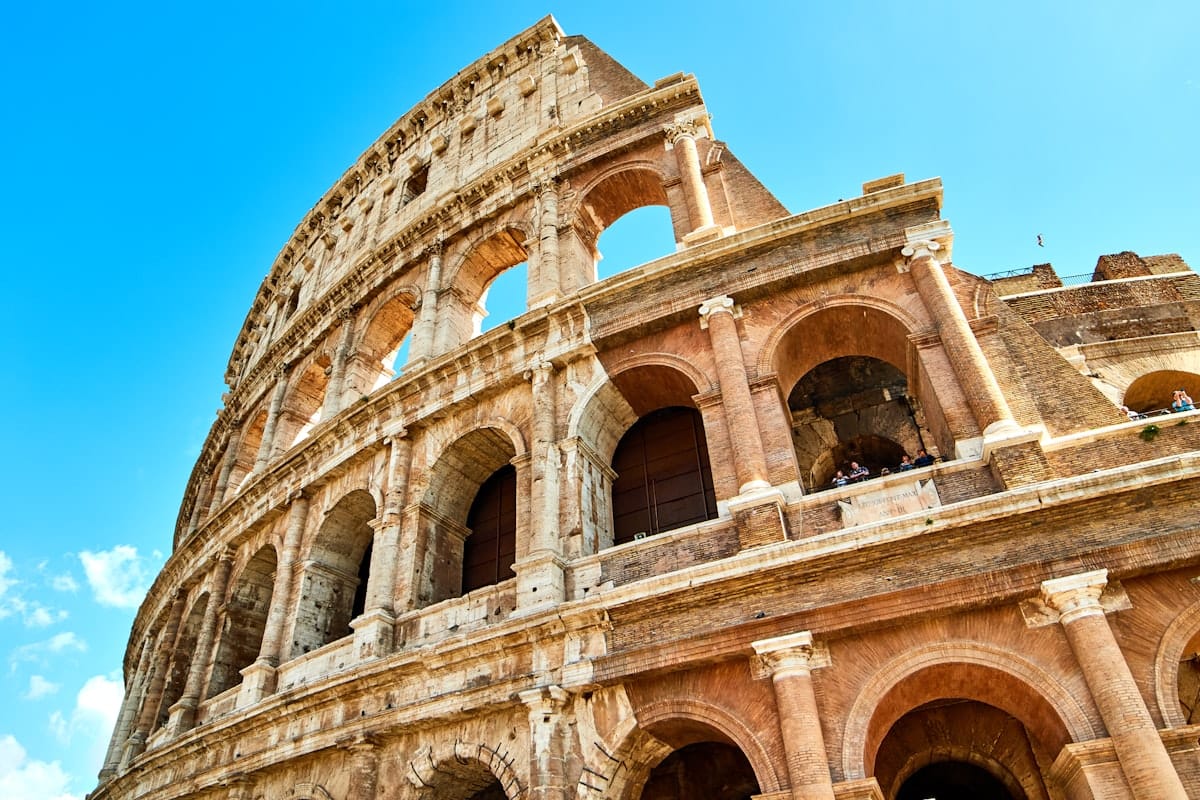
1. Ancient Rome — Colosseum, Forum, Palatine
The imperial heart. Go early: the Forum is a shadeless field of ruins, punishing after 11am. The climb up the Palatine gives the best view over the whole site, and almost nobody bothers.
2. The Capitoline and the Ghetto
Just above the Forum, the square designed by Michelangelo. Coming back down toward the Tiber, the Jewish quarter — one of the few places in Rome where you still feel two thousand years of unbroken life.
3. The baroque center — Pantheon, Navona, Trevi
The Rome of squares and fountains, entirely walkable and entirely free. The Pantheon is close to two thousand years old and its dome still stands without reinforcement: the building that best explains Roman engineering.
4. The Vatican
Half a day in its own right, and a different country. Schedule it early morning or late afternoon. St Peter's Square makes sense from the outside long before you enter anything.
5. Trastevere
Across the river, narrow lanes and ochre facades. This is the evening district: it changes character completely once the light goes.
6. The Aventine and Testaccio
Rome's quietest hill, its orange garden and its famous keyhole. Then Testaccio below — working-class, food-obsessed, and free of tour groups.
7. The Appian Way
For an extra day: the original Roman road, its paving stones, tombs and catacombs. Best on a Sunday, when it closes to cars.
8. The Janiculum
Neither a district nor a monument: a hill with the finest panorama over Rome. Free, never crowded, perfect at sunset.
These zones cover most of what brings people to Rome. But between them lie hundreds of churches, fountains and squares that appear on no list — and that often turn out to be the best surprises of a trip.
Building your self-guided tour of Rome
Two zones a day, no more
One in the morning, one in the late afternoon, with a genuine break between. Rome is a walking city: you'll cover 5 to 8 miles a day without trying.
Book entries in advance
The Colosseum and the Vatican Museums run on timed slots. Lock those first, then build the day around them — it's the one non-negotiable part of your route.
Save the outdoor sights for the quiet hours
Squares, fountains and facades are free and always open. Those are the ones to do at 7am or 9pm, when everything else is shut or overrun.
Download before you head out
Signal is poor in the center's alleys and across the archaeological sites. A downloaded audio guide works in airplane mode, keeping your battery for the day.
How to have Rome explained without a guide
Rome is the city where missing context costs you most: without explanation, an isolated column stays an isolated column.
The paper guidebook
Very thorough on Rome, but heavy and slow. Standing at the Forum, you spend more time hunting for the right page than looking at the ruins.
On-site signage
Sparse, often faded, and rarely translated well. Across the archaeological sites it assumes you already know Roman history.
The location-aware audio guide
Commentary starts by itself as you reach the square or the facade. Your eyes stay on Rome rather than a screen — and you understand what you're seeing without stopping.
A typical day in Rome
The shape that works best, to adjust by season.
The baroque center, empty. Pantheon, Navona, Trevi with nobody there. It's the only window when those three are genuinely walkable, and by far the best light.
Ancient Rome. Colosseum on your booked slot, then Forum and Palatine straight after — one ticket covers all three and lasts two days.
A long break, guilt-free. Lunch in the Ghetto or Testaccio, then a rest. Walking Rome between noon and four in summer is simply a miscalculation.
Trastevere or the Aventine, depending on the energy left. Shaded lanes, gardens, viewpoints.
The Janiculum at sunset, then dinner nearby. Rome lights up, and the squares fill with residents rather than visitors.
— Questions fréquentes
Self-guided tour of Rome: your questions
Three full days cover the five zones without rushing. Two days force you to drop either the Vatican or Trastevere. With four you add the Appian Way and get to breathe.
The historic center, yes — and it's the best way. Only the Vatican from some districts and the Appian Way justify transport. Bring real shoes: Roman cobbles are merciless.
Always. Slots sell out days ahead in high season, and the walk-up queue can pass two hours. The ticket includes the Forum and the Palatine.
Before 8am or after 10pm. In between, the square is so dense you can't reach the basin edge. Early morning you can have it almost to yourself — an entirely different experience.
Yes, provided you downloaded first: reception is poor across the Forum and Palatine. That's exactly where it earns its keep, because without commentary those ruins stay unreadable.
Yes, as long as you accept shorter days. The Colosseum and the fountains land well with them; the Forum much less. A self-guided tour is precisely what lets you cut it short without inconveniencing anyone.
— Pour aller plus loin
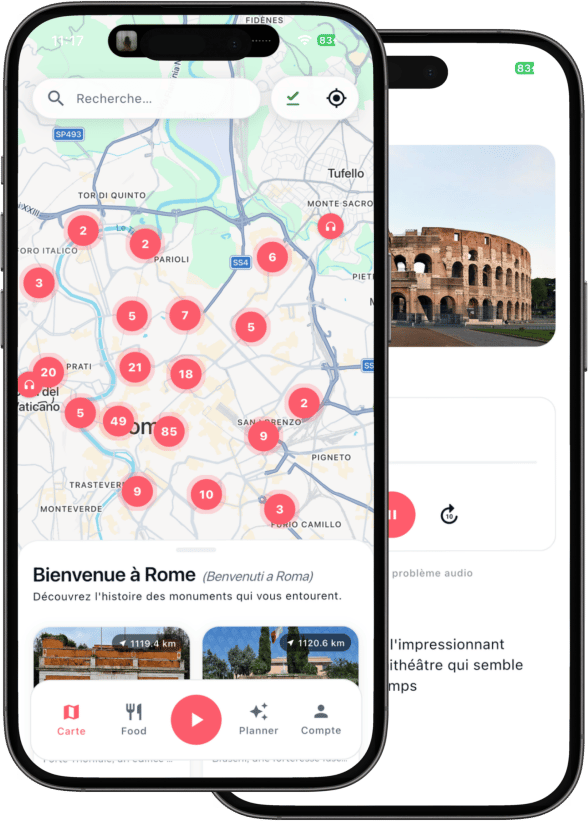
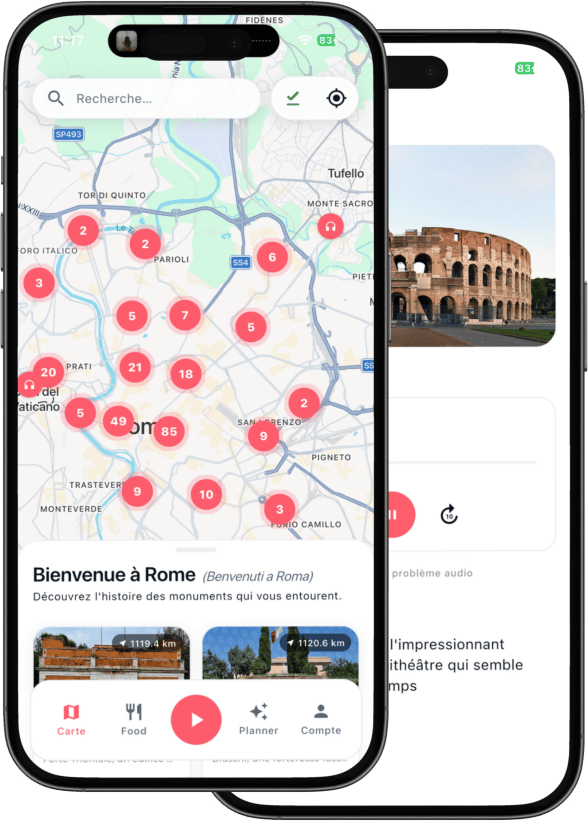
The audio guide that tells you Rome as you walk
CityGuide starts the commentary on its own as you reach each place: the Forum, the Pantheon, a square you cross by accident. Everything works offline, and one purchase covers everyone traveling with you.
Explore the Rome audio guide