

— TRAVEL TIPS · ATHENS
Visit Athens in 3 days: the itinerary for travellers who want to truly understand the city
Seventy-two hours are ample time to explore Classical antiquity and understand the city centre's Ottoman evolution. However, it is too tight a window to delve properly into the Athens Riviera or the port of Piraeus.
By Sophie Dorval, Greece specialist · September 9, 2026 · 9 min read

Athens demands a strict zonal approach: its hilly terrain and summer heat make backtracking exhausting. Focus your archaeological visits in the morning, secure your Acropolis entry slots weeks ahead, and keep the denser residential neighbourhoods for the late afternoon.
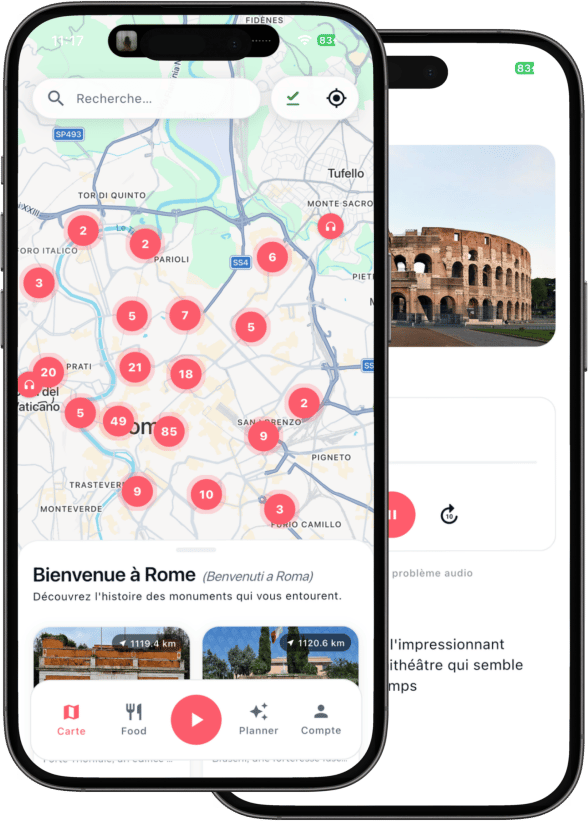
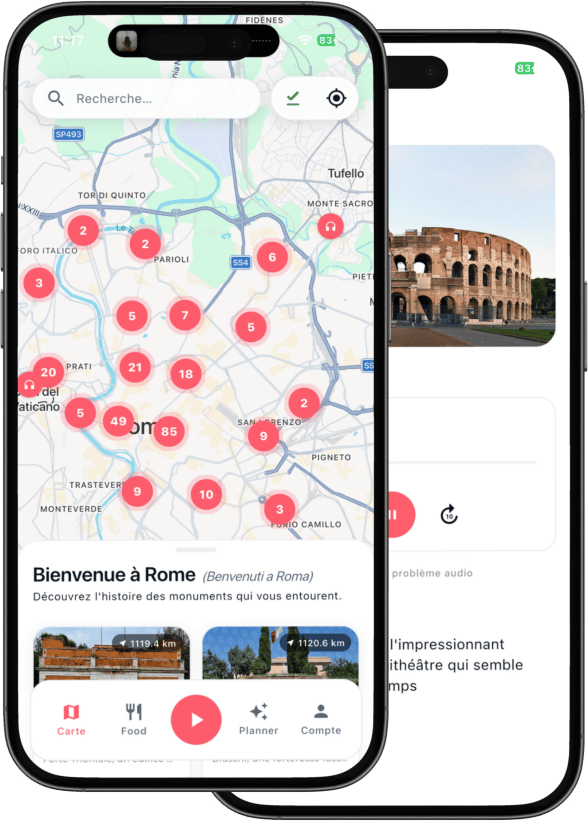
One tip before you go: to follow this itinerary independently — at your own pace, without booking a guided tour for every site — bring an audio guide app. You unlock the whole city at once, and the story of each monument starts playing as soon as you arrive in front of it. That's exactly what CityGuide offers in Athens.
Here is a walking itinerary tailored to stay ahead of the morning cruise-ship crowds.
Day 1
Antiquity in all its grandeur
A day dedicated to the sacred rock and its immediate archaeological setting.
Tickets for the Acropolis require a timed entry slot, which frequently sells out days in advance during summer. The Parthenon, whose Doric columns feature subtle entasis to counter optical illusions, is best visited right when the gates open.
Philopappos Hill rises to an elevation of 147 metres and is home to the funeral monument of Antiochus Philopappos, erected in the early 2nd century AD. Access is completely free and offers an unobstructed view towards the Propylaea of the Acropolis.
Just south of the museum, the pedestrianised streets of Drakou and Georgaki Olympiou are lined with tavernas popular with local students. Menus focus on traditional slow-baked dishes, well away from the inflated prices of the tourist strip.
Designed by Bernard Tschumi and opened in 2009, the Acropolis Museum sits on concrete pillars above Byzantine excavations. The third floor is skewed at an angle to align directly with the Parthenon visible through its glass facade.
Day 2
The urban transition
From the ancient civic heart to Cycladic alleyways: the city's transformation under Ottoman and Bavarian rule.
As the political heart of the city in the 5th century BC, the Ancient Agora is home to the Temple of Hephaestus, the best-preserved Doric building in Greece. The combined archaeological ticket grants entry here and remains valid over multiple days.
Monastiraki Square brings together the 1759 Tzistarakis Mosque and the Byzantine Pantanassa church. Behind it, Ifestou Street is lined with independent record shops, while the Varvakios Central Market a little further north sells meat and fish every day except Sunday.
Built in the mid-19th century by stonemasons from the island of Anafi, the tiny enclave of Anafiotika features numerous whitewashed houses clinging to the northern cliff. You will navigate extremely narrow alleyways entirely devoid of shops.
To bridge the history between Hadrian's Library and the Tower of the Winds, designed by Andronicus of Cyrrhus, switch on our app's audio guide. The commentary reveals how this octagonal marble tower functioned as an elaborate water clock in the 1st century BC.
Once you are there, let it guide you
The CityGuide Athens audio guide starts by itself in front of every stop on your itinerary.
Full audio guide
$21.90 $39.90
★ 4.8/5 · 15 reviews
30-day money-back guarantee
Day 3
Modern and alternative Athens
The foundations of the modern Greek state and the hubs of contemporary counterculture.
The Neoclassical Trilogy on Panepistimiou Avenue, designed by the Hansen brothers and Ernst Ziller, includes the National Library, the University, and the Academy. These 19th-century Pentelic marble edifices represent the young Greek nation's determination to reclaim its classical heritage.
The National Archaeological Museum houses the gold funeral Mask of Agamemnon, unearthed by Schliemann in 1876, along with the Antikythera mechanism, the earliest known analogue computer. Its vast exhibition galleries warrant an extensive visit.
Exarcheia has been the historic stronghold of anarchist movements since the 1973 Athens Polytechnic uprising. Political murals cover the walls along Stournari Street, and collective-run community cafes serve espresso at modest prices.
Commissioned by Queen Amalia in 1838, the National Garden is home to numerous plant species and open-air Roman mosaics. Admission is free from sunrise to sunset, providing a shaded walk across towards the Temple of Olympian Zeus.
The peak of Mount Lycabettus reaches 277 metres. The funicular departs regularly from Aristippou Street, but walking up the winding stepped path lets you bypass the lengthy queues typical of late afternoons in peak season.
6 practical tips for your stay in Athens
- The combined archaeological ticket costs several dozen euros and remains valid for multiple days across various sites, including the Acropolis and the Roman Agora, though it does not include the Acropolis Museum.
- Metro Line 3 connects Eleftherios Venizelos Airport directly to Syntagma Square. The earliest trains run from early morning and operate until late at night.
- The National Archaeological Museum is closed on Tuesday mornings between November and March; always check winter opening times, which reduce afternoon visiting hours.
- EU students under 25 enjoy free admission to all Greek public heritage sites upon showing a physical student card or the digital ISIC app.
- Tap water is safe to drink throughout Athens. Monastiraki and Syntagma metro stations have free public fountains where you can refill water bottles.
- The changing of the Evzones presidential guard outside Parliament occurs regularly throughout the day, but the grand ceremonial change with full military band takes place exclusively on Sundays at 11:00 am.
Reading the ruins to truly understand the city
Greek history spans millennia, yet informational plaques at archaeological sites are often terse. A well-planned itinerary only truly delivers once you grasp the political and social context behind every marble column or Byzantine chapel.
That's where an audio guide app like CityGuide comes in: it detects where you are and plays the story of each place at just the right moment, while you walk from one stop to the next — hands and eyes free, even offline. So you can follow your itinerary without ever being left in the dark.
— Frequently Asked Questions
Frequently asked questions about Athens
Seventy-two hours provide enough time to take in the three key eras: Classical, Byzantine, and modern. You will, however, have to skip the Temple of Poseidon at Cape Sounion, which sits too far to the south.
A hostel dorm bed in the Psyrri district costs a few dozen euros per night, while a full meal in an unpretentious local taverna remains very affordable. Set aside extra budget for the primary cultural sites.
The historic centre is compact and best explored on foot. A single metro ticket costs just over a euro and is valid for 90 minutes across the entire network of buses, trams, and underground lines.
October and November bring pleasant temperatures, ideal for walking up the hills. From June to August, municipal authorities often close the Acropolis during the hottest hours of the day due to heatwaves.
Access to the Parthenon requires a named ticket with a specific time slot, which often sells out several days in advance. Tickets for the National Archaeological Museum can easily be bought on-site the same day without significant queues.
Kolokotroni Street is packed with award-winning independent cocktail bars. For dinner, the Petralona district, tucked behind Philopappos Hill, is where locals head for dinner.
— Go Further
Ancient history brought to life in your headphones
The CityGuide Athens app does away with bulky paper guidebooks. It features 45 points of interest documented by historians, alongside offline maps so you can explore without eating into your roaming data.
See the Athens audio guide