

— TRAVEL TIPS · LONDON
How to visit London without a guide (and miss nothing)?
You want to explore London on your own terms, at your own pace, without paying for a guided tour or shuffling along behind a group. Good news: not only is it possible, it's often the finest way to discover the British capital — with one condition.
James Whitfield, London specialist · June 23, 2026 · 8 min read

Let's settle it straight away: yes, you can absolutely visit London without a guide. Millions of travellers do it every year, and they gain something no organised tour can offer — total freedom. Your itinerary. Your pace. Your budget. The right to linger an hour in a room of the British Museum, or to slip off for a cup of tea whenever the mood strikes.
The only mistake to avoid is setting off completely blind. Because London, without any context, can quickly boil down to very handsome buildings whose history you never grasp. And that would be a shame: it's precisely that history that turns a stroll into a journey.
The right approach fits in a single sentence: stay free, but don't stay ignorant. Here's how.
What nobody tells you about London "with nothing"
Standing before the Tower of London, an unprepared traveller sees… a grey fortress on the bank of the Thames. It's the classic trap, and travellers admit it themselves: "you wander among magnificent monuments without really understanding what you're looking at."
There's a reason for that: London carries nearly two thousand years of history, from Roman Londinium to the Tudor royal intrigues and the Great Fire of 1666. Without a key to read it, you walk straight past centuries of plots, coronations and dramas without seeing them. The signs on site are scarce, often terse, and never tell the anecdotes that bring a place to life.
Visiting without a guide is therefore not "visiting with nothing." It's giving yourself the right means to understand — while keeping your freedom.
London's must-sees (and why you need to understand them)
Here are the places not to miss. But remember one thing: in front of each, what changes everything isn't seeing it — it's knowing what you're looking at.
The Tower of London
From afar, an old fortress. With its history: nine centuries as a royal prison, two queens beheaded, and the Crown Jewels guarded by ravens.
The British Museum
Eight million objects and free entry. Without context, you walk past the Rosetta Stone and the Parthenon marbles without grasping why the whole world still argues over them.
Westminster & Big Ben
The most photographed clock tower in the world. But "Big Ben" is the bell — and the palace beside it is the beating heart of British democracy.
Buckingham Palace
775 rooms and a flag that says it all: raised, the monarch is in. The Changing of the Guard isn't a show for tourists — it's a military ritual centuries old.
Tower Bridge
The bridge everyone mistakes for London Bridge. Its Victorian machinery still lifts the roadway to let ships through, just as it did in 1894.
St Paul's Cathedral
Christopher Wren's dome, raised after the Great Fire and a survivor of the Blitz. Its Whispering Gallery hides an acoustic secret 300 years old.
Camden & Soho
Rebel London: punk markets, a legendary music scene and backstreets where the Beatles, Bowie and Britpop were born. Far from the postcards.
Covent Garden
A former fruit market turned open-air theatre. Street performers, the Royal Opera House and the bohemian soul of the West End under an iron canopy.
And these are only the best known: London has hundreds of places worth pausing for, from overlooked neighbourhoods to hidden treasures.
How to visit London without a guide, in practice
1. Group your must-sees by neighbourhood
You now know the big must-sees. Spot them on a map and group them by area so you don't zigzag: the Tower of London with Tower Bridge and the City, Westminster with Big Ben, the Abbey and Buckingham, the British Museum with Covent Garden and Soho. And leave room for the unexpected — in London, it's often the unplanned lanes and hidden pubs that stay with you most.
2. Give yourself the means to understand what you see
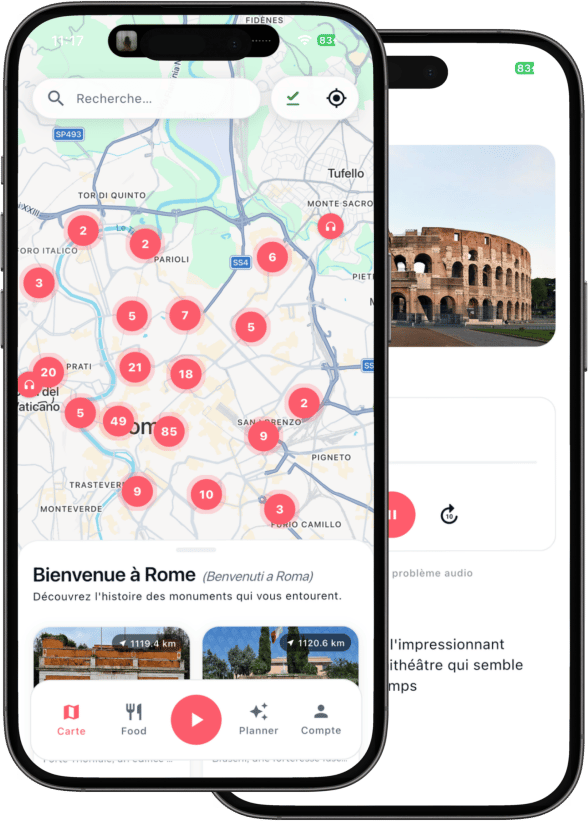
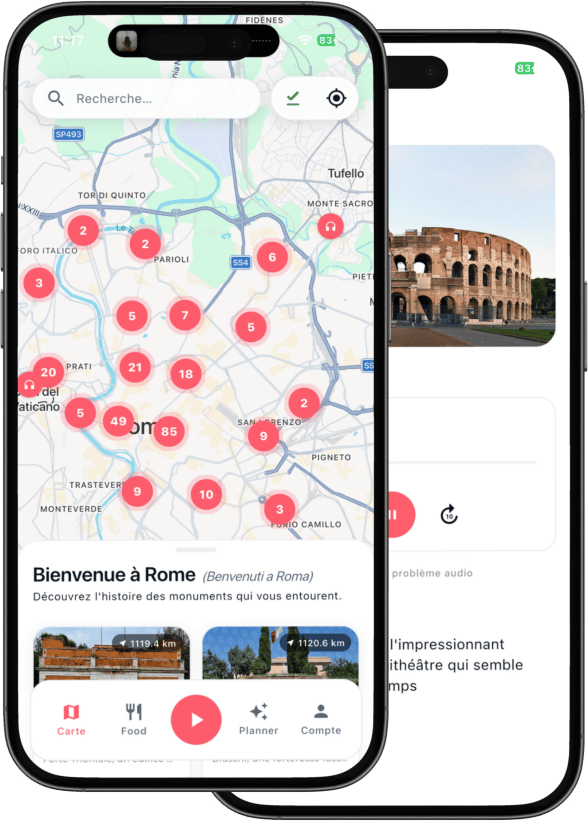
This is the step most people neglect — and the one that makes all the difference. You have several options: a paper guide (effective, but read head-down with your hands full), home preparation (notes, videos), or the solution independent travellers have adopted in recent years: the location-aware audio guide, which detects where you are and starts the story of a place the exact moment you arrive — hands and eyes free, across London.
3. Pick the right moment and avoid the traps
Arrive early at the major sites (before the groups and before the Changing of the Guard), book your tickets for the Tower of London and the London Eye in advance to avoid hours of queueing, keep an eye on your belongings on the Tube and in tourist zones, carry an umbrella in any season, and favour spring or summer for the long hours of daylight. With that, you'll visit London more freely — and often better — than with any guided tour.
Paper guide, mobile app or audio guide: which to choose?
All three options look equal on paper. On London's streets, the experience is very different.
The paper guide
Thorough, but you read it standing in the rain, head down, hands full. You lower your eyes to the pages instead of looking at the city — and you forget it by that evening.
The "classic" audio app
It imposes a fixed route to follow in order. The frequent result: you end up disoriented, you backtrack, and you feel you've missed half of it.
The location-aware audio guide
The story starts on its own wherever you are: impossible to get lost or miss the order. And it's not a robot — a real story, with the anecdotes and secrets no sign ever tells. You look up at London, not at a screen, even offline. That's the CityGuide approach.
A typical day in London without a guide
An example walking itinerary, to adapt to your own taste — each stop tells its own story if you have an audio guide that triggers as you walk.
Tower of London and Tower Bridge. This is where the stone comes alive: coronations, executions, jewels and ravens. Arrive early with tickets booked to skip the queues, then cross the bridge for the view.
Head up towards the City and St Paul's, then have lunch around Borough Market or in a proper London pub. Look for the spots where Londoners actually eat, away from the busiest squares.
Westminster, Big Ben, the Abbey and a walk along the Thames to Buckingham. You wander as the mood takes you — each landmark has its story, and they follow one another just minutes apart.
Sunset from a bridge over the Thames, or a wander through Soho and Covent Garden. The last anecdote of the day before the evening pub.
— Questions fréquentes
Visiting London without a guide: your questions
Yes, absolutely. Millions of travellers visit London independently every year. You gain total freedom — your itinerary, your pace, your budget. The only thing to plan for: having a minimum of context to understand what you're looking at, otherwise the monuments stay silent.
Not necessarily. A good audio guide like CityGuide downloads before you leave and then works 100% offline — without touching your data plan or paying roaming in the UK, a detail that matters since Brexit. GPS is enough.
That's the difference with a location-aware audio guide: instead of imposing a fixed route to follow in order, it detects where you are and starts the right story in the right place. You walk however you like, you can't miss the order or end up disoriented.
Not if you equip yourself a little. A well-made audio guide tells you the stories and anecdotes a guide would give — except you keep it forever and replay it whenever you want. You gain the freedom on top.
The Tower of London, the British Museum, Westminster and Big Ben, Buckingham Palace, Tower Bridge, St Paul's Cathedral, and the districts of Camden, Soho and Covent Garden. But London is also lived in its parks, its markets and its overlooked lanes.
Spring (May-June) and summer for the long, bright days, or autumn for gentler prices and smaller crowds. The weather stays unpredictable all year, so always pack an umbrella. And whatever the season, arrive early at the major sites to avoid the queues.
— Pour aller plus loin
The audio guide that tells you London as you walk
CityGuide turns your phone into a personal audio guide: you walk, and the precise moment you reach a monument, a voice begins — a real story, with the anecdotes and secrets no sign ever tells. And it's not just an audio guide: ready-made walks to follow, the best places to eat like a local, an itinerary planner. Hundreds of places in London, even offline — everything you need to discover the city from A to Z, without ever staying ignorant.
Discover the London audio guide