

— TRAVEL TIPS · LONDON
Things to do in London: the highlights and the right pace
London has no centre. It is a collection of villages that turned into a metropolis, and that is what throws people: two landmarks that look adjacent on a map can be forty minutes apart. The real question is not what to see, but in what order.
Sophie Dorval, UK specialist · September 5, 2026 · 9 min read
London breaks down into a few useful zones: Westminster for power and monuments, the City and the Tower for the older history, the South Bank for museums and walking, the West End for theatre, and the east for whatever is currently happening.
Three days is an honest minimum. Two force a choice between monuments and museums; four finally let you leave the centre, which is where the city gets interesting.
The most underrated fact: the great national museums — British Museum, National Gallery, Tate Modern, Natural History, V&A — are free. Nothing else in Europe matches that scale, and it changes the budget of a trip completely.
What to know before you go
You do not need to buy a travel card: a contactless bank card or a phone works, and the system caps your daily total automatically. Just tap the same card every time.
Distances deceive. Walk within a neighbourhood, take the Tube or a bus between neighbourhoods — doing the opposite costs hours.
Entry to the great national museums is free, but temporary exhibitions are ticketed and should be booked. The Tower of London, Westminster Abbey and St Paul's are paid too.
The highlights of London
What to see, with what makes each one interesting rather than merely compulsory.
The British Museum
Eight million objects, free entry, and a collection whose origins remain contested — the Rosetta Stone and the Parthenon marbles above all. Two hours are enough if you target three rooms instead of walking the lot.
Westminster: the Abbey and Parliament
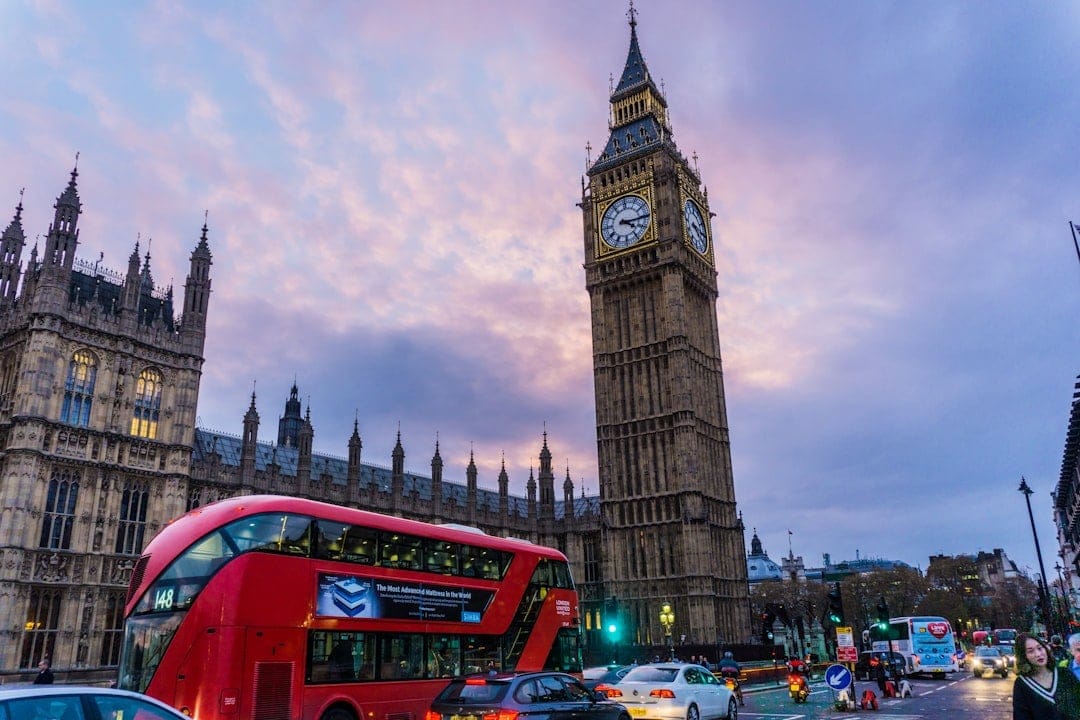
A thousand years of coronations in the Abbey, and a neo-Gothic Parliament rebuilt after the 1834 fire. Big Ben is the name of the bell, not the tower: that has been the Elizabeth Tower since 2012.
The Tower of London
Fortress, palace, prison and treasury: it has been all of them. The Crown Jewels are here, and the Yeoman Warder tour — included in the ticket — is well worth the hour it takes.
The National Gallery
Van Eyck, Velázquez, Turner, Van Gogh, in a building that presides over Trafalgar Square. Free as well, open late on certain evenings, and far quieter at the end of the day.
Tate Modern and the South Bank
A decommissioned power station turned into the most visited modern art museum in the world. The top-floor terrace gives one of the best views over the City, for nothing.
Borough Market and Southwark
A food market recorded since the twelfth century, now the best place in London to eat standing up. Next door: Southwark Cathedral and the Globe, a reconstruction of Shakespeare's theatre.
The royal parks
Hyde Park, St James's, Regent's Park: former royal hunting grounds opened to the public, covering a remarkable share of the centre. St James's has the best view of Buckingham Palace, from its bridge.
Greenwich
The meridian, the Royal Observatory, the Cutty Sark and a view over the Thames from the hill. Get there by boat from Westminster — the journey is part of the visit.
Beyond those: Camden and its markets, Shoreditch for street art, Notting Hill and Portobello Road on Saturdays, Soho in the evening, and the Victoria & Albert, still the most underrated museum in the city.
How to plan your days
Group by area, not by appetite
Westminster and St Paul's on the same day means two pointless crossings. One zone per half-day, and everything flows.
Free museums at the end of the day
They stay open into late afternoon, often later one evening a week, and free entry means you can spend forty minutes there without feeling short-changed.
Book the Tower and the Abbey
They are the two paid sites where queuing can cost an hour. The rest of the monuments can be improvised.
Take a bus at least once
The upper deck of a double-decker costs the price of a fare and crosses the city above ground. Routes 11 and 15 are worth any sightseeing tour.
Understanding what you are looking at
London stacks two thousand years in invisible layers: a Roman wall in a car park, a street name recalling a vanished trade, a Wren church rebuilt after the Great Fire. Without a key, you walk through all of it without seeing it.
A paper guidebook
Thorough, but heavy, and impractical in a city where you walk in the rain more often than you would like.
A guided tour
Excellent on one specific area, but fixed times, and it covers a tiny fraction of the city.
A location-aware audio guide
The commentary starts on its own at each monument, church and square — including in areas no tour reaches. It all works offline, which matters on a Tube with no signal.
What to do in London depending on how long you have
Three itineraries that build on each other, organised by area rather than by landmark.
Westminster in the morning — the Abbey, Parliament, the Changing of the Guard if the schedule allows — then the South Bank on foot to Tate Modern, and Borough Market for lunch.
Day two at the Tower of London and Tower Bridge in the morning, St Paul's and the City in the afternoon, then the British Museum at the end of the day.
A day out of the centre: Greenwich by boat, or Camden and Regent's Park, or the V&A followed by Hyde Park. This is the day London stops being a list of landmarks.
Hampton Court, Windsor or Oxford, all under an hour by train. Or east London: Shoreditch, Spitalfields and Brick Lane on a Sunday.
A pub before seven — that is when they fill with people coming off work — or a West End play, often cheaper than you would think if you book on the day.
— Questions fréquentes
Things to do in London: your questions
Three full days is a reasonable minimum for the major landmarks and two or three museums without rushing. Four or five let you get out of the centre, which is where the city's real interest lies.
Yes, the permanent collections of the great national museums are: British Museum, National Gallery, Tate Modern and Britain, Natural History, Science Museum, V&A. Only temporary exhibitions are ticketed.
Not any more: a contactless bank card or a phone works identically, with the same daily cap. Always use the same one so the cap applies.
Yes, at Buckingham Palace, but not daily and on a variable schedule published in advance. Arrive forty-five minutes early, or watch it at Horse Guards, which is far less crowded.
Only if you stack paid sites — Tower, Abbey, St Paul's, river cruises. Since most museums are free, it pays off less often here than elsewhere in Europe.
May-June and September: long days, mild temperatures, parks at their best. Winter is dark and damp, but the museums are calm and the theatres in full swing.
— Pour aller plus loin
The audio guide that tells you London as you walk
CityGuide starts the commentary on its own at the Abbey, the Tower, every church and every square — including in the areas tours ignore. It all works offline, and one purchase covers everyone travelling with you.
See the London audio guide