

Travel Guide
Top 10 Things to Do in Rome in 2026
Planning a first trip to the Italian capital requires a methodical approach to avoid burnout. Here is the exact selection of the ten must-see sites, along with up-to-date access rules.
Sophie Dorval, Italy specialist · September 10, 2026 · 9 min read
For a first trip, plan for a minimum of three full days on-site. This timeframe allows you to divide the city into three main zones: Ancient Rome, the historic center, and the Vatican City.
Always start with the Colosseum and the Roman Forum on the first morning. This area requires the most physical energy, involving miles of walking on uneven cobblestones often under strong sun.
Save the historic center, with the Pantheon and the Trevi Fountain, for late afternoons or a more relaxed second day. These public spaces remain accessible late into the evening and benefit from artificial lighting that makes visiting pleasant after dinner.
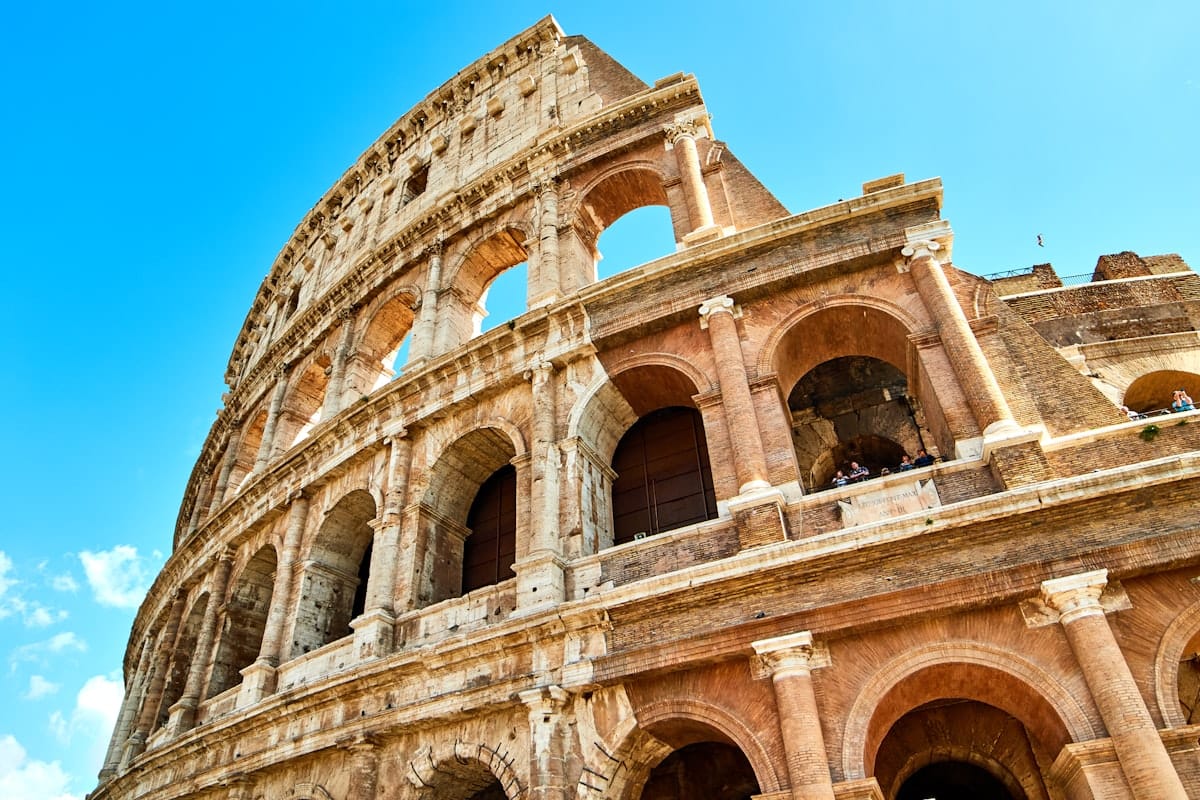
The Colosseum
This amphitheater completed in 80 AD could accommodate 50,000 spectators. Its complex structure includes an underground network, the hypogeum, where gladiators and animals waited before fights.
Online reservation is mandatory. Choose a ticket that includes access to the arena or the underground area for a comprehensive visit.
The Vatican and the Sistine Chapel
The Vatican Museums stretch over 7 kilometers of galleries housing papal collections. The ceiling painted by Michelangelo between 1508 and 1512 draws more than six million visitors each year.
Buy your skip-the-line ticket on the official website as soon as ticket sales open. Admission is free on the last Sunday of the month, but lines often exceed three hours.
The Pantheon
Its unreinforced concrete dome, measuring 43.3 meters in diameter, remains the largest in the world from antiquity. The 9-meter central oculus lets in both rain and natural light.
Admission is paid and requires a reservation on weekends. Opt for a visit right at opening time to avoid crowds.
The Roman Forum and Palatine Hill
The political and religious heart of the Empire, this valley brings together the ruins of the temples of Saturn and the Vestals. Palatine Hill overlooks the site at an elevation of 40 meters, providing the clearest overview of ancient topography.
The ticket is combined with the Colosseum and remains valid for 24 hours. The entrance via Via di San Gregorio is generally the least crowded.
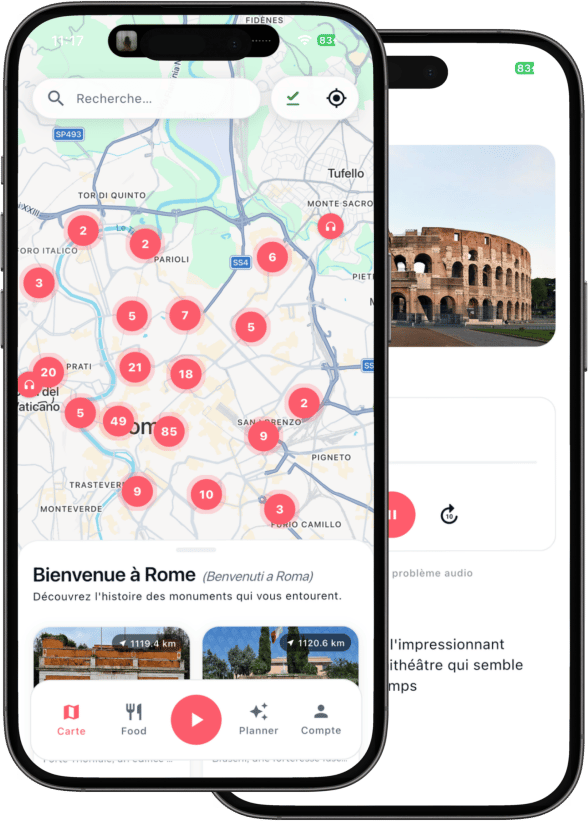
Once you are there, let it guide you
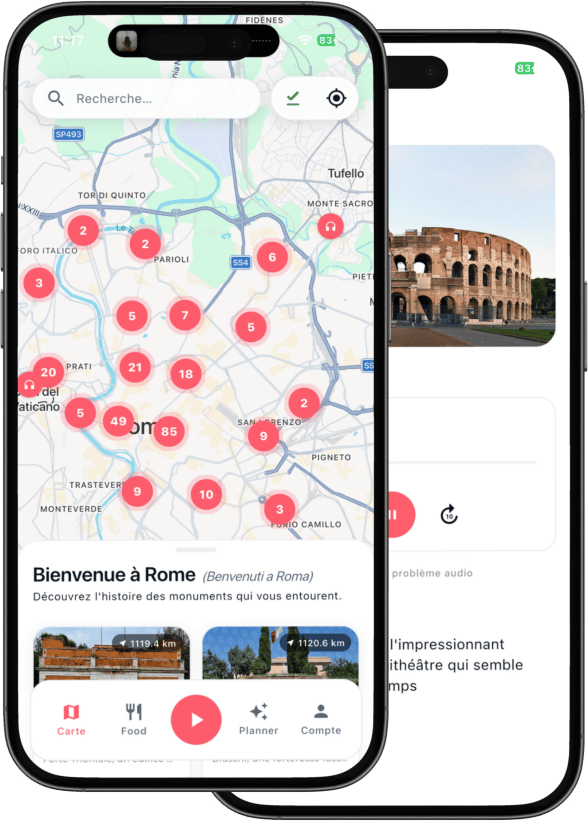
The CityGuide Rome audio guide starts by itself in front of every stop on your itinerary.
Full audio guide
$21.90 $39.90
★ 4.8/5 · 15 reviews
30-day money-back guarantee
The Trevi Fountain
Completed in 1762, this monumental fountain stands 26 meters tall and is fed by the Aqua Virgo aqueduct, one of the oldest in the city. A large volume of coins is tossed in daily, which is later donated to charities.
Visit this public monument early in the morning to photograph the sculptures without the massive crowds.
Piazza Navona
Its elliptical shape mirrors the exact footprint of the Stadium of Domitian built in the 1st century. It houses the Fountain of the Four Rivers sculpted by Bernini in 1651, representing the Nile, Ganges, Danube, and Río de la Plata.
Completely free public space. Avoid the restaurants located directly on the square, as their prices are disproportionate to the quality served.
Trastevere
This neighborhood on the west bank of the Tiber retains a medieval street layout with narrow alleyways. The Basilica of Santa Maria in Trastevere, founded in the 3rd century, features golden mosaics by Pietro Cavallini.
An ideal area for dinner, but arrive early in the evening if you have not booked a table at the local trattorias.
Villa Borghese and the Pincian Terrace
This 80-hectare public park was designed in the 17th century by Cardinal Scipione Borghese. The Pincian Terrace overlooks Piazza del Popolo and offers an unobstructed view of St. Peter's dome.
Access to the park is free, but the Borghese Gallery strictly requires reservations for two-hour time slots.
The Janiculum
This hill peaks at 82 meters, making it the second-highest point in the capital. A cannon fires a blank shot every day at noon, a tradition established by Pope Pius IX in 1847.
Walk up via the Passeggiata del Gianicolo from Trastevere. The view is especially striking in the morning with the sun at your back.
Largo di Torre Argentina
This archaeological complex contains the remains of four Republican temples and the base of Pompey's Curia, the exact site where Julius Caesar was assassinated in 44 BC. The ruins also shelter a cat sanctuary protected by law.
Equipped with walkways, the site can be explored from within with an admission ticket.
What to Do on a Second Trip?
Once you have covered the classics, venture beyond the center. The Testaccio district, centered around a former slaughterhouse, reveals the city's traditional working-class culinary history. Further south, the EUR district showcases the rationalist architecture of the 1930s commissioned by Mussolini.
How to Organize Your Days
Group sites by geographic proximity
Split the map into sectors. Combine the Colosseum, the Forum, and the Palatine Hill on the same day. The following day, focus on the Vatican and finish the afternoon with a stroll through Trastevere, located just to the south.
Manage tourist crowds in 2026
Early mornings are your best asset. Schedule open-access outdoor sites for the start of the morning. Save museums with timed-entry tickets for mid-morning or early afternoon, when the streets fill up.
Plan your transit ahead of time
The Italian capital is best explored on foot. The metro has only three lines that bypass the historic center. Expect to walk between 10 and 15 kilometers per day on cobblestones, so make sure to wear closed walking shoes.
The Best Tools for Exploring the City
Several resources can assist you. Here are the three most common approaches to make the most of your time on-site.
Traditional printed travel guide
Provides solid historical context and comprehensive maps. Keep in mind, however, that printed admission prices and opening hours often become outdated within a few months.
Group guided tour
A convenient option for large, complex museums since the guide sets the pace. The total cost adds up quickly if you are traveling with family.
Smartphone GPS audio tour
An app that detects your location and triggers clear audio explanations directly in front of the monuments. You stay independent, explore at your own pace, and enjoy regularly updated content.
— Questions fréquentes
Frequently Asked Questions About Planning
Yes, the historic center is compact. The distance between the Colosseum and the Vatican is 3.5 kilometers, which takes about 45 minutes at a brisk pace.
The Roma Pass is only cost-effective if you plan to visit at least two major paid museums and use public transit multiple times each day.
April, May, September, and October offer pleasant temperatures around 20 degrees Celsius. Summer frequently brings temperatures above 35 degrees, making outdoor sightseeing physically demanding.
The city features over 2,500 public drinking fountains known as nasoni. The water is safe, cold, and runs continuously. Bring a reusable water bottle to refill.
Expect to pay a few euros for a classic pasta dish at a neighborhood trattoria. The bill increases substantially on major tourist squares.
Most state-run museums close their doors on Mondays. The Colosseum and the Vatican Museums are exceptions and remain open, making Mondays their busiest days.
— Pour aller plus loin
Ready to Wander Through the Ancient City?
Download the app to turn your smartphone into a personal guide. GPS audio tours are ready to reveal the stories behind every ruin and facade without keeping your eyes glued to a screen.
Try the audio guide