

— TRAVEL TIPS · ROME
Things to do in Rome: the highlights and the right pace
Rome offers more than three thousand years of history across a few square miles. The real challenge isn't finding things to do — it's choosing, and doing them in the right order.
Sophie Dorval, Italy specialist · September 4, 2026 · 9 min read
The heart of Rome plays out across five zones: ancient Rome, the baroque center, the Vatican, Trastevere and the Aventine. Each fills about half a day on foot.
A great deal of what matters is outdoors and free: the squares, the fountains, the facades, the bridges. Tickets concern only a handful of sites — but they're the most sought-after, and the ones to book.
The main constraint is neither distance nor budget: it's the hour. The same places are magnificent at 7am and impassable at 2pm.
What to know before you go
Rome is hilly. The Capitoline, the Palatine, the Aventine and the Janiculum are hills: a 900-metre hop can cost twenty minutes and several flights of steps. Bring real shoes — the cobbles are merciless.
The Colosseum and the Vatican Museums run on timed slots that sell out days ahead in high season. They're the only non-negotiable fixtures in your plan.
Between noon and 4pm in summer, walking is simply a miscalculation. Romans take a genuine break: copy them, and save your energy for the late afternoon.
Rome's essential sights
Here's what to see, and what makes each one interesting — because a monument you know nothing about stays a handsome piece of stone.
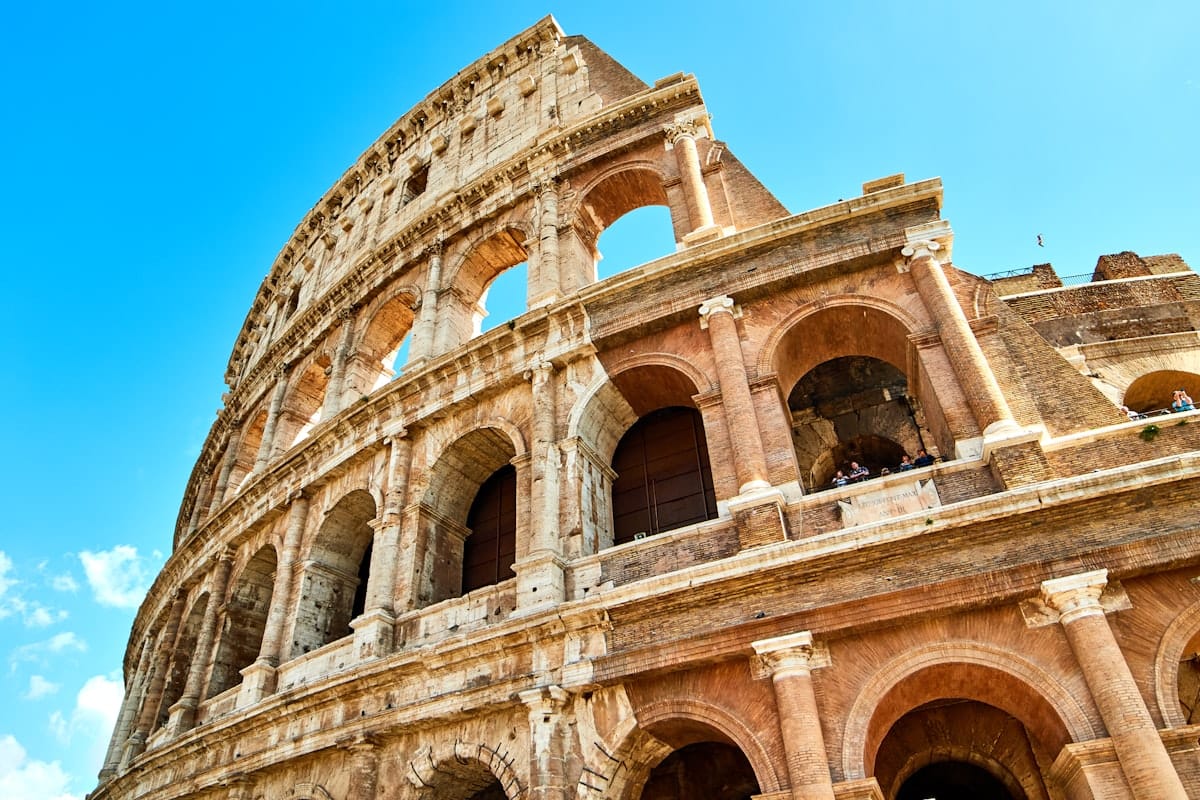
The Colosseum
The largest amphitheatre of the Roman world, engineered to empty fifty thousand spectators in minutes. The ticket includes the Forum and the Palatine and lasts two days — don't do them all in one morning.
The Roman Forum and the Palatine
The political heart of the Empire, today a shadeless field of ruins. Climb the Palatine: the overview is the only thing that makes the Forum legible, and almost nobody bothers.
The Pantheon
Nearly two thousand years old, and its dome still stands without reinforcement — the oculus at its summit is open to the sky. It's the building that best explains Roman engineering, and it costs little or nothing.
The Trevi Fountain
Impassable from 10am to 10pm. Before 8am you can have it almost to yourself, and it bears no relation to the experience everyone describes.
Piazza Navona
Its elongated shape is no accident: it traces an ancient stadium whose exact footprint it occupies. Entirely free, and beautiful at dusk.
The Vatican and St Peter's
A country in its own right, and half a day in its own right. The square makes sense from outside long before you enter anything — and entry to the basilica remains free.
Trastevere
Across the Tiber, ochre lanes that change character completely after dark. It's the evening district, and the best place for dinner.
The Janiculum
Neither monument nor district: a hill with the finest panorama over Rome. Free, never crowded, unbeatable at sunset.
And these are only the famous ones. Between them, Rome holds hundreds of churches, fountains and squares that appear on no list — and that are often what you remember best.
How to structure your days
Book first, plan second
Lock in your Colosseum and Vatican slots before anything else, then build around them. It reverses the usual logic, but it's the only approach that works in Rome in season.
Two zones a day, no more
One in the morning, one in the late afternoon, with a genuine break between. You'll walk five to eight miles a day without trying.
Save the outdoor sights for the quiet hours
Squares, fountains and facades are free and always open. Those are the ones to do at 7am or 9pm, when everything else is shut or overrun.
Never cross the city twice
The center fits inside two miles by one, but it's cut by the Tiber and seven hills. A badly ordered day costs you two hours of walking for nothing.
Understanding what you're looking at
Rome is the city where missing context costs you most. Three ways to fill that gap, asking rather different amounts of effort.
The paper guidebook
Very thorough, but standing at the Forum you spend more time hunting for the right page than looking at the ruins.
On-site signage
Sparse, often faded, rarely well translated. Across the archaeological sites it assumes you already know Roman history.
The location-aware audio guide
Commentary starts by itself as you reach the square or the facade. Your eyes stay on Rome rather than a screen, and everything works offline.
What to do in Rome depending on how long you have
Three plans that nest inside each other: the second builds on the first, the third on both.
Colosseum and Forum in the morning on a booked slot, a long break, then the baroque center in the late afternoon: Pantheon, Navona, Trevi. You'll have seen the essentials without understanding them deeply.
Add the Vatican on the second morning and Trastevere in the evening. It's the most common format, and enough to miss nothing essential.
Add the Aventine, Testaccio and the Janiculum. You shift from visitor to walker, and that's when Rome becomes genuinely enjoyable.
The Appian Way, the original Roman road with its paving stones and catacombs. Best on a Sunday, when it closes to cars.
Whatever your length of stay, keep an hour before 9am. It's the only time Trevi, the Pantheon and Navona are genuinely walkable — and by far the best light.
— Questions fréquentes
Things to do in Rome: your questions
Three full days cover the five zones without rushing. Two force you to drop either the Vatican or Trastevere. One day lets you see, not understand.
Far more than people expect: the Pantheon, St Peter's Basilica, every square and fountain, the Janiculum, the churches of the center. Most of Rome's charm costs nothing — only the major archaeological sites and museums charge.
Always, in season. Slots sell out days ahead and the walk-up queue regularly passes two hours. The ticket includes the Forum and the Palatine and lasts two days.
The Colosseum and the fountains land well; the Forum much less, since it demands imagination. Plan short days with ice cream stops: distances are small but the cobbles are tiring.
April–May and September–October: bearable heat and long days. July and August are punishing between noon and 4pm. Winter is quiet and bright, with far fewer people.
The historic center, entirely. Only the Vatican from some districts and the Appian Way justify transport. It's also simply the best way to discover it.
— Pour aller plus loin
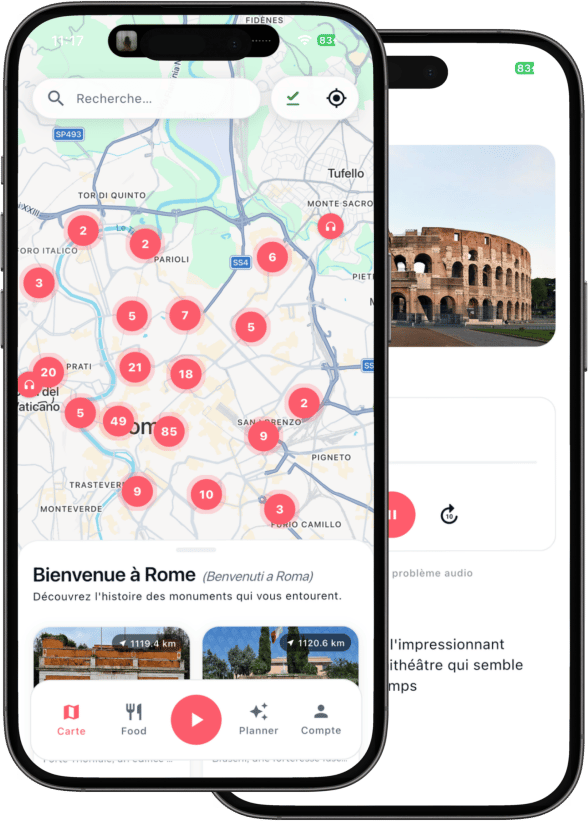
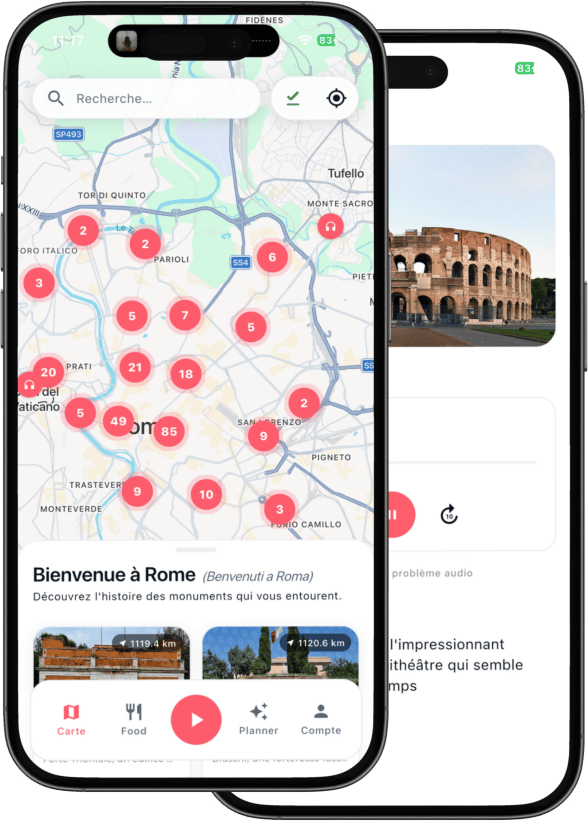
The audio guide that tells you Rome as you walk
CityGuide starts the commentary on its own as you reach each place — the Forum, the Pantheon, a square you cross by accident. Everything works offline, and one purchase covers everyone travelling with you.
Explore the Rome audio guide