

— TRAVEL TIPS · BARCELONA
How to visit Barcelona without a guide (and miss nothing)?
You want to explore Barcelona on your own terms, at your own pace, without paying for a guided tour or shuffling along behind a group. Good news: not only is it possible, it's often the most beautiful way to discover the Catalan capital — with one condition.
Sophie Dorval, Spain specialist · June 23, 2026 · 8 min read
Let's settle it right away: yes, you can absolutely visit Barcelona without a guide. Millions of travellers do it every year, and they gain something no organised tour offers — total freedom. Your itinerary. Your pace. Your budget. The right to linger an hour in front of a Gaudí façade or slip away for a vermouth whenever the mood strikes.
The only mistake to avoid is setting off completely blind. Because Barcelona, without any context, can quickly come down to very beautiful façades whose genius and history you simply don't grasp. And that would be a shame: it's precisely that history that turns a stroll into a journey.
The right approach fits in one sentence: stay free, but don't stay clueless. Here's how.
What nobody tells you about Barcelona "with nothing"
Standing before the Sagrada Família, an unprepared traveller sees… a huge, strange church under construction. That's the classic trap: without a key to read it, you photograph the towers and miss the essentials — that every column mimics a tree, that the light was calculated hour by hour, and that Gaudí hid an entire cosmology in the stone.
There's a reason for this: Catalan modernism speaks a language of symbols. Mosaics, curves, carved animals, references to nature and to Catalan history — nothing is decorative by accident. Without context, you walk right past a century of ideas without seeing them. Signs on site are rare, often in Catalan or Spanish, and never tell the stories that bring a place to life.
Visiting without a guide doesn't mean "visiting with nothing." It means giving yourself the right tools to understand — while keeping your freedom.
Barcelona's must-sees (and why you need to understand them)
Here are the places you can't miss. But remember one thing: in front of each, what changes everything isn't seeing it — it's knowing what you're looking at.
The Sagrada Família
From afar, an endless cathedral. With its story: begun in 1882, Gaudí worked on it until his death in 1926, and its façades tell the life of Christ like a book carved in stone.
Park Güell
A colourful park perched on a hillside. It began as a luxury housing estate that never found buyers — hence its mosaics, its dragon and its leaning columns like a forest.
Casa Batlló
Nicknamed "the house of bones." Its rippling façade tells the legend of Saint George slaying the dragon, whose spine is echoed by the roof.
La Pedrera (Casa Milà)
A façade of stone waves, nicknamed "the quarry." On its roof, the chimneys Gaudí sculpted are said to have inspired the Star Wars helmets.
Las Ramblas
The city's most famous avenue, once an open-air stream. Lively but tricky: this is where Spain's most skilful pickpockets ply their trade.
The Gothic Quarter
A medieval maze built on Roman Barcelona. Behind the cathedral, stretches of wall are nearly 2,000 years old.
La Barceloneta
The old fishing village that became the city's beach. Its narrow lanes and tapas bars keep Barcelona's maritime soul alive.
Montjuïc
The hill overlooking the port: castle, gardens, museums and the memory of the 1992 Olympics that transformed the city.
And these are only the best known: Barcelona has hundreds of places worth stopping for, from overlooked neighbourhoods to hidden treasures.
How to visit Barcelona without a guide, in practice
1. Organise your must-sees by neighbourhood
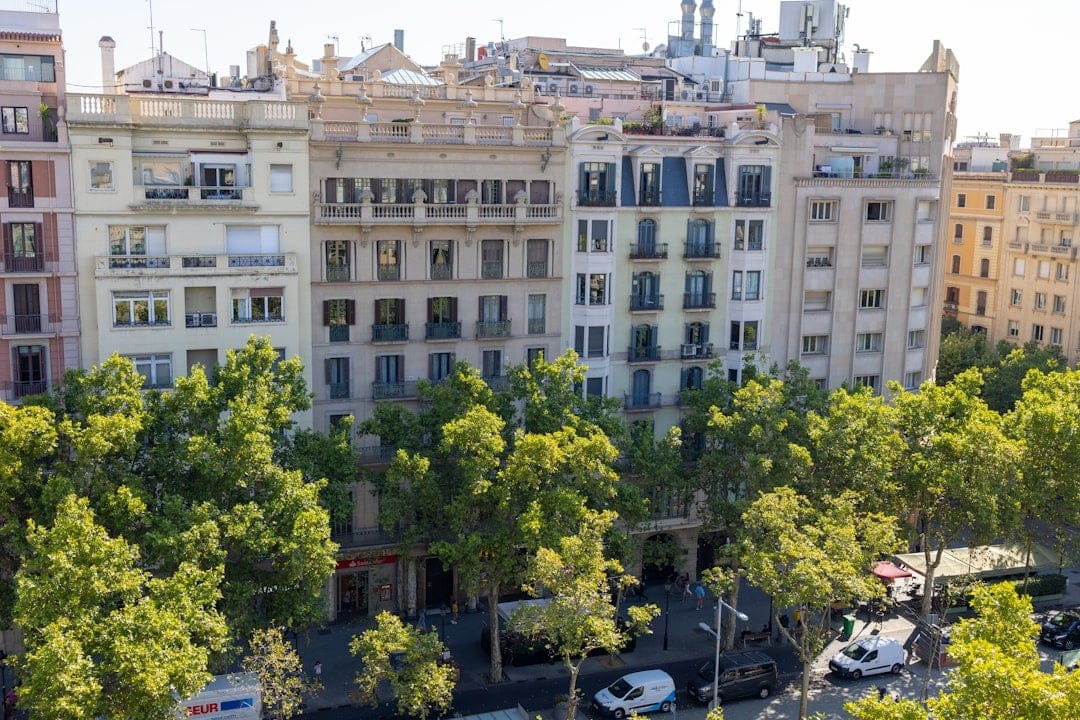
You now know the major must-sees. Pin them on a map and group them by area so you don't zigzag: Casa Batlló and La Pedrera together on Passeig de Gràcia, the Sagrada Família on its own, the Gothic Quarter with Las Ramblas and La Barceloneta, Park Güell and Montjuïc as dedicated half-days. And leave room for the unexpected — in Barcelona, it's often the unplanned lanes that leave the strongest mark.
2. Give yourself the means to understand what you see
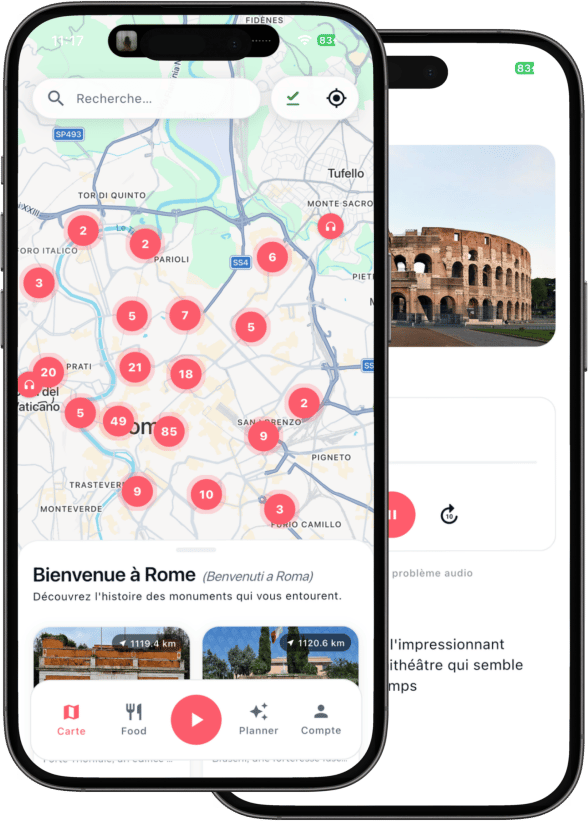
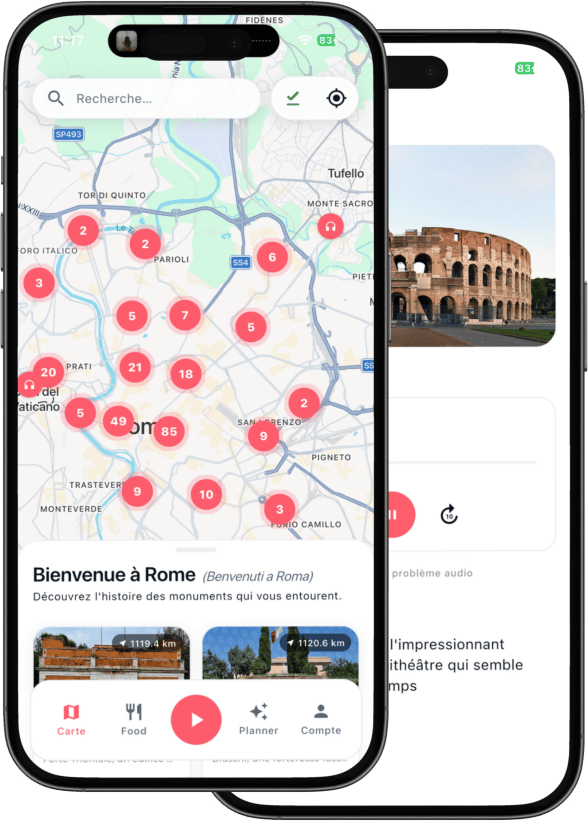
This is the step most people skip — and the one that makes all the difference. You have several options: a paper guide (effective, but you read it head down, hands full), DIY prep (notes, videos), or the solution independent travellers have embraced in recent years: the location-aware audio guide, which detects where you are and starts the story of the place at the exact moment you arrive — hands and eyes free, across Barcelona.
3. Pick the right moment and avoid the traps
Book your tickets for the Sagrada Família and Park Güell well in advance — they sell out days or even weeks ahead, and the on-site queue can cost you hours. Arrive early at the major sites, keep an eye on your belongings on Las Ramblas and in the metro (pickpockets are notorious here), and favour spring or autumn over the crowded, sweltering summer. With that, you'll visit Barcelona more freely — and often better — than with any guided tour.
Paper guide, mobile app or audio guide: which to choose?
On paper, all three options look the same. In the streets of Barcelona, the experience is very different.
The paper guide
Thorough, but you read it standing in the sun, head down, hands full. You look down at the pages instead of at the city — and forget it all by that evening.
The "classic" audio app
It forces a fixed route to follow in order. The frequent result: you end up disoriented, backtracking, with the feeling you missed half of it.
The location-aware audio guide
The story starts on its own right where you are: impossible to get lost or miss the order. And it's not a robot — a real story, with the anecdotes and secrets no sign ever tells. You look up at Barcelona, not at a screen, even offline. That's the CityGuide approach.
A typical day in Barcelona without a guide
An example walking itinerary, to adapt to your mood — each stop tells its own story if you have an audio guide that triggers as you walk.
Sagrada Família right at opening, ticket booked to skip the queue. This is where the stone comes alive: a forest of columns, coloured light and hidden symbols. Arrive early, before the groups and the heat.
Walk up Passeig de Gràcia to admire Casa Batlló and La Pedrera, then have lunch in the Eixample or head into the Gothic Quarter for tapas away from the most touristy squares.
Gothic Quarter and Las Ramblas, then La Barceloneta down to the sea. You walk as the mood takes you — medieval lanes, the Boqueria market, and the salty air of the port at the end.
Sunset from Montjuïc or Park Güell, with a view over the whole city and the Mediterranean. The day's last story before the evening drink.
— Questions fréquentes
Visiting Barcelona without a guide: your questions
Yes, absolutely. Millions of travellers visit Barcelona independently every year. You gain total freedom — your itinerary, your pace, your budget. The only thing to plan for: a bit of context to understand what you're looking at, otherwise Gaudí's masterpieces stay silent.
Not necessarily. A good audio guide like CityGuide downloads before you leave and then works 100% offline — without touching your data plan or paying roaming in Spain. GPS is enough.
That's the difference with a location-aware audio guide: instead of forcing a fixed route to follow in order, it detects where you are and plays the right story in the right place. You walk however you like, you can't miss the order or end up disoriented.
Yes, it's strongly advised. These are Barcelona's two most in-demand sites: tickets often sell out several days ahead and the on-site queue can cost you hours. Book a timed slot online before you leave so you don't lose a whole morning.
The Sagrada Família, Park Güell, Casa Batlló and La Pedrera, Las Ramblas, the Gothic Quarter, La Barceloneta and Montjuïc. But Barcelona is also lived in its lanes, its markets and its lesser-known neighbourhoods like Gràcia.
Spring (April-May) and autumn (September-October): mild weather, thinner crowds and bearable heat compared to summer. And whatever the season, arrive early at the major sites and keep an eye on your belongings in tourist areas.
— Pour aller plus loin
The audio guide that tells you Barcelona as you walk
CityGuide turns your phone into a personal audio guide: you walk, and the instant you reach a monument, a voice begins — a real story, with the anecdotes and secrets no sign ever tells. And it's more than an audio guide: ready-made walks to follow, the best spots to eat like a local, an itinerary planner. Hundreds of places in Barcelona, even offline — enough to explore the city from A to Z, without ever staying clueless.
Discover the Barcelona audio guide