

— TRAVEL TIPS · PARIS
Visit Paris in 3 days: the definitive itinerary
In 72 hours, you will comfortably cover three to four historic neighbourhoods without rushing, but you will have to rule out suburban museums and surrounding châteaux. The classic mistake is criss-crossing the Seine four times a day: this itinerary groups your footsteps by arrondissement to make the most of every daylight hour.
By Sophie Dorval, France specialist · September 9, 2026 · 9 min read
Paris encompasses 20 arrondissements with a dense transport network, yet walking remains the most efficient way to link sights if you stick to a sensible perimeter. Each day mapped out below focuses on a specific geographical pocket, from the historic Right Bank to the heights of the 18th arrondissement, grouping landmarks by immediate proximity.
One tip before you go: to follow this itinerary independently — at your own pace, without booking a guided tour for every site — bring an audio guide app. You unlock the whole city at once, and the story of each monument starts playing as soon as you arrive in front of it. That's exactly what CityGuide offers in Paris.
The golden rule: book your timed-entry tickets for the Louvre or the Eiffel Tower a month in advance, or expect to be turned away at the gates.
Day 1
From Notre-Dame to Place de la Concorde
The historic spine of the capital, between royal power and revolution.
Notre-Dame Cathedral reopens its doors in late 2024 following the 2019 blaze; its solid oak framework was rebuilt using 13th-century carpentry techniques. Access to the parvis is free, though entering the archaeological crypt requires a ticket.
Pont Neuf, opened by Henri IV in 1607, is paradoxically the oldest standing bridge in the city. Cross it towards La Samaritaine, whose striking 1928 Art Deco glass roof underwent meticulous restoration before welcoming shoppers back in 2021.
The Louvre Pyramid, engineered from 603 glass rhombs and 70 triangles, has served as the main entrance to the Palais du Louvre since 1989. For lunch, give Rue de Rivoli a miss and head into the pedestrianised streets of the 1st arrondissement around the Palais-Royal.
Landscaped by André Le Nôtre in 1664, the Tuileries Garden links the Louvre to Place de la Concorde, where the 3,300-year-old Luxor Obelisk has stood since 1836. Access to the park's gravel alleys is entirely free during opening hours.
To unravel the layers of these historic squares without spending a fortune, open Lutèce: Paris Before Paris on your smartphone. This GPS-guided audio tour reveals the footprints of ancient palaces and long-lost gardens directly beneath your feet.
Day 2
The Latin Quarter and Le Marais
Medieval Paris, from student alleyways to aristocratic courtyards.
The Church of Saint-Séverin, a masterwork of Flamboyant Gothic architecture, features modern stained-glass windows by Jean Bazaine installed in 1970; entry is free. Then walk up Boulevard Saint-Michel, cut by Baron Haussmann in 1855, to reach the gardens of the Left Bank.
The French Senate maintains the Jardin du Luxembourg, commissioned in 1612 by Marie de' Medici. You can sit free of charge on one of the iconic green metal chairs—the 'Sénat' model manufactured by Fermob since 1923.
Cross the Seine into the 4th arrondissement, where the city layout preserved its narrow 17th-century street grid. Wander into the courtyards and private mansions of Le Marais; the gardens of the Archives Nationales are free to enter and close their gates at dusk in winter.
Linger around the Haut Marais, an area with a remarkable concentration of natural wine bars. The Marché des Enfants Rouges, established in 1615, sees its food stalls wind down for dinner service at the weekend.
Once you are there, let it guide you
The CityGuide Paris audio guide starts by itself in front of every stop on your itinerary.
Full audio guide
$21.90 $39.90
★ 4.8/5 · 15 reviews
30-day money-back guarantee
Day 3
Montmartre and western Paris
From the gypsum quarries of the 18th arrondissement to the ironworks of the World's Fair.
The 18th arrondissement tops out at an elevation of 130 metres. Sacré-Cœur Basilica, completed in 1914, was built using Château-Landon stone, which exudes calcite and whitens whenever rain falls upon it.
Skip the paid RATP funicular and take the stairs on Rue Foyatier instead. The terrace in front of the basilica offers an expansive, free south-facing view over the city skyline, perfect for spotting the golden dome of Les Invalides.
Walk down towards the 9th arrondissement along Rue des Martyrs, lined with more than 40 specialist food shops. Local bakeries here produce traditional baguettes governed by strict standards set down in the 1993 bread decree.
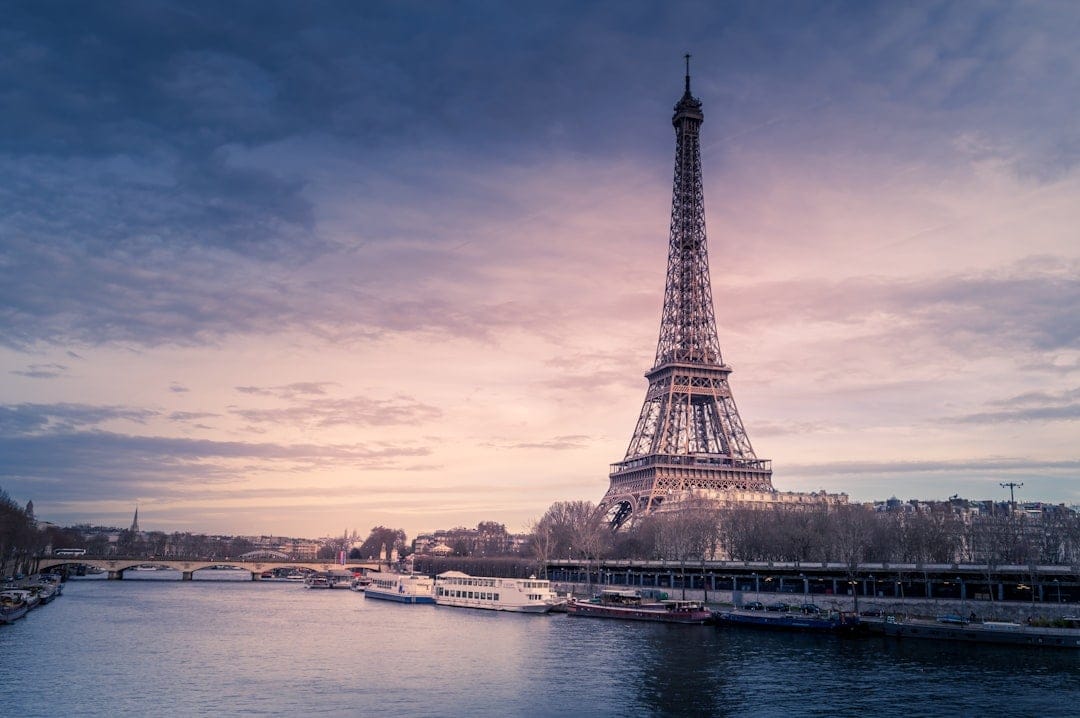
The Eiffel Tower, assembled with 7,300 tonnes of puddled iron for the 1889 Exposition Universelle, requires advance booking on its official website. Reaching the summit by lift requires a paid ticket.
Find a spot on the Esplanade du Trocadéro as dusk falls. The 20,000 bulbs illuminating the Eiffel Tower sparkle for five minutes at the start of every hour until late in the evening.
6 essential rules to navigate the capital
- The Navigo Easy pass costs a few euros at station counters and can be loaded with digital t+ tickets, which are cheaper than the traditional cardboard tickets now being phased out.
- The Musée du Louvre is closed on Tuesdays, while the Musée d'Orsay and the Palace of Versailles close on Mondays. Check opening schedules before finalising your dates.
- The RER train network (lines A to E) requires a point-to-point ticket if you travel outside Zone 1 (central Paris); using a standard t+ ticket to La Défense will lead to a fine.
- Entry to active parish churches throughout the city is free of charge, with the notable exception of Sainte-Chapelle, a designated national monument managed by the CMN.
- Galeries Lafayette Haussmann (9th arrondissement) boasts a panoramic rooftop terrace with no entry fee or purchase required; ride the escalators to the 8th floor for open views of the Opéra Garnier.
- Tables at sought-after bistros in the 11th arrondissement (around Oberkampf and Bastille) frequently open several weeks in advance on booking platforms such as Zenchef or SevenRooms.
Reading the city beyond its façades
Ticking off Haussmannian avenues and stone bridges from a map will never reveal how the capital truly works. Behind every sweeping vista in the 1st arrondissement or narrow lane in Le Marais lie radical political shifts, urban uprisings, and engineering triumphs. If you simply admire the stone façades without discovering the legacy of Préfet Poubelle or the whims of Louis XIV, you miss the essence of the city.
That's where an audio guide app like CityGuide comes in: it detects where you are and plays the story of each place at just the right moment, while you walk from one stop to the next — hands and eyes free, even offline. So you can follow your itinerary without ever being left in the dark.
— Frequently Asked Questions
Frequently asked questions about short breaks in Paris
Three days allow you to explore three distinct zones in depth, such as the historic centre (1st and 4th arrondissements), the Left Bank (5th and 6th), and the north (18th). It is ideal for a first taste of the city, provided you limit comprehensive museum visits to one per day.
Costs vary across districts, but you should budget realistically for a mid-range 3-star hotel in the 13th or 15th arrondissement, along with daily dining. Access to permanent collections across national museums also requires ticket purchases.
Metro Line 1 (fully automated) cuts across Paris from east to west, serving key Right Bank destinations. Steer clear of Line 13 during morning and evening rush hours due to chronic overcrowding.
May and September offer mild, pleasant temperatures that are ideal for walking. August brings widespread closures among independent bakeries and restaurants, while street parking remains strictly metered across the capital.
Yes. The Eiffel Tower, the Musée d'Orsay, and the Louvre require timed-entry slots purchased online. Turning up without a reservation means facing long queues or being refused admission at the ticket desk.
The banks of the Seine between the Hôtel de Ville and Pont Neuf are entirely pedestrianised and open around the clock. You can bring a bottle along to sit by the water, provided you dispose of rubbish in the recycling bins provided along the riverbanks.
— Go Further
Parisian history in your headphones
Our CityGuide app leaves outdated paper guides behind. Packed with over 120 documented points of interest, rare sound archives, and thoroughly sourced stories, it lets you explore all 20 arrondissements at your own pace, GPS in hand.
See the Paris audio guide