

— TRAVEL TIPS · ROME
Free Things to Do in Rome: 20 Free Activities for Summer 2026
Squares, fountains, churches, viewpoints, free museum Sundays… Here are 20 completely free things to do in Rome without blowing your budget.
By Sophie Dorval, Italy specialist · August 18, 2026 · 10 min read
Rome is one of those cities where you can spend an entire day discovering incredible places… without spending a single euro on activities.
Monumental squares, fountains, churches, panoramic viewpoints, historic neighbourhoods, ancient ruins, and even some museums: a huge part of the Eternal City can be explored for free.
And if you're travelling to Rome in summer 2026, there are even a few dates when you can visit attractions that normally charge admission completely free of charge.
Here is our selection of the best free things to do in Rome in 2026, along with a few tips to help you experience the city without blowing your budget.
1. Admire the Trevi Fountain
There was really no other place to start this list.
The Trevi Fountain is one of Rome's most famous landmarks, and admiring it doesn't cost a thing.
Built in the 18th century, the fountain features Oceanus at the centre of an impressive Baroque composition.
Tradition says you should turn your back to the fountain and toss a coin over your shoulder to make sure you'll return to Rome one day.
Technically, if you throw in a coin, this activity isn't completely free anymore. But no one's forcing you to.
Our summer tip: visit early in the morning or later in the evening. In the middle of the day, the Trevi Fountain is one of the busiest places in Rome.
2. Enter St Peter's Basilica for free
This is probably one of the best free things to do in Rome.
Entry to St Peter's Basilica is free. Inside, you can explore one of the world's most important churches and see masterpieces including Michelangelo's famous Pietà.
However, don't confuse the different Vatican attractions. Entry to the basilica itself is free, but some additional experiences require a ticket, including access to the dome.
And most importantly, free doesn't mean there won't be a wait. During summer, lines can get particularly long. Try to arrive early in the morning and make sure you're wearing clothing appropriate for a religious site.
3. See the Pantheon from Piazza della Rotonda
Although entering the Pantheon is no longer automatically free for visitors, seeing the monument from Piazza della Rotonda is still an essential Rome experience.
The building is spectacular. Its history dates back to Ancient Rome, and its architecture has influenced countless buildings around the world.
Take a few minutes to admire its façade and enormous columns before continuing your walk through Rome's historic centre.
And if you'd like to understand what you're looking at without booking a guided tour, you can use an audio guide on your phone as you explore.
4. Explore the Roman Forum… without necessarily buying a ticket
You normally need a ticket to enter the heart of the Roman Forum.
However, several spots surrounding the archaeological site allow you to see parts of the ruins for free.
Walk along Via dei Fori Imperiali and explore the surrounding elevated areas, and you'll already get impressive views of Ancient Rome.
It's a great way to get a first look at the Forum before deciding whether you want to buy a ticket and explore the site in greater depth.
5. See the Colosseum from the outside for free
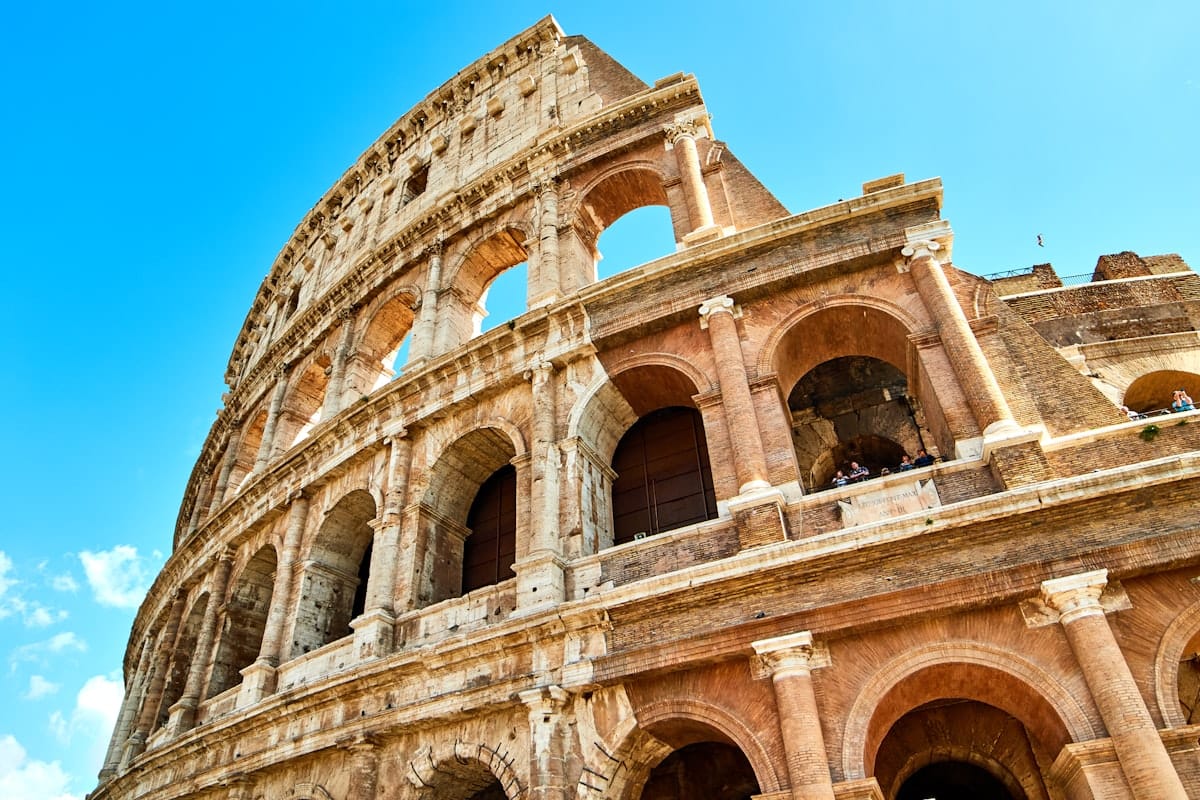
Obviously, entering the Colosseum normally requires a ticket. But seeing the Colosseum itself is completely free.
And the exterior alone is spectacular. Walk around the amphitheatre, observe its different levels, then head slightly uphill to find some great viewpoints overlooking the monument.
At night, when the Colosseum is illuminated, the atmosphere changes completely.
It's therefore one of those free activities worth doing twice: once during the day and again after sunset.
6. Visit museums for free on the first Sunday of the month
This might be the best money-saving tip on this entire list.
In Italy, the Domenica al Museo initiative provides free admission to many state museums, archaeological parks, and cultural sites on the first Sunday of every month.
In Rome, many museums and attractions participate. For summer 2026, remember these dates in particular:
- Sunday, 7 June 2026
- Sunday, 5 July 2026
- Sunday, 2 August 2026
It's an excellent opportunity to visit attractions that normally charge admission without spending a euro.
Of course, you won't be the only person with the same idea. Arrive early and always check the admission conditions for the specific attraction you plan to visit.
7. Visit the Vatican Museums for free on the last Sunday of the month
Here's another excellent way to save money during your trip to Rome.
The Vatican Museums offer free admission on the last Sunday of the month, subject to their opening schedule. During summer 2026, this includes:
- 28 June 2026
- 26 July 2026
- 30 August 2026
Free admission is generally available during the morning and into the early afternoon, with last admission before closing.
Unsurprisingly, this is an extremely popular opportunity. So expect crowds.
If avoiding lines is your absolute priority, paying for admission on another day may provide a much more comfortable experience. But if your priority is visiting Rome on a budget, the savings can definitely be worth it.
8. Explore Piazza Navona
Piazza Navona is one of the most beautiful squares in Rome. And like many of the city's greatest sights, it's completely free to visit.
Among its highlights is Bernini's famous Fountain of the Four Rivers.
But what makes the square especially interesting is its unusual shape. That's no coincidence: Piazza Navona was built on the site of the ancient Stadium of Domitian.
Today, cafés, artists, and pedestrians have replaced the spectators of Ancient Rome.
9. Climb Janiculum Hill for an amazing view of Rome
Looking for one of the best free viewpoints in Rome? Head to Janiculum Hill, known in Italian as the Gianicolo.
From the top, you'll enjoy a beautiful panoramic view over the rooftops and monuments of the Italian capital.
It's particularly enjoyable toward the end of the day. Grab something to drink, head up before sunset, and simply enjoy the view.
Simple, free, and probably more memorable than some paid attractions.
10. Wander through Trastevere
You don't need a ticket to discover one of Rome's most enjoyable neighbourhoods.
Trastevere is perfect for simply wandering around without a specific itinerary. Narrow cobblestone streets, colourful façades, lively squares, churches, and outdoor terraces give the neighbourhood an atmosphere completely different from Rome's monumental centre.
During summer, visit in the late afternoon or early evening. Temperatures become more comfortable, and the neighbourhood gradually starts coming to life.
11. Step inside Rome's churches
Rome has hundreds of churches, and many of them are free to enter.
Some contain works of art that would probably be displayed behind a paid museum entrance anywhere else in the world.
Even if you're not religious, get into the habit of stepping inside the churches you pass while exploring Rome. You may discover spectacular architecture, frescoes, sculptures, and sometimes works created by some of Italy's greatest artists.
That's one of the pleasures of Rome: treasures can be hidden behind a façade you might otherwise walk straight past.
12. Relax in the Villa Borghese Gardens
After several hours walking under the Roman sun, you'll probably be happy to find some greenery.
The Villa Borghese Gardens are one of the best places in Rome to take a break. Access to the park is free.
You can walk around, find a shady spot, have a picnic, or simply escape the crowds of the historic centre for a couple of hours.
Just remember: admission to the Borghese Gallery itself is not free.
13. See Rome from the Pincio Terrace
While you're at Villa Borghese, head over to the Pincio Terrace.
It offers a beautiful view over Piazza del Popolo and part of Rome. Again, no ticket required.
Sunset is particularly popular, so expect some crowds during summer.
14. Walk across Piazza del Popolo
Just below the Pincio is Piazza del Popolo.
For centuries, this enormous square served as one of the main entrances to Rome.
At its centre you'll find an ancient Egyptian obelisk, while several churches surround the square.
It fits perfectly into a walking route connecting Villa Borghese, the Pincio, and Piazza di Spagna.
15. Walk down the Spanish Steps at Piazza di Spagna
Piazza di Spagna and its famous Spanish Steps are among the must-see attractions in central Rome.
Visiting is free, and they're easy to include in a walk through the historic centre.
One particularly effective free walking route connects: Piazza del Popolo → Piazza di Spagna → Trevi Fountain → Pantheon → Piazza Navona.
You'll see several of Rome's most famous landmarks simply by walking.
16. Explore Rome's Jewish Quarter
Rome's Jewish Ghetto is one of the city's most interesting neighbourhoods to explore on foot.
Its history stretches back centuries, and the area has a distinctive identity.
While exploring, you can also reach the Portico of Octavia, the Theatre of Marcellus, and the banks of the Tiber.
It's an excellent area to discover a different side of Rome without spending any money.
17. See the Theatre of Marcellus
At first glance, you might almost mistake it for a smaller Colosseum. But the Theatre of Marcellus is a different — and older — monument.
Built toward the end of the Roman Republic and inaugurated under Augustus, it could accommodate several thousand spectators.
Seeing it from the outside costs nothing, and the area fits perfectly into a walk through Rome's Jewish Quarter.
18. Walk along the Tiber
As temperatures begin to drop, walking along the Tiber River is an excellent way to end your day.
During summer, the riverbanks become especially enjoyable in the evening. Seasonal events and activities also take place in different parts of the city.
In July and August 2026, Rome once again offers various free or inexpensive cultural events, including outdoor screenings, festivals, and summer activities.
Programmes change throughout the summer, so check what's happening during the exact dates of your trip.
19. Look through the Aventine Keyhole
Here's a slightly more unusual free thing to do in Rome.
On Aventine Hill, you'll find a famous keyhole offering a surprising view of the dome of St Peter's Basilica.
Look through it and you'll immediately understand why the spot became famous.
While you're there, take some time to explore the neighbourhood and nearby gardens.
20. Watch the sunset over Rome
It sounds obvious, but some of the best memories in Rome cost absolutely nothing.
The Janiculum, Pincio, and Aventine hills all offer great places to admire the city at the end of the day.
During summer, it's also one of the best times to explore Rome. Once the intense afternoon heat begins to fade, the streets come alive again and the city becomes much more pleasant to explore.
Bonus: visiting Rome for free doesn't mean exploring Rome without understanding what you're seeing
It's entirely possible to discover a huge part of Rome without paying admission fees. But there's one problem many travellers don't think about before arriving.
Rome is filled with history… but nothing necessarily explains what you're actually looking at.
You walk past an ancient ruin. A statue. A fountain. A church. A centuries-old building.
You take a photo… and keep walking.
That's a shame, because a huge part of what makes Rome fascinating lies in the stories hidden behind these places.
A guided tour obviously solves this problem, but booking several tours during your trip can quickly become expensive.
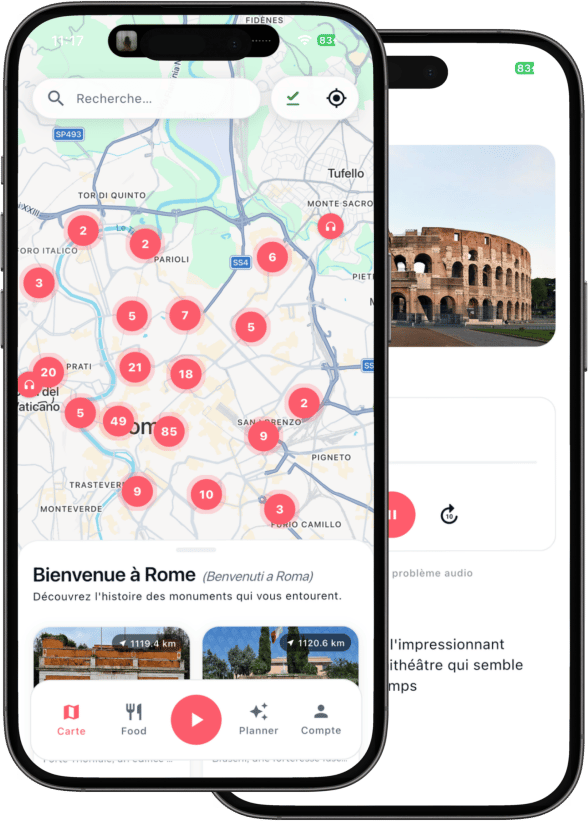
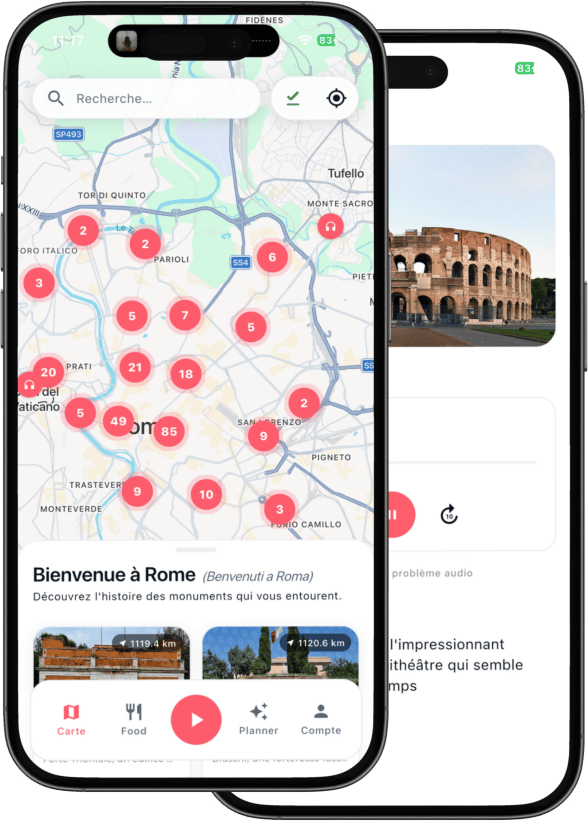
An alternative is to use CityGuide as your personal tour guide directly on your phone. You can listen to the stories and anecdotes behind the places you discover in Rome, follow walking tours, or simply explore the city at your own pace with your headphones.
And if you come across a landmark you don't recognise, you can even take a picture of it to identify it and discover the story behind it.
No need to follow a group or book a different guided tour at every attraction. Just keep exploring.
How much should you budget for Rome in summer 2026?
Even if you take full advantage of free activities, some expenses are obviously difficult to avoid, especially accommodation, food, and transport.
However, you can significantly reduce the amount you spend on sightseeing.
If your trip falls on the first Sunday of the month, take advantage of free admission to participating museums and cultural sites. For the rest of your stay, plan your days around neighbourhoods and landmarks that can be explored for free.
For example:
- Morning: Piazza del Popolo → Pincio → Villa Borghese
- Afternoon: Piazza di Spagna → Trevi Fountain → Pantheon
- Evening: Piazza Navona → Trastevere → Janiculum
You'll already have discovered an incredible amount of Rome without paying for a single activity.
Rome for free in 2 days: our itinerary
Day 1 – Rome's historic centre
Start early at Piazza del Popolo before heading up to the Pincio. Walk through Villa Borghese, then head back down toward Piazza di Spagna.
Continue to the Trevi Fountain before making your way to the Pantheon and Piazza Navona.
Toward the end of the day, cross the Tiber to explore Trastevere, then climb Janiculum Hill for sunset.
Day 2 – Ancient Rome and the Vatican
Start your day around the Colosseum and Via dei Fori Imperiali. Continue toward the Theatre of Marcellus and the Jewish Quarter.
After a break, head toward the Vatican to explore St Peter's Square and St Peter's Basilica.
End your day along the Tiber or return to the historic centre to experience Rome at night.
What can you really do for free in Rome?
To sum it up, you can enjoy all of the following for free:
- the Trevi Fountain;
- St Peter's Square and entry to St Peter's Basilica;
- Piazza Navona;
- Piazza di Spagna;
- Piazza del Popolo;
- Trastevere;
- Villa Borghese;
- the Pincio Terrace;
- Janiculum Hill;
- numerous churches;
- several viewpoints overlooking Ancient Rome;
- some museums that are free year-round;
- many public museums and sites on the first Sunday of the month.
That's already more than enough to fill several days.
Enjoy Rome without blowing your budget
Rome doesn't have to be an expensive destination. Much of what makes the city extraordinary is right there in its streets.
Walk. Step inside the churches. Look up. Explore the side streets. Take the time to understand what you're seeing.
And save your budget for the few landmarks or experiences that really matter to you.
For everything else, Rome itself is already one enormous open-air museum.
— Frequently asked questions
FAQ: free things to do in Rome in 2026
Rome offers plenty of free things to do, including visiting the Trevi Fountain, Piazza Navona, Trastevere, Piazza di Spagna, the Villa Borghese Gardens, Janiculum Hill, numerous churches, and seeing the Colosseum and ancient ruins from the outside.
Several smaller museums in Rome offer free admission year-round. Many state museums and cultural sites also participate in free admission days on the first Sunday of each month. Conditions can change, so always check the official admission rules before visiting.
Entry to the Colosseum normally requires a ticket. However, you can see its exterior and enjoy several viewpoints around the monument completely free of charge. Certain national free-admission days may also include the archaeological park, depending on the announced conditions.
St Peter's Square and St Peter's Basilica are free to visit, while the Vatican Museums normally require a ticket. However, the museums offer free admission on the last Sunday of the month according to their calendar.
You can wander through Trastevere, see Rome's illuminated landmarks, return to the Colosseum or Trevi Fountain, walk along the Tiber, or watch the sunset from Janiculum Hill.
Yes. Rome is particularly well suited to budget travellers. Many of its landmarks and neighbourhoods can be explored for free on foot. By planning your days carefully and taking advantage of free admission dates, you can significantly reduce the cost of sightseeing.
— Go further
Understand what you're looking at — free or not
CityGuide combines a location-aware audio guide (over 500 places in Rome), ready-made walks, local recommendations and a trip planner — even offline.
Discover the Rome audio guide