

— TRAVEL TIPS · NAPLES
Things to do in Naples: the highlights and the right pace
Naples disorients at first: loud, dense, and far less polished than Rome or Florence. That's also what makes it the most alive city in Italy — provided you know where to look.
Sophie Dorval, Italy specialist · September 4, 2026 · 9 min read

Naples works on three levels: the dense, working-class historic centre, the upper districts of Vomero overlooking the bay, and the seafront from Chiaia to Mergellina.
The historic centre is a World Heritage site in its entirety. The decumano inferiore — nicknamed Spaccanapoli, literally “Naples-splitter” — cuts straight through it: that's still the layout of the original Greek streets.
Naples is also the base for the great southern day trips: Pompeii, Herculaneum, Vesuvius, the Amalfi Coast. Allow at least one full day for one of them.
What to know before you go
Naples is walkable, but attentively: traffic is heavy and scooters don't always stop. It isn't dangerous, it's simply a different rhythm.
The historic centre is narrow and shaded, which keeps it walkable even in summer — the opposite of Rome. On the other hand there's almost no open square to breathe in.
The city is among the cheapest in western Italy. A pizza in the centre costs a few euros, and many of the finest places are churches with free entry.
Naples's essential sights
What to see, and what makes each one interesting — because Naples rarely explains what it shows you.
Spaccanapoli and the historic centre
The straight street slicing through the old town, inherited from the Greek layout. Dozens of churches, artisan workshops and open courtyards follow one another — the beating heart of the city, and it's free.
The National Archaeological Museum
It holds most of what was lifted from Pompeii and Herculaneum. Visiting it BEFORE the sites changes everything: on site, most of the objects were moved here long ago.
The Sansevero Chapel
A small chapel holding the Veiled Christ, a sculpture whose marble veil appears translucent. It needs booking, it's tiny, and it's worth the constraint.
Underground Naples
A network of Greek, then Roman, then wartime-shelter galleries, forty metres beneath the streets. It's the best way to understand how the city is stacked.
Vomero and the Certosa di San Martino
The upper district, reached by funicular. The charterhouse offers the finest view over the bay and Vesuvius, with far fewer people than the seafront.
The Royal Palace and Piazza del Plebiscito
Official Naples — monumental and open, in total contrast with the lanes of the centre. The square is entirely free to walk.
The Spanish Quarter
A grid of sloping lanes built in the sixteenth century to house garrisons. Long avoided, it's now one of the liveliest parts of the city.
The seafront from Chiaia to Mergellina
A long car-free promenade facing the bay, with the Castel dell'Ovo set on its islet. Free, and the best possible end to a day.
And beyond those, Naples holds hundreds of churches, courtyards and stairways no guidebook mentions — it's a city that gives itself to people willing to turn a corner at random.
How to structure your days
Archaeological museum first
Before Pompeii, not after. The frescoes and mosaics from the sites were moved here: seeing them first makes the ruins infinitely more legible.
One day trip per stay, not three
Pompeii, Vesuvius and the Amalfi Coast each need a full day. Cramming two into one day spoils both.
Take the funicular up
Vomero sits a hundred and thirty metres above the centre. Three funicular lines climb it for the price of a ticket: save your legs for the descent.
Accept the disorder
Naples isn't visited the way Florence is. Churches close without warning, streets are congested, and that's precisely what makes it a living city rather than a museum.
Understanding what you're looking at
Naples is arguably the major Italian city that explains itself least: few signs, few translations, and a history layering Greeks, Romans, Spaniards and Bourbons.
The paper guidebook
Useful, but impractical in narrow, busy lanes where you'd rather keep an eye on the scooters.
On-site signage
Sparse and often absent, including in major churches. Many masterpieces have no explanation beside them at all.
The location-aware audio guide
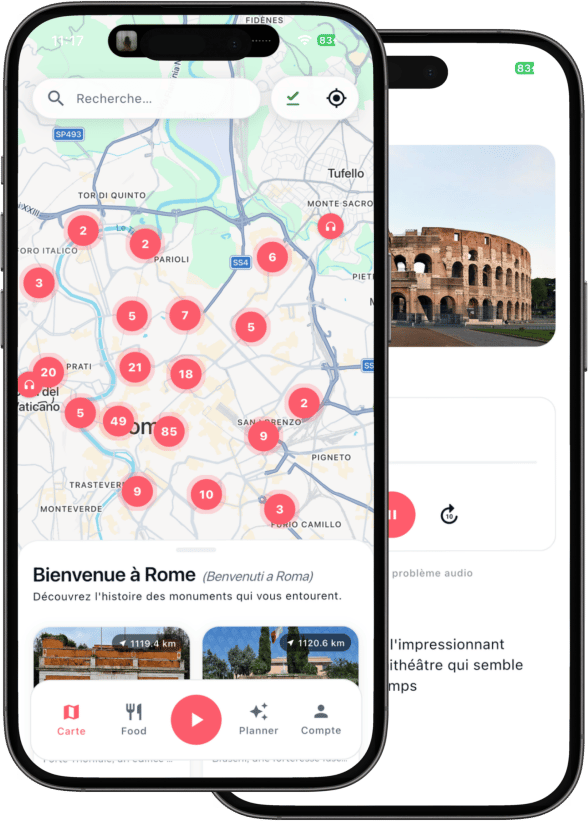
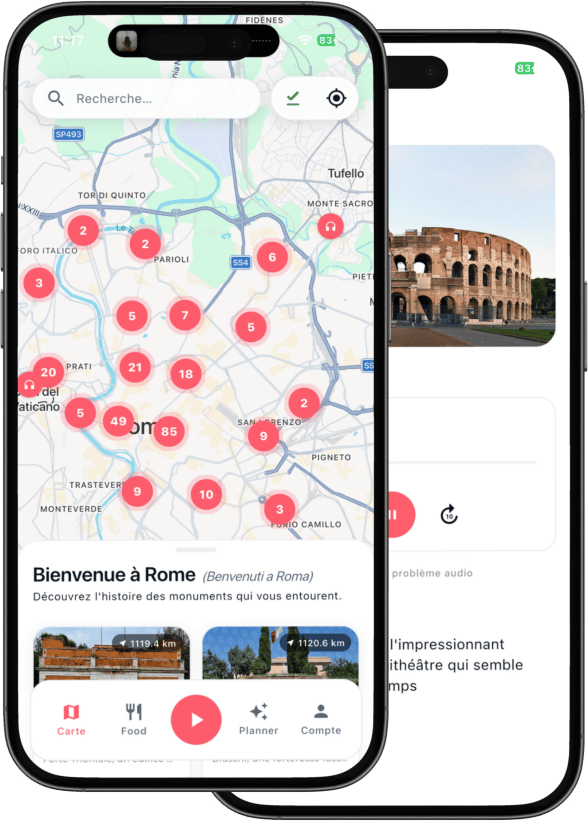
Commentary starts by itself at each church, square and courtyard — including the ones no tour stops at. Everything works offline.
What to do in Naples depending on how long you have
Three plans that nest inside each other, keeping the day trips for last.
The historic centre in the morning — Spaccanapoli, the churches, the Sansevero Chapel — then Piazza del Plebiscito and the seafront in the late afternoon.
Add the Archaeological Museum on the second morning and Vomero at the end of the day, for the view over the bay. This format gives the fullest picture of the city.
Give the third day to Pompeii or Herculaneum. Herculaneum is smaller, better preserved and far quieter — often the better choice if you only do one.
Vesuvius, or the Amalfi Coast from Sorrento. Both are reachable by public transport, but each takes a whole day.
The seafront at sunset, then a pizza in the centre. That's the Neapolitan ritual, and it costs almost nothing.
— Questions fréquentes
Things to do in Naples: your questions
Two full days cover the city. Three let you add Pompeii or Herculaneum. Four allow Vesuvius or the Amalfi Coast without rushing.
A great deal: Spaccanapoli and the whole historic centre, Piazza del Plebiscito, the seafront from Chiaia to Mergellina, and most churches in the centre. Naples is one of the major Italian cities where you spend least.
Herculaneum if you only do one: smaller, better preserved, quieter, and doable in half a day. Pompeii is far larger and needs a full day, with very little shade.
Yes, provided you accept the noise and density. Underground Naples and the funiculars go down very well. The historic centre does demand attention to traffic, though.
April–June and September–October. The historic centre stays walkable in summer thanks to its shaded lanes, but the trips to Pompeii and Vesuvius are punishing in July and August.
Entirely, and it's the only way. Only Vomero and the seafront justify the funicular or the metro, both of which are fast and cheap.
— Pour aller plus loin
The audio guide that tells you Naples as you walk
CityGuide starts the commentary on its own at each church, square and courtyard — in a city that explains very little of what it shows. Everything works offline, and one purchase covers everyone travelling with you.
Explore the Naples audio guide